Home · Texas · Erosion Control
Texas · Erosion Control
Erosion Control Plants for Texas
Updated 2026-09-11
Bare or thinly grassed slopes wash out in Texas downpours faster than most people expect. The 14 species here hold soil in place two different ways: deep-rooted bunchgrasses that anchor a slope from underneath, and spreading groundcovers that knit a dense mat across the surface. Most establish faster and cheaper from seed or plugs than a full landscape planting would.
14 plants
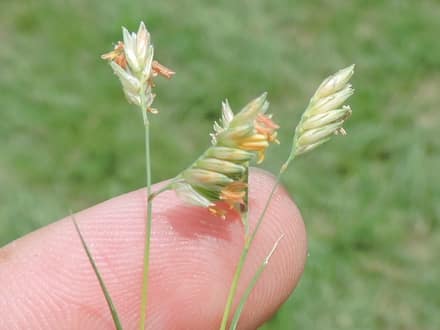
Buffalograss
Bouteloua dactyloides
North America's true native turf grass — a fine, soft, blue-green sod that forms a low lawn on a fraction of the water Bermuda or St.
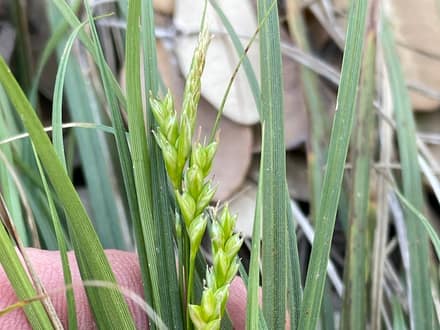
Cedar Sedge
Carex planostachys
A fine, arching native sedge that forms a soft green carpet in the dry shade beneath cedars and oaks — one of the very few things that will grow, and hold soil, there..
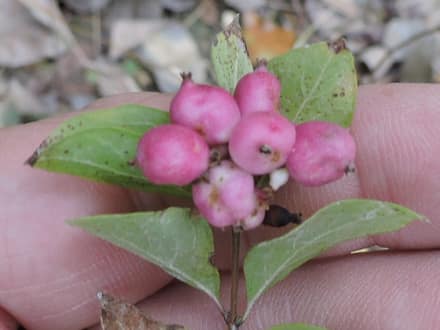
Coralberry
Symphoricarpos orbiculatus
A modest suckering shrub for shade that comes into its own in fall, when the arching branches string themselves with clusters of coral-pink berries the birds strip by spring..
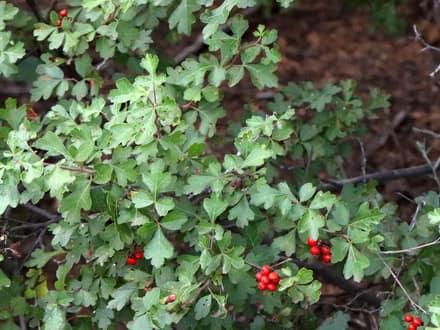
Fragrant Sumac
Rhus aromatica
A low, spreading shrub that blazes orange-red in fall and holds slopes with its suckering roots.
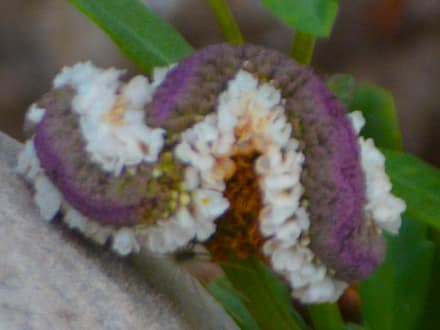
Frogfruit
Phyla nodiflora
A flat, spreading mat that takes light foot traffic and blooms with tiny pollinator flowers — the leading native lawn substitute for sun to part shade in Texas..
Gregg's Dalea
Dalea greggii
A silvery, trailing groundcover that spills over walls and banks and dots itself with small purple flowers.
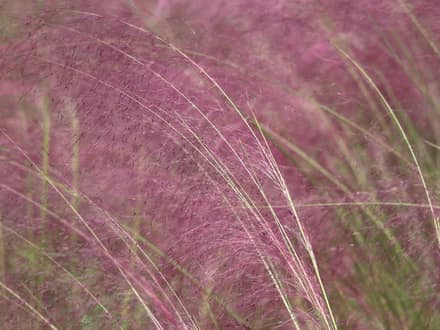
Gulf Muhly
Muhlenbergia capillaris
For a few weeks each fall this clump grass erupts into a cloud of glowing pink — the most spectacular native ornamental grass for the South..
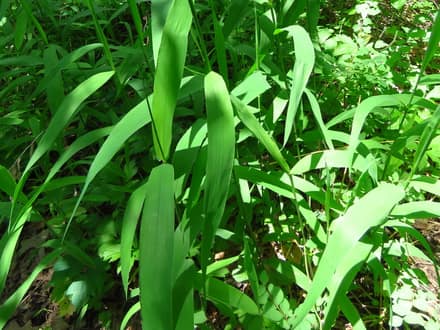
Inland Sea Oats
Chasmanthium latifolium
The rare ornamental grass that thrives in shade, dangling flat, papery seed heads that shift from green to bronze and rustle all winter.
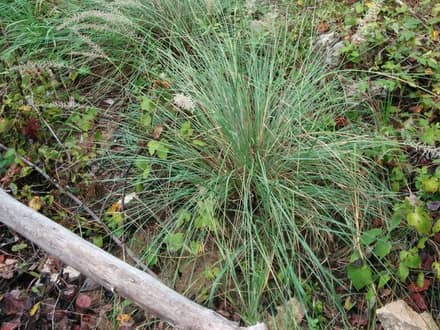
Lindheimer's Muhly
Muhlenbergia lindheimeri
A big, fountain-shaped clump grass topped with silver-blond plumes in fall.

Little Bluestem
Schizachyrium scoparium
The backbone grass of the American prairie, turning coppery-mahogany in fall and silver-tufted in winter.
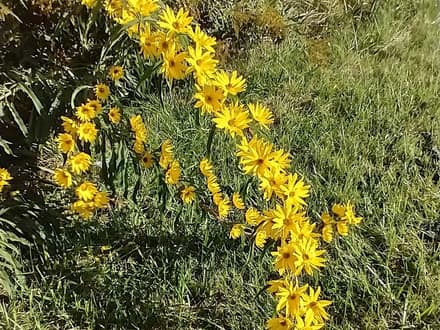
Maximilian Sunflower
Helianthus maximiliani
A towering prairie sunflower that lines its tall stems with gold in fall, feeding late pollinators and then a run of seed-eating birds.
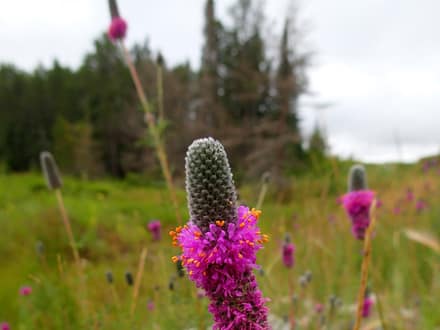
Purple Prairie Clover
Dalea purpurea
A fine-textured prairie legume with thimbles of purple bloom ringed in orange pollen.
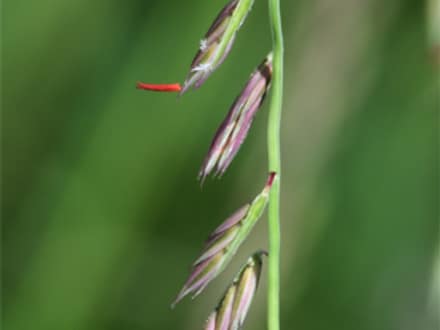
Sideoats Grama
Bouteloua curtipendula
The state grass of Texas, hanging its tiny oat-like seeds along one side of each stem, tinged with orange-red pollen.
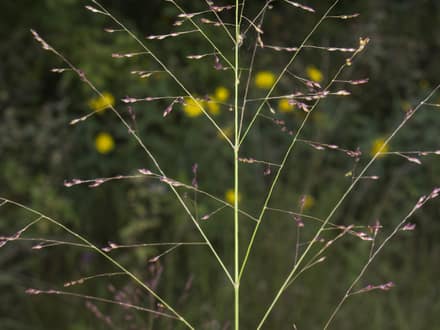
Switchgrass
Panicum virgatum
An upright prairie grass with airy pink-bronze seed clouds and gold fall color.
Bunchgrasses for slopes and banks
Little bluestem, sideoats grama, switchgrass, gulf muhly, and lindheimer's muhly all grow as discrete clumps with roots that can reach several feet down, which is what actually holds a slope together during a heavy rain rather than the visible growth on top. Buffalograss works differently, spreading by stolons into a low, mowable sod, which makes it the better choice for a slope you want to walk on or keep short rather than a taller, unmown bank planting.
Spreading groundcovers for surface coverage
Frogfruit, cedar sedge, and gregg's dalea spread laterally to close gaps between larger plants, which matters most in the first year or two before a slope planting fills in, since bare soil between plants is where erosion actually happens. Fragrant sumac and coralberry do the same job at shrub scale, both suckering to form a wider thicket over time rather than staying as a single stem. Maximilian sunflower and purple prairie clover round out the list with deep taproots suited to a drier, sunnier bank.
FAQ
What native Texas grass is best for stopping erosion on a slope?
Little bluestem and switchgrass both have deep, fibrous root systems built for exactly this. For a mowable, walkable slope instead of a taller grass planting, buffalograss is the better fit.
How fast do these plants establish on a bare slope?
Most establish within one to two growing seasons from seed or plugs, though bunchgrasses like little bluestem take a full season to build the root mass that actually resists erosion; a groundcover like frogfruit fills gaps faster on the surface in the meantime.
Can I use groundcovers and grasses together on the same slope?
Yes, and it's usually the better approach: bunchgrasses anchor the slope with deep roots while a spreading groundcover like frogfruit or cedar sedge closes the bare ground between them faster than the grasses alone would.