Home · Texas · Little Bluestem
Grass · Deer-resistant
Little Bluestem
Schizachyrium scoparium
Also called: Beard Grass
Updated 2026-09-23
The backbone grass of the American prairie, turning coppery-mahogany in fall and silver-tufted in winter. A larval host for several skipper butterflies.
Little bluestem is the grass that held the American prairie together before it was plowed under, and it still does the same job in a Texas garden: a deep, fibrous root system that anchors soil, paired with a plant that turns copper and mahogany in fall and holds silvery seed heads through winter.
It wants nothing from a gardener but full sun and to be left alone, which is part of why it's become the default choice for a native meadow planting anywhere in the state.
Growing & care
Full sun keeps it upright; too much shade or water makes it flop. Cut back in late winter. Thrives in poor, dry soil — no fertilizer.
Where little bluestem grows in Texas
It grows across nearly every ecoregion the Native Plant Society of Texas tracks, from the Cross Timbers and Edwards Plateau to the High Plains and Southern Texas Plains, making it one of the most widely adapted native grasses in Texas. It handles clay, sandy, rocky and loam soils as long as drainage is decent.
How to plant little bluestem
Start seed as early in spring as the soil allows, since young plants need a full growing season to build the root system that gets them through their first winter. Seed germinates within one to three weeks around 80 degrees. To divide an established clump, do it in spring, splitting healthy sections and spacing the divisions roughly a foot and a half apart so each has room to fill in without immediately crowding its neighbors.
Watering little bluestem the first year
Water new plantings through the first summer to help roots establish, then taper off. It reseeds readily on its own once established, so a planting tends to thicken over the following seasons without any help.
Little Bluestem care through the seasons
Cut it back in late winter, before new growth starts, to clear last year's growth and make room for the season ahead. It wants poor, dry soil and no fertilizer; feeding it or giving it too much shade or water causes it to flop instead of standing upright, which is the opposite of the effect most gardeners are going for.
Common little bluestem problems
Flopping is the main complaint, and it almost always traces back to too much shade, too much water, or too rich a soil. In its native range on lean, dry ground it stands upright without support; the more you improve the soil for it, the worse it tends to perform.
Wildlife value of little bluestem
It's a larval host for Celia's roadside skipper, the crossline skipper and the Ottoe skipper, three butterflies that depend on native bunchgrasses like this one. In fall, its seed heads draw birds looking for a dense, easy food source right as other seed sources are running out.
Using little bluestem in the garden
Use it as the structural grass in a meadow or naturalistic planting, mixed with wildflowers that bloom in the gaps between clumps, or massed on its own for the fall color and winter texture. It also works as a specimen accent where its upright form and seasonal color change can be seen against a plain background.
Little Bluestem FAQ
Why is my little bluestem flopping over instead of standing upright?
Almost always too much shade, water, or overly rich soil. It's built for lean, dry, full-sun conditions, and improving those conditions for it tends to make it grow soft and lean over.
When should I cut back little bluestem?
In late winter, before new growth starts in spring. Cutting it back earlier removes winter interest and habitat value for no benefit to the plant.
Does little bluestem need fertilizer?
No. It's adapted to poor, dry soil, and fertilizing it usually just makes it grow floppy and less upright than it would on lean ground.
Bloom season
In bloom: Aug–Oct · Colors: bronze, copper
Where to buy
Look for little bluestem (Schizachyrium scoparium) at: Prairie Moon Nursery, native Texas nurseries, Eden Brothers seed.
Guides featuring little bluestem
Sources
Range, nomenclature, and the USDA symbol above come from the federal plant record for this species. Check it yourself:
Schizachyrium scoparium (SCSC) in the USDA PLANTS Database →
Good for
Plant it with
Natives that pair with little bluestem
Same conditions, same uses — species that share little bluestem's growing requirements and belong in the same bed.
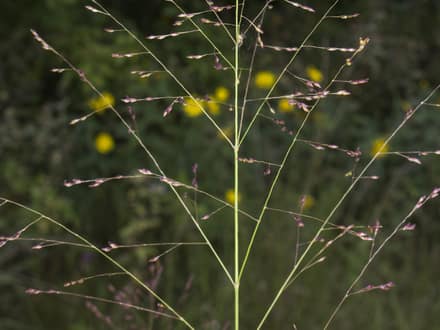
Switchgrass
Panicum virgatum
An upright prairie grass with airy pink-bronze seed clouds and gold fall color.
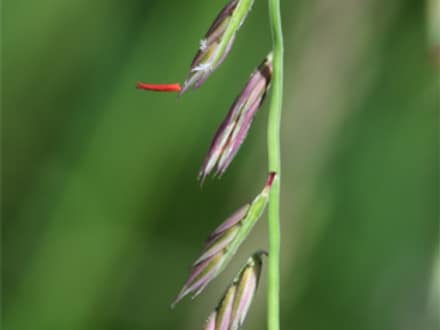
Sideoats Grama
Bouteloua curtipendula
The state grass of Texas, hanging its tiny oat-like seeds along one side of each stem, tinged with orange-red pollen.
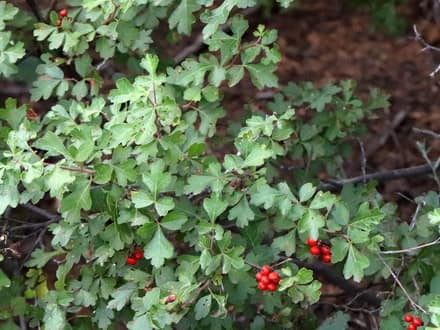
Fragrant Sumac
Rhus aromatica
A low, spreading shrub that blazes orange-red in fall and holds slopes with its suckering roots.
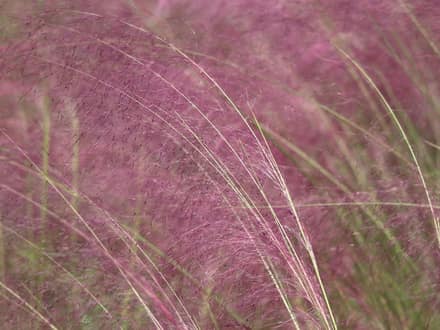
Gulf Muhly
Muhlenbergia capillaris
For a few weeks each fall this clump grass erupts into a cloud of glowing pink — the most spectacular native ornamental grass for the South..
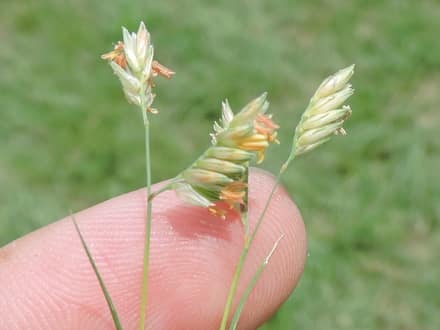
Buffalograss
Bouteloua dactyloides
North America's true native turf grass — a fine, soft, blue-green sod that forms a low lawn on a fraction of the water Bermuda or St.
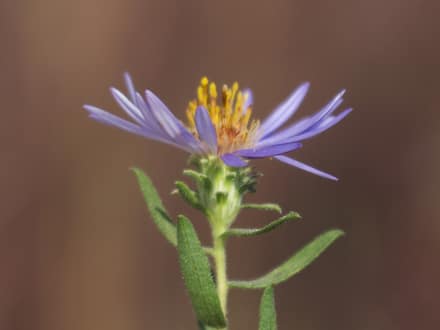
Fall Aster
Symphyotrichum oblongifolium
A mounding aster that vanishes into the background all summer, then bursts into a haze of blue-purple daisies in October — a lifeline of late nectar for pollinators..