Texas · Native Grasses
Native Grasses of Texas
Updated 2026-09-11
"Native grass" covers two very different jobs in a Texas yard. One is a true lawn grass you mow and walk on. The other is an ornamental clump grass grown for texture, movement, and fall color rather than foot traffic. All seven species on this page are native to Texas and need far less irrigation than a St. Augustine or Bermuda lawn, but only two of them are built to be mowed like a lawn. The rest are structural plants for beds, borders, and meadow plantings.
7 plants
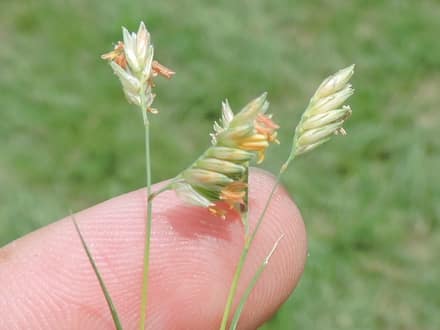
Buffalograss
Bouteloua dactyloides
North America's true native turf grass — a fine, soft, blue-green sod that forms a low lawn on a fraction of the water Bermuda or St.
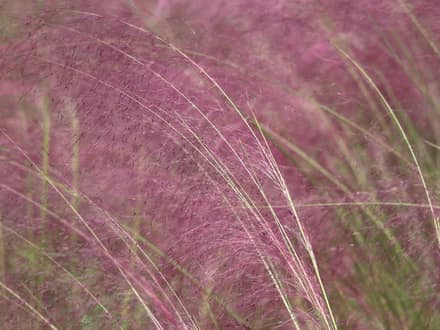
Gulf Muhly
Muhlenbergia capillaris
For a few weeks each fall this clump grass erupts into a cloud of glowing pink — the most spectacular native ornamental grass for the South..
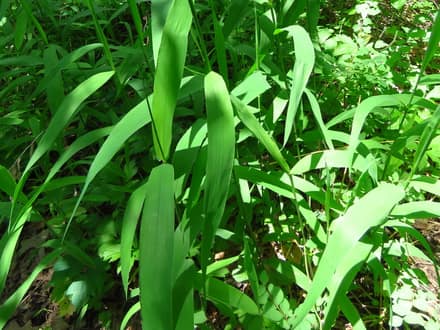
Inland Sea Oats
Chasmanthium latifolium
The rare ornamental grass that thrives in shade, dangling flat, papery seed heads that shift from green to bronze and rustle all winter.
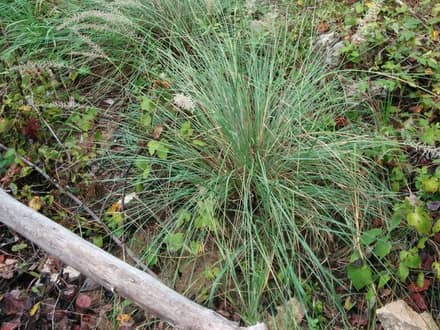
Lindheimer's Muhly
Muhlenbergia lindheimeri
A big, fountain-shaped clump grass topped with silver-blond plumes in fall.
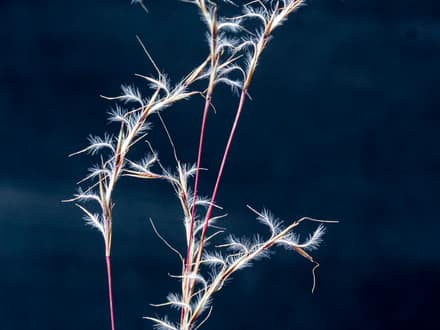
Little Bluestem
Schizachyrium scoparium
The backbone grass of the American prairie, turning coppery-mahogany in fall and silver-tufted in winter.
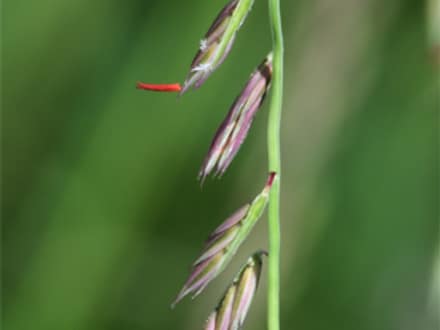
Sideoats Grama
Bouteloua curtipendula
The state grass of Texas, hanging its tiny oat-like seeds along one side of each stem, tinged with orange-red pollen.
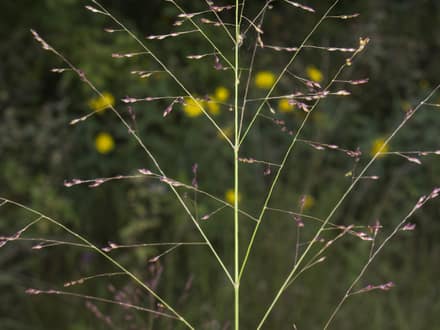
Switchgrass
Panicum virgatum
An upright prairie grass with airy pink-bronze seed clouds and gold fall color.
Turf grass or ornamental grass?
Buffalograss is the only widely planted turf species that's actually native to the Great Plains, and it's built to run on rain alone once it's rooted in, needing only a small share of what Bermuda or St. Augustine drink over a season. Keep it short with regular mowing for a conventional lawn look, or let the blades grow out for a looser, silvery texture; either way it browns off during a hard freeze or a long dry spell and comes back green on its own once conditions improve.
Sideoats grama earns its place as the official state grass mostly as a meadow and slope-stabilizing species, but it stands up to mowing well enough to double as a lawn on the thin, rocky ground where a conventional turf grass would struggle. Left unmowed, it flowers into small seed clusters that all point toward one side of the stem, an odd, distinctive look that's easy to miss if the patch is kept cut short.
The other five species on this list, gulf muhly, inland sea oats, lindheimer's muhly, little bluestem, and switchgrass, are ornamental clump grasses. They aren't meant for foot traffic or regular mowing. Instead they're planted for shape, seasonal color, and the way they move in wind, the same role a shrub or perennial plays in a bed. Most of them save their real show for fall: gulf muhly and lindheimer's muhly both bloom September through November, gulf muhly in a pink haze and lindheimer's muhly in silver-blond plumes, while little bluestem turns coppery-mahogany around the same months. Switchgrass and inland sea oats bloom a little earlier, in mid to late summer, and carry their seed heads into fall and winter instead.
Using ornamental grasses in the garden
Clump grasses read best in groups rather than as single specimens; a lone little bluestem or gulf muhly gets lost, but three or five planted together give the mass of color and movement the species is actually known for. Leave the seed heads and foliage standing through winter instead of cutting back in fall. It's the main season these grasses earn their keep visually, and switchgrass and little bluestem seed heads also feed birds well into the cold months. Trim it all down close to the soil once winter is nearly over, right before new growth starts, and skip fertilizer entirely; every species here is built for poor, unimproved soil and gets floppy and thin-stemmed in rich ground.
Compare the seven species
A quick side-by-side of height, light, and water needs for all seven natives on this page.
Which native grass for which part of Texas
Central Texas and the Hill Country run on shallow, rocky, limestone soil, and two grasses on this list are built for exactly that ground: lindheimer's muhly and sideoats grama both list limestone explicitly among the soils they tolerate, and both hold up on slopes and caliche where little else establishes. Buffalograss and little bluestem handle the region's clay just as well.
Inland sea oats is the one grass here that actually wants shade, which makes it the pick for the wooded parts of the Hill Country and the piney woods of East Texas, where turf grasses thin out under tree canopy; it also does well in that region's sandier soil. Switchgrass tolerates the same sandy East Texas ground as well as clay, and both it and gulf muhly take the occasional wet spell better than the others, which suits the Gulf Coast and other areas that see periodic standing water.
Erosion control and meadow plantings
All seven grasses on this page are deep-rooted enough to be listed for erosion control, which makes this whole group worth considering for a slope, a swale, or any bare ground that washes out in a heavy rain. Sideoats grama, little bluestem, and switchgrass are also the three most commonly used as matrix species in native meadow plantings, the mix of grasses and wildflowers that fills in as a low-maintenance alternative to a bed or a mowed lawn. Once established, none of them need the soil amendment or irrigation a meadow of non-native species would require to hold together.
Getting a new grass planting established
Fall is the better planting window for nearly all of these species, buffalograss being the main exception since it's a warm-season grass and typically goes in during spring once soil has warmed. Fall planting gives roots the cooler months to establish before facing a Texas summer, the same reason it's the recommended timing for replacing a lawn outright. Seed is the cheapest way to start any of the seven, but it takes a full season or more to fill in; plugs or containers cost more up front and establish faster, which matters more for a lawn grass people want to walk on sooner. Whichever method is used, water lightly and consistently through germination and the first growing season. Once a planting is established, typically by the following year, all seven species need little to no supplemental water beyond normal rainfall.
Replacing Bermuda or St. Augustine with a native grass
Swapping an existing lawn for buffalograss or sideoats grama follows the same process as replacing it with any other native: kill the old turf, then plant into cleared ground. The full step-by-step, including timing and how to smother grass without herbicide, is in the [lawn replacement guide](/guides/how-to-replace-your-lawn-texas). The [lawn replacement calculator](/tools/lawn-calculator) estimates the water, mowing time, and money a given square footage will save once it's converted.
| Plant | Height | Sun | Water |
|---|---|---|---|
| Buffalograss | 0.3–0.8 ft | full-sun | low |
| Sideoats Grama | 1.5–3 ft | full-sun | low |
| Gulf Muhly | 2–3 ft | full-sun, part-shade | low |
| Inland Sea Oats | 2–4 ft | part-shade, shade | medium |
| Little Bluestem | 2–4 ft | full-sun | low |
| Lindheimer's Muhly | 3–5 ft | full-sun, part-shade | low |
| Switchgrass | 3–6 ft | full-sun, part-shade | medium |
FAQ
What grass is native to Texas?
Several species are, including buffalograss, sideoats grama, little bluestem, switchgrass, gulf muhly, lindheimer's muhly, and inland sea oats. Of these, only buffalograss and sideoats grama are typically grown as mowed lawn grass; the rest are ornamental clump grasses.
What is the state grass of Texas?
Sideoats grama (Bouteloua curtipendula), designated the official state grass in 1971.
Is buffalograss native to Texas?
Yes. Buffalograss is native across Texas and much of the Great Plains, and it's the only widely available true native turf grass for a Texas lawn.
Do native Texas grasses need fertilizer?
No. All seven species on this page are adapted to poor, unimproved soil and establish and perform better without regular feeding; fertilizer tends to make them floppy and encourages the weeds they'd otherwise outcompete.
When should I cut back native ornamental grasses?
Late winter, just before new growth starts. Cutting earlier throws away the fall and winter show these grasses are usually planted for, including seed heads that feed birds through the cold months.