Grass · Deer-resistant
Sideoats Grama
Bouteloua curtipendula
Also called: Sideoats
Updated 2026-09-23
The state grass of Texas, hanging its tiny oat-like seeds along one side of each stem, tinged with orange-red pollen. A host for several skipper butterflies.
Sideoats grama holds the honor of official state grass of Texas, and it earns the title honestly: a tough, adaptable bunch grass that anchors native meadows from the Panhandle down through the Hill Country. Its tiny seed pods hang along just one side of each stem, tinged with orange-red, which is where both the common name and a good bit of its charm come from.
Growing & care
A backbone species for native meadows and low-water lawns. Cut back in late winter. Thrives on poor, rocky ground with no help.
Where sideoats grama grows in Texas
The Native Plant Society of Texas documents it across the High Plains, Edwards Plateau, Cross Timbers, Blackland Prairies and Gulf Coast Prairies, often as a dominant or co-dominant grass in the drier parts of that range. It grows in prairies, dry sandy hills, limestone outcrops, rocky slopes, woodlands and forest openings, tolerating clay, limestone, loam or sandy soil.
How to plant sideoats grama
Start from seed or divisions in spring or fall, in full sun to part shade. It's genuinely easy from seed, which is part of why it's such a common backbone species in native meadow mixes.
Watering sideoats grama the first year
It needs very little help getting started and even less afterward; this is a grass built to handle poor, rocky ground with essentially no assistance. Keep new seedlings from drying out completely in their first few weeks, and that's about the extent of it.
Sideoats Grama care through the seasons
Cut it back in late winter before new growth starts, which keeps the stand tidy and encourages fresh spring growth. Beyond that yearly cutback, it asks for nothing.
Common sideoats grama problems
It has few real problems on the lean, rocky ground it's built for; richer soil or too much shade are the main things that can make it perform poorly. It's not a grass that struggles with pests or disease in a typical Texas landscape.
Wildlife value of sideoats grama
It's a larval host for the dotted skipper, green skipper, range caterpillar moth and veined ctenucha, and its June-through-November bloom draws bees, butterflies and moths for nectar and pollen.
Using sideoats grama in the garden
Use it as the backbone of a native meadow or low-water lawn alternative, or along a slope for erosion control where its bunching habit helps hold soil in place. It also works well mixed with wildflowers in a naturalized planting.
Sideoats Grama FAQ
Is sideoats grama really the state grass of Texas?
Yes, it holds that official designation. It's valued for how widely adapted it is across the state and how little care it needs once established.
How do I care for sideoats grama through the year?
Cut it back once in late winter before new growth starts, and otherwise leave it alone. It's built to thrive on poor, rocky soil without fertilizer or supplemental water.
What butterflies and moths use sideoats grama as a host plant?
It hosts the dotted skipper, green skipper, range caterpillar moth and veined ctenucha, making it a solid choice for a meadow planting focused on supporting the full butterfly and moth life cycle, not just adult nectar feeding.
Bloom season
In bloom: Jun–Aug · Colors: purple, orange
Where to buy
Look for sideoats grama (Bouteloua curtipendula) at: Prairie Moon Nursery, native Texas nurseries.
Sources
Range, nomenclature, and the USDA symbol above come from the federal plant record for this species. Check it yourself:
Good for
Plant it with
Natives that pair with sideoats grama
Same conditions, same uses — species that share sideoats grama's growing requirements and belong in the same bed.
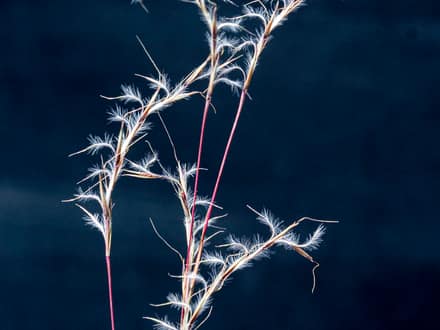
Little Bluestem
Schizachyrium scoparium
The backbone grass of the American prairie, turning coppery-mahogany in fall and silver-tufted in winter.
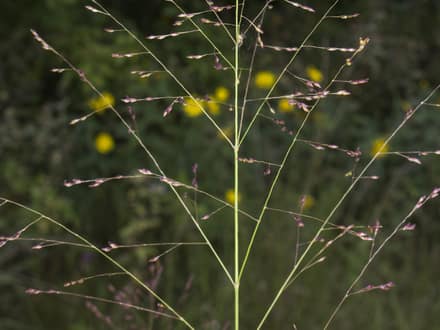
Switchgrass
Panicum virgatum
An upright prairie grass with airy pink-bronze seed clouds and gold fall color.
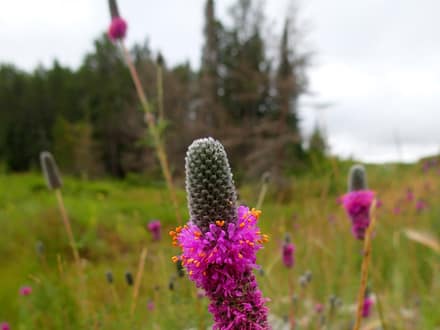
Purple Prairie Clover
Dalea purpurea
A fine-textured prairie legume with thimbles of purple bloom ringed in orange pollen.
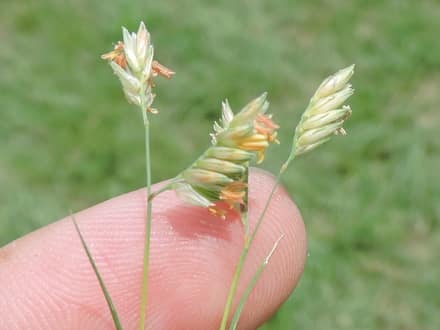
Buffalograss
Bouteloua dactyloides
North America's true native turf grass — a fine, soft, blue-green sod that forms a low lawn on a fraction of the water Bermuda or St.
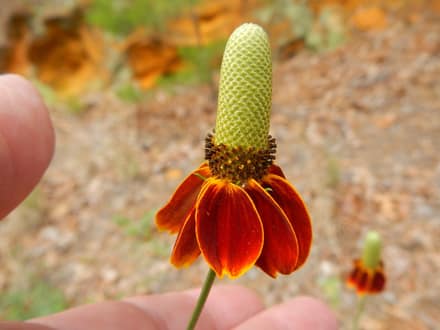
Mexican Hat
Ratibida columnifera
A whimsical prairie flower whose drooping petals form a sombrero beneath a tall central cone.
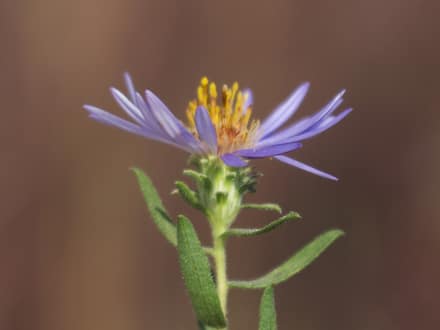
Fall Aster
Symphyotrichum oblongifolium
A mounding aster that vanishes into the background all summer, then bursts into a haze of blue-purple daisies in October — a lifeline of late nectar for pollinators..