Texas · For Shade
Native Plants for Shade in Texas
Updated 2026-09-11
This page is the full list of every plant on the site that tolerates shade in Texas, from full shrubs down to groundcovers. A separate guide covers planting advice, design combinations, and how to sort your own yard's shade into workable categories. Use this page to browse and compare the 12 species by height, sun tolerance, and water need.
12 plants
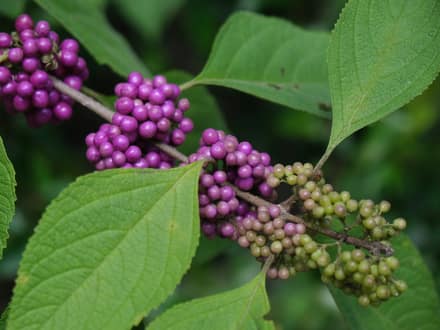
American Beautyberry
Callicarpa americana
Grown for its show-stopping clusters of electric-purple berries in fall — a feast for mockingbirds and dozens of other birds — on a graceful arching shrub..
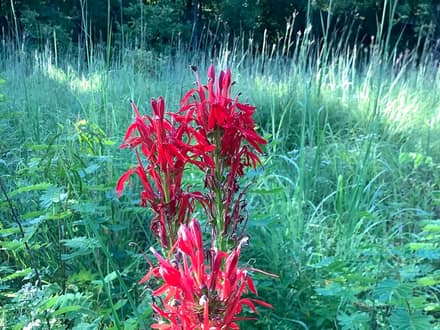
Cardinal Flower
Lobelia cardinalis
Spikes of the most intense scarlet of any native flower, rising from moist shade in late summer.
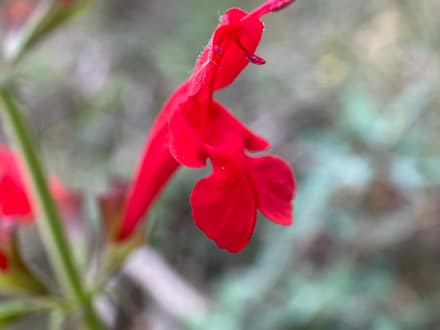
Cedar Sage
Salvia roemeriana
A little scarlet sage made for the dry shade under cedar and oak — one of the few natives that lights up those difficult spots with true red bloom..
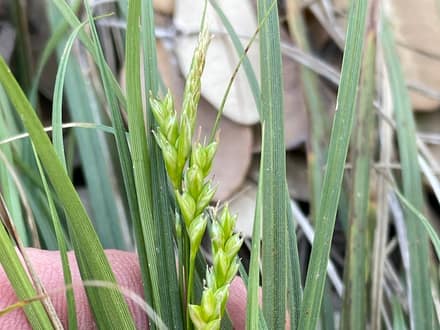
Cedar Sedge
Carex planostachys
A fine, arching native sedge that forms a soft green carpet in the dry shade beneath cedars and oaks — one of the very few things that will grow, and hold soil, there..
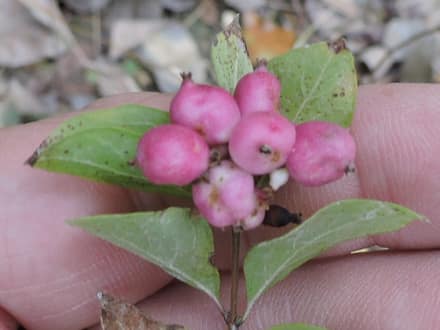
Coralberry
Symphoricarpos orbiculatus
A modest suckering shrub for shade that comes into its own in fall, when the arching branches string themselves with clusters of coral-pink berries the birds strip by spring..
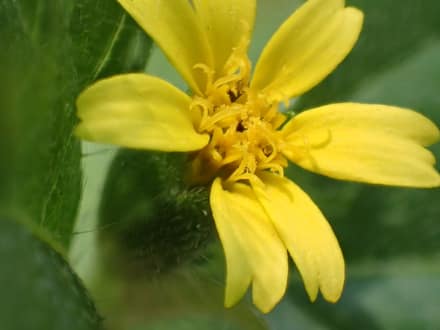
Horseherb
Calyptocarpus vialis
A soft, low groundcover that quietly replaces lawn in the shade where turf fails, threading tiny yellow flowers through its foliage for pollinators nearly year-round..
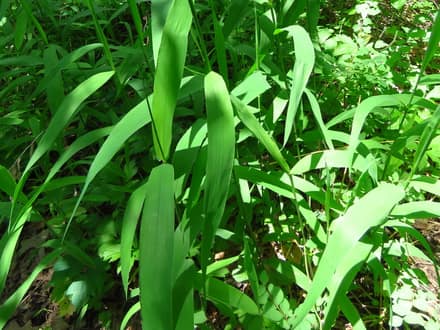
Inland Sea Oats
Chasmanthium latifolium
The rare ornamental grass that thrives in shade, dangling flat, papery seed heads that shift from green to bronze and rustle all winter.
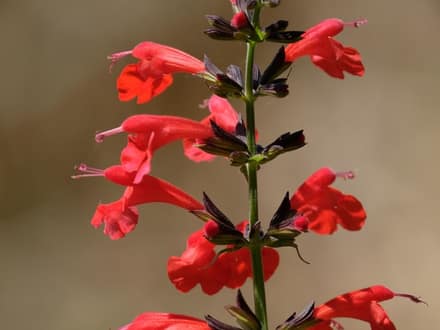
Scarlet Sage
Salvia coccinea
An easy reseeding sage that blooms scarlet from spring to frost, even in part shade — one of the few hummingbird plants that flowers reliably out of full sun..
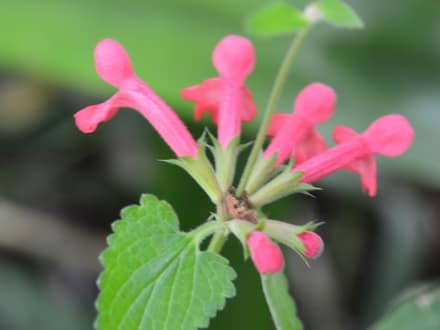
Texas Betony
Stachys coccinea
Soft mounds of felted leaves send up scarlet flower spikes for months, thriving in the part shade where few hummingbird plants will bloom..
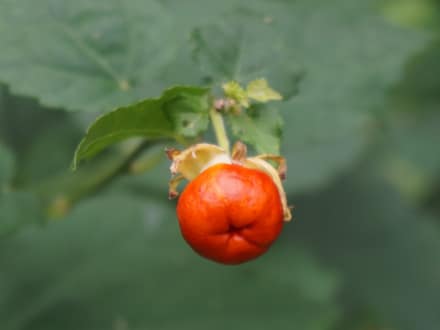
Turk's Cap
Malvaviscus arboreus var. drummondii
The go-to native for shade that still wants color.
Wax Myrtle
Morella cerifera
A fast, dense, aromatic evergreen that makes an ideal privacy screen and fixes its own nitrogen.
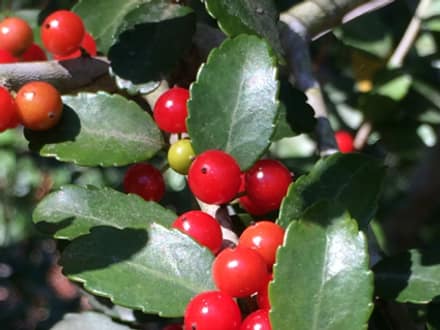
Yaupon Holly
Ilex vomitoria
An adaptable evergreen holly that takes sun or deep shade, wet or dry, and covers itself in translucent red berries that hold all winter for the birds.
Layering a shaded bed
For planting advice and design combinations, the native plants for shade in Texas guide covers that in depth; this page is the full comparison list. Shade plantings hold together better when they're built in layers rather than scattered as single specimens. Yaupon holly and wax myrtle work as the tall backbone, since both take full shade and grow well past head height. American beautyberry and coralberry fill the mid layer at four to six feet, arching over whatever's beneath them. Cedar sedge and horseherb do the groundwork, spreading low and tight enough to crowd out weeds where grass has already given up. Layering this way also means the bed keeps working if a mature tree overhead eventually comes down and the light changes.
Matching the plant to how much shade you actually have
Not every plant on this page tolerates the same amount of shade. Several, including scarlet sage, turk's cap, and texas betony, flower from part shade all the way into full shade, while others like cardinal flower and inland sea oats want at least some part-shade light and struggle in a truly dark corner. The table below sorts all 12 by height so you can match size to spot as well as light.
| Plant | Height | Sun | Water |
|---|---|---|---|
| Horseherb | 0.2–0.5 ft | part-shade, shade, full-sun | low |
| Cedar Sedge | 0.3–0.7 ft | shade, part-shade | low |
| Cedar Sage | 1–1.5 ft | part-shade, shade | low |
| Scarlet Sage | 1–3 ft | part-shade, full-sun, shade | low |
| Texas Betony | 1–2 ft | part-shade, shade, full-sun | low |
| Cardinal Flower | 2–4 ft | part-shade, full-sun | high |
| Coralberry | 2–4 ft | part-shade, shade, full-sun | low |
| Inland Sea Oats | 2–4 ft | part-shade, shade | medium |
| Turk's Cap | 2–5 ft | part-shade, shade, full-sun | medium |
| American Beautyberry | 4–6 ft | part-shade, full-sun, shade | medium |
| Wax Myrtle | 10–20 ft | full-sun, part-shade, shade | medium |
| Yaupon Holly | 10–20 ft | full-sun, part-shade, shade | low |
FAQ
What native Texas plants grow in full, deep shade?
Yaupon holly and wax myrtle both take full shade as mature shrubs, and turk's cap, scarlet sage, texas betony, and coralberry all tolerate it as well, though most bloom more with at least a little filtered light.
Can you grow flowers in a shady Texas yard?
Yes. Turk's cap, scarlet sage, cedar sage, and texas betony all flower reliably in part to full shade, which covers red and pink color from spring through fall.
Do shade-loving natives need less water than sun-loving ones?
Not automatically. Shade cuts evaporation, so a shaded bed often needs less frequent watering than the same plants in full sun, but a few of these, including cardinal flower, still want consistently moist soil regardless of light.