Perennial · Deer-resistant
Texas Betony
Stachys coccinea
Also called: Scarlet Hedgenettle
Updated 2026-09-23
Soft mounds of felted leaves send up scarlet flower spikes for months, thriving in the part shade where few hummingbird plants will bloom.
Texas betony fills a niche few other hummingbird plants can: it blooms for months in the kind of dry shade that stops most nectar plants cold. Its scarlet flower spikes rise from soft, felted mounds of foliage, resembling cedar sage or tropical sage but holding on through more shade and neglect than either of those.
Growing & care
Handles dry shade better than most nectar plants. Trim spent spikes to keep it going. Reseeds and spreads gently into a colony.
Where Texas betony grows in Texas
The Native Plant Society of Texas places its origin in the Trans-Pecos and areas further west, though it performs especially well in Hill Country gardens well outside that native footprint. It thrives in poor soil and tolerates both sun and shade, wanting rocky, loam or well-drained ground.
How to plant Texas betony
Plant container stock in spring or fall, in part shade to full shade for the best performance, though it also handles full sun. It's a strong choice for the difficult dry-shade spots where few other flowering natives will bloom.
Watering Texas betony the first year
It settles in with minimal fuss and needs only occasional water once its roots are down; this is one of the more forgiving plants on this site during its first season.
Texas Betony care through the seasons
Trim spent flower spikes to keep new ones coming through its long March-to-October bloom season. It spreads gently into a colony over time by reseeding, which can be encouraged or thinned depending on how much spread is wanted.
Common Texas betony problems
It has few real problems, tolerating dry periods, poor soil, deer browsing and general neglect about as well as any plant on this site. No fertilizer is needed, and it rarely shows the stress that other hummingbird plants do in a shady, dry spot.
Wildlife value of Texas betony
The scarlet flowers draw hummingbirds and butterflies over a long season, and deer generally leave it alone; established plants develop a pungent odor that seems to be part of what discourages browsing.
Using Texas betony in the garden
Use it as a border plant or loose groundcover under trees, in the dry shade where hummingbird plants are otherwise hard to come by. It also works as an edging plant along a shaded path.
Texas Betony FAQ
Will Texas betony grow in shade?
Yes, and it's actually one of the better hummingbird plants for shady spots specifically. It blooms reliably in part to full shade, a condition that stops most other nectar plants.
Is Texas betony deer resistant?
Yes, deer generally avoid it. Established plants develop a pungent odor that appears to be part of what keeps browsing away.
How big does Texas betony get?
One to three feet tall, but it tends to sprawl outward rather than stay upright, with branches that recline as much as they stand erect.
Bloom season
In bloom: Mar–Oct · Colors: red
Where to buy
Look for texas betony (Stachys coccinea) at: native Texas nurseries.
Guides featuring Texas betony
Sources
Range, nomenclature, and the USDA symbol above come from the federal plant record for this species. Check it yourself:
Good for
Plant it with
Natives that pair with texas betony
Same conditions, same uses — species that share texas betony's growing requirements and belong in the same bed.
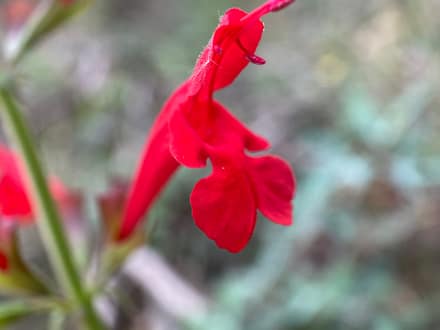
Cedar Sage
Salvia roemeriana
A little scarlet sage made for the dry shade under cedar and oak — one of the few natives that lights up those difficult spots with true red bloom..
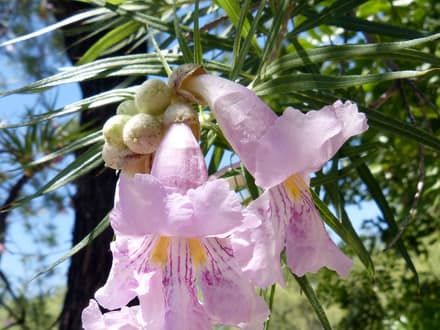
Desert Willow
Chilopsis linearis
A slender desert tree that produces orchid-like trumpet flowers all summer on almost no water.
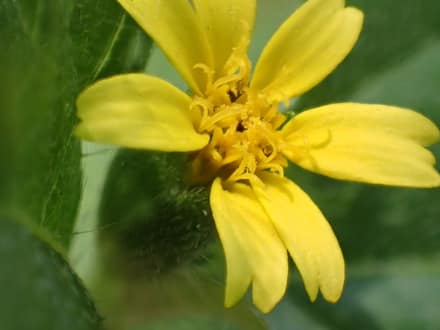
Horseherb
Calyptocarpus vialis
A soft, low groundcover that quietly replaces lawn in the shade where turf fails, threading tiny yellow flowers through its foliage for pollinators nearly year-round..
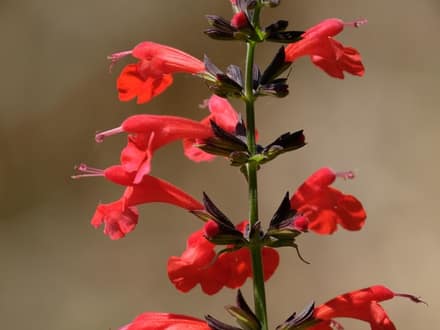
Scarlet Sage
Salvia coccinea
An easy reseeding sage that blooms scarlet from spring to frost, even in part shade — one of the few hummingbird plants that flowers reliably out of full sun..
Autumn Sage
Salvia greggii
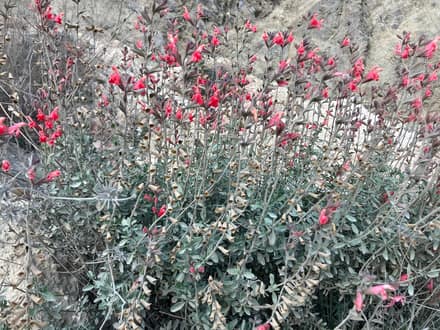
The workhorse of the water-wise Texas garden: a small evergreen shrub that blooms nearly year-round and shrugs off heat, drought, and deer..
Cedar Sedge
Carex planostachys
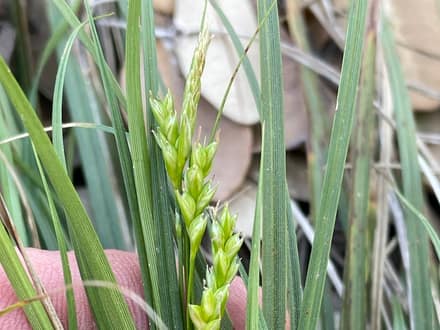
A fine, arching native sedge that forms a soft green carpet in the dry shade beneath cedars and oaks — one of the very few things that will grow, and hold soil, there..