Tree · Deer-resistant
Desert Willow
Chilopsis linearis
Also called: Flor de Mimbre
Updated 2026-09-11
A slender desert tree that produces orchid-like trumpet flowers all summer on almost no water. Hummingbirds and native bees work it constantly.
Desert willow isn't a true willow. It's in the trumpet-vine family, and the narrow, willow-shaped leaves are where the common name comes from, not any real relation to Salix. What sets it apart from most flowering trees is timing: it keeps putting out flushes of bloom straight through the hottest stretch of a Texas summer, when most trees have already finished for the year.
It does that on almost no supplemental water once established. The trade for that toughness is restraint on the gardener's part: more water or richer soil buys soft, weak growth and fewer flowers, not a better tree.
Left unpruned, it can reach 40 feet in its native range; with the regular training a garden tree gets, it typically stays in the 15-to-25-foot range that fits a home landscape.
Growing & care
Demands full sun and sharp drainage — never plant in wet clay. Blooms on new growth, so a hard late-winter prune boosts flowering. Overwatering causes weak, floppy growth.
Where it grows in Texas
Desert willow tolerates a wide range of Texas soils, from sand and loam to caliche and rock, but it needs sharp drainage in all of them. It's a poor fit for heavy clay that holds water, and it will rot in a spot that stays wet. Planted in full sun with decent drainage, it does well across most of the state; where the ground doesn't drain on its own, a raised bed or a slope solves the problem.
How to plant
Plant in full sun. The Wildflower Center's growing notes call for well-drained limestone soil as the preference, though desert willow also grows in sand, loam, caliche, and rocky ground as long as water doesn't sit. It can be started from fresh seed, dormant cuttings, or semi-hardwood cuttings taken in late summer; if collecting seed pods yourself, wait until they've dried and turned brown but pick them before they split open. It grows fast once established, so a small nursery tree catches up quickly.
Care through the seasons
Train a young tree by pruning it repeatedly through its first few years, cutting back competing stems to leave one or a few main trunks; left alone, it tends to grow as a multi-trunk thicket instead of a small single-trunk tree. Cut mature trees back by about a third each winter: since next season's flowers form on the growth that follows, this cutback is what keeps the tree covered in bloom instead of thinning out. Deadheading spent flower clusters through the season brings on more waves of bloom. Fertilizer isn't necessary, and letting the soil dry out between waterings, rather than watering on a fixed schedule, is what actually produces the heaviest flowering.
Common problems
Overwatering is the main way to lose a desert willow. Wildflower Center's own warning is direct: avoid excessive water and fertilizer, since prolonged saturation causes root rot. A tree planted in clay or a low spot that collects runoff is at the most risk. Aside from that, it's an easy tree: full sun and drainage largely prevent the problems that show up elsewhere.
Wildlife value
The tubular flowers are built for hummingbirds, and native bees work them too, sometimes stripping bits of the flower for nesting material. Songbirds eat the seeds from the long, bean-like pods later in the season.
Using it in the garden
Desert willow's open, airy form and constant summer bloom make it a natural specimen tree near a patio or a rain-free bed, and its narrow leaves cast light, dappled shade rather than a dense canopy. Because it thrives on so little water, it pairs well with other low-water Texas natives in a xeriscape planting rather than a lawn-adjacent bed that gets regular irrigation.
It's also deer-resistant, which matters in the Hill Country and West Texas towns where desert willow is most at home and deer pressure is heaviest.
Often confused with
Desert willow is sometimes confused with the true willows (Salix) that share its common name, but the two aren't related; a true willow wants consistently moist soil near water, the opposite of what desert willow needs. It's also occasionally mixed up with catalpa, another Bignoniaceae relative with broadly similar trumpet-shaped flowers, though catalpa has large broad leaves rather than desert willow's narrow, grass-like ones and wants far more water.
FAQ
Is desert willow actually a willow tree?
No. It's Chilopsis linearis, a member of the trumpet-vine family (Bignoniaceae), not a true willow (Salix). The name refers to its narrow, willow-shaped leaves.
Why isn't my desert willow blooming much?
The most common cause is too much water or fertilizer, which pushes leafy growth instead of flowers. Desert willow blooms best when it's allowed to dry out between waterings and gets full sun.
When should I prune desert willow?
Prune young trees repeatedly in their first few years to establish a single or minimal trunk, then do a winter cutback of about a third each year on mature trees, since flowers form on new growth.
How fast does desert willow grow?
It's a fast grower for a small tree, commonly reaching flowering size within a few years from a nursery pot.
Bloom season
In bloom: May–Sep · Colors: pink, purple, white
Where to buy
Look for desert willow (Chilopsis linearis) at: native Texas nurseries, local garden centers.
Sources
Range, nomenclature, and the USDA symbol above come from the federal plant record for this species. Check it yourself:
Good for
Plant it with
Natives that pair with desert willow
Same conditions, same uses — species that share desert willow's growing requirements and belong in the same bed.
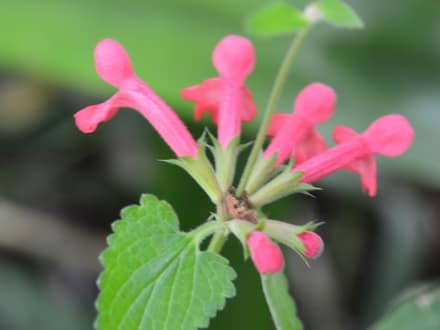
Texas Betony
Stachys coccinea
Soft mounds of felted leaves send up scarlet flower spikes for months, thriving in the part shade where few hummingbird plants will bloom..
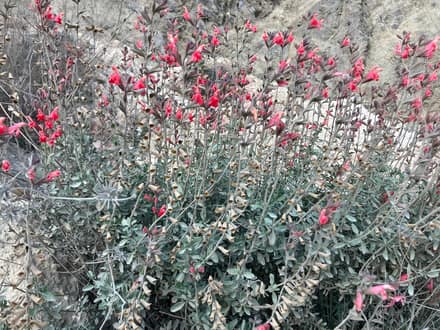
Autumn Sage
Salvia greggii
The workhorse of the water-wise Texas garden: a small evergreen shrub that blooms nearly year-round and shrugs off heat, drought, and deer..
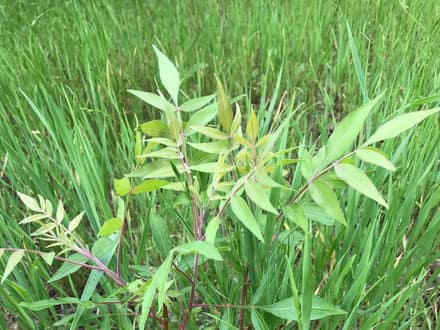
Flameleaf Sumac
Rhus lanceolata
A small native tree grown for the best red-orange fall color in central Texas, plus summer flower panicles for bees and red berry clusters that feed birds into winter..
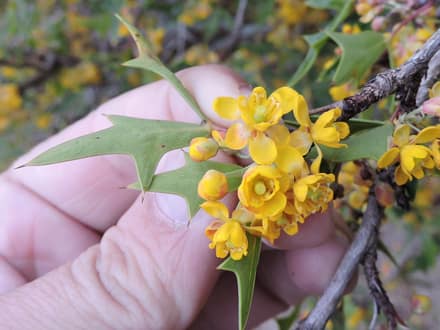
Agarita
Berberis trifoliolata
A spiny blue-grey evergreen that bees swarm in late winter and birds nest inside for protection.
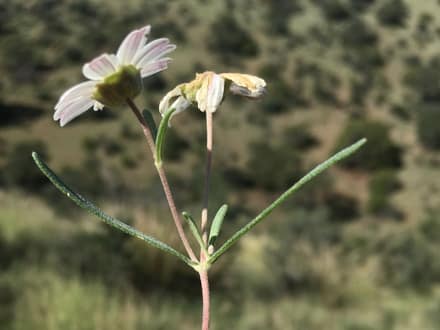
Blackfoot Daisy
Melampodium leucanthum
A tidy mound smothered in honey-scented white daisies for most of the year.
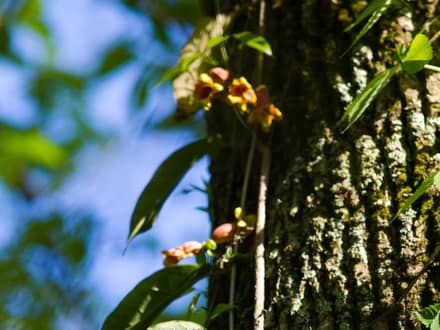
Crossvine
Bignonia capreolata
A vigorous semi-evergreen climber that covers a fence or arbor in orange-red trumpets in early spring — timed for the first returning hummingbirds.