Texas · Native Trees
Native Trees of Texas
Updated 2026-09-11
The ten species on this page split into two clearly different jobs. Cedar elm and escarpment live oak are true shade trees, capable of reaching 30 to 70 feet and anchoring a yard for decades. The rest are smaller, in the 10-to-25-foot range, and earn their place for spring flowers, fall color, or winter berries rather than for shade. Nearly all of them get by on low water once established, the same advantage that runs through every category on this site.
10 plants
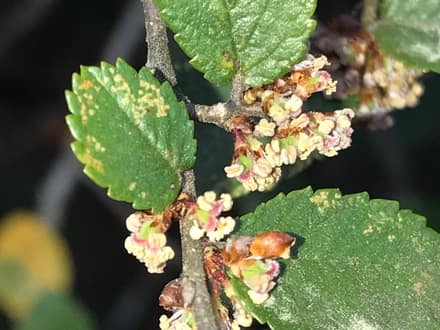
Cedar Elm
Ulmus crassifolia
The toughest large shade tree for central Texas — takes heavy clay, drought, and heat, then turns gold in fall.
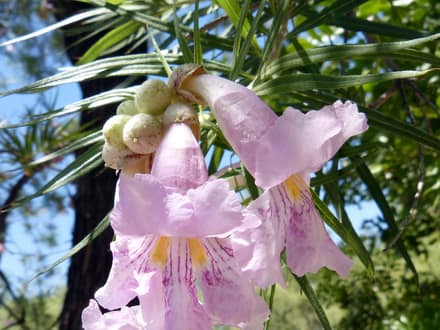
Desert Willow
Chilopsis linearis
A slender desert tree that produces orchid-like trumpet flowers all summer on almost no water.
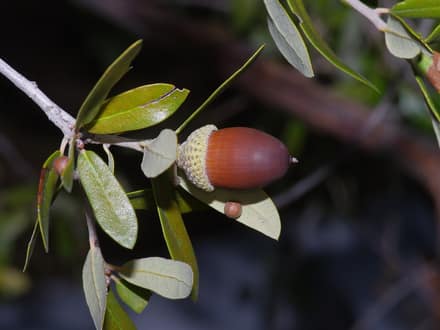
Escarpment Live Oak
Quercus fusiformis
The iconic sprawling evergreen oak of the Hill Country, holding its leaves through winter and dropping acorns that feed everything from jays to deer..
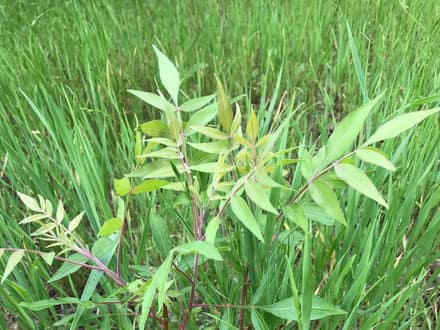
Flameleaf Sumac
Rhus lanceolata
A small native tree grown for the best red-orange fall color in central Texas, plus summer flower panicles for bees and red berry clusters that feed birds into winter..
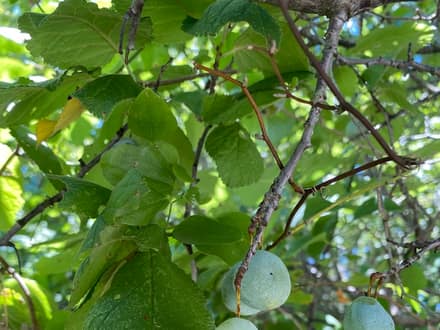
Mexican Plum
Prunus mexicana
A single-trunked native plum that clouds itself in fragrant white blossom in late winter — one of the earliest nectar sources of the year — then sets small plums the wildlife take..
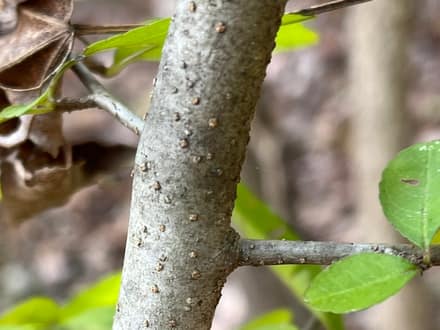
Possumhaw Holly
Ilex decidua
Drops its leaves in fall to reveal branches packed with scarlet berries that glow through winter and feed cedar waxwings and robins in late season..
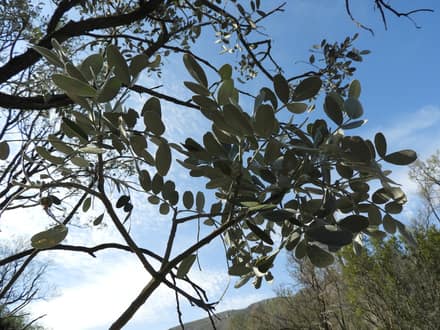
Texas Mountain Laurel
Dermatophyllum secundiflorum
A slow-growing evergreen with glossy leaves and drooping clusters of purple flowers that smell exactly like grape soda each spring.
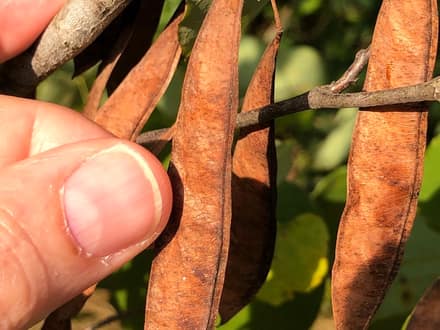
Texas Redbud
Cercis canadensis var. texensis
A small understory tree that lines its bare branches with magenta pea-flowers before the leaves appear — the classic first sign of a Texas spring.
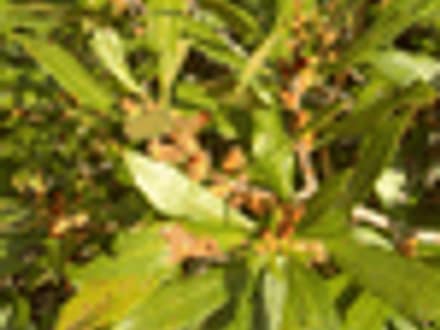
Wax Myrtle
Morella cerifera
A fast, dense, aromatic evergreen that makes an ideal privacy screen and fixes its own nitrogen.
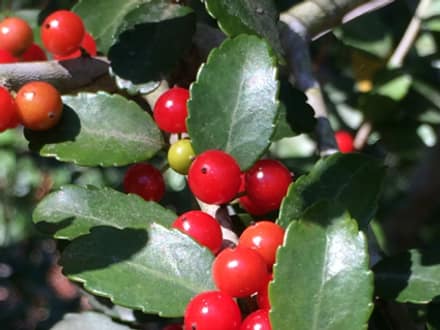
Yaupon Holly
Ilex vomitoria
An adaptable evergreen holly that takes sun or deep shade, wet or dry, and covers itself in translucent red berries that hold all winter for the birds.
Shade trees vs. flowering understory trees
Cedar elm and escarpment live oak are the two on this list built to grow large and cast real shade, both reaching well past 30 feet and tolerating the region's clay soil without complaint. Escarpment live oak keeps that canopy year-round, since it barely loses a leaf over winter, while cedar elm sheds and puts on a yellow display each fall instead. The remaining eight trees stay smaller, generally under 25 feet, and are planted more for a specific seasonal moment than for shade: mexican plum opens its fragrant white flowers before almost anything else in late winter, texas redbud follows a few weeks later with a haze of magenta and pink blossom on otherwise bare branches, desert willow keeps flowering for most of the summer on very little water, and flameleaf sumac saves its display for fall, when its foliage turns some of the strongest red and orange in the region.
Evergreen options and shade tolerance
Most of the natives on this page drop their leaves for winter, but four hold them year-round: escarpment live oak, texas mountain laurel, wax myrtle, and yaupon holly. The last two are also the most shade-tolerant trees on the list, both taking part shade to full shade where the others want full sun to part shade, which makes them the better choice for planting under an existing canopy rather than in an open yard.
FAQ
What's a good native shade tree for Central Texas?
Cedar elm and escarpment live oak are the two true shade trees on this list, both able to handle clay soil, heat, and drought once established.
What native Texas tree blooms first in spring?
Mexican plum, typically in February or March, ahead of texas redbud, which usually follows in March or April.
Can any native Texas trees grow in shade?
Yaupon holly and wax myrtle both tolerate part shade to full shade. The rest of the trees on this list want full sun to part shade and won't perform well under a dense canopy.