Shrub · Deer-resistant
Yaupon Holly
Ilex vomitoria
Also called: Yaupon
Updated 2026-09-23
An adaptable evergreen holly that takes sun or deep shade, wet or dry, and covers itself in translucent red berries that hold all winter for the birds. Its leaves brew North America's only native caffeinated tea.
Yaupon holly is one of the most adaptable evergreens a Texas garden can grow, equally at home in full sun or deep shade, dry ground or fairly wet. Female plants cover themselves in bright red berries that hold through winter for the birds, and the leaves happen to be North America's only native source of caffeine, a fact most people planting it as a hedge never learn.
Growing & care
Female plants bear the berries — buy in fruit to be sure. Shears well into a hedge or limbs up into a small tree. Tolerates almost any condition.
Where yaupon holly grows in Texas
It's native from southern Virginia south to Florida and west to southeast Oklahoma and central Texas, thriving in coastal areas and well-drained sandy soil while adapting to most other soil types too. It tolerates clay, sandy, loam or well-drained soil across a wide range of moisture, from dry to fairly wet.
How to plant yaupon holly
Plant container stock in fall or winter, in sun, part shade, or full shade; it's one of the few substantial evergreens that genuinely performs in all three. A young plant gives no outward sign of whether it will ever set fruit, so if berries matter, look for one already showing them on the nursery shelf rather than gambling on an unfruited plant.
Watering yaupon holly the first year
Water regularly through the first year or two while it establishes. It tolerates both dry stretches and occasional wet ground once rooted in, which is part of what makes it so forgiving across different planting sites.
Yaupon Holly care through the seasons
It shears well into a formal hedge or can be limbed up into a small multi-trunk tree, so the pruning approach depends entirely on the look you want. Left alone, it takes a naturally full, rounded shape without much shaping at all.
Common yaupon holly problems
The berries are toxic if eaten in quantity, causing gastrointestinal upset, so it's worth keeping in mind around small children even though the plant itself isn't otherwise hazardous. It can also be confused with a couple of look-alikes: Ligustrum japonicum has an opposite rather than alternate leaf arrangement, and pyracantha has thorny stems and smooth-edged leaves, both useful ways to tell yaupon apart from the two.
Wildlife value of yaupon holly
The persistent red winter berries on female plants are an important food source for birds through the cold months, and the spring flowers draw bees. Historically, Native American communities used the leaves to brew a ceremonial caffeinated tea, sometimes called the black drink, as part of purification rituals, and yaupon tea has seen a modern revival as a home-grown alternative to coffee or green tea, with a cup carrying somewhere between 28 and 47 milligrams of caffeine.
Using yaupon holly in the garden
Use it as a sheared hedge, a screening shrub, or limbed up into a small evergreen tree wherever year-round structure is needed, since it tolerates nearly any light and moisture condition a yard can offer. It's also a strong choice under existing tree canopy, where its shade tolerance lets it do a job few other evergreens can handle.
Often confused with
Yaupon holly is sometimes confused with two unrelated shrubs sold at the same nurseries. Ligustrum japonicum (Japanese privet), a non-native often used for hedging, has leaves arranged in opposite pairs along the stem, while yaupon's leaves alternate. Pyracantha (firethorn) has thorny stems and smooth-edged leaves, versus yaupon's thornless stems and small serrated leaf edges. Both comparisons are useful when buying an unlabeled hedge plant or identifying one already growing on a property.
Yaupon Holly FAQ
Is yaupon holly the same plant used for yaupon tea?
Yes. Its leaves are North America's only native source of caffeine, and Native American communities historically brewed them into a ceremonial tea, sometimes called the black drink, used in purification rituals. The same leaves are behind the yaupon tea sold today as a coffee alternative.
Why doesn't my yaupon holly have any berries?
Only some plants ever set fruit, and a young, berryless nursery specimen gives no clue in advance about which kind it is. Choosing a shrub that's already carrying berries when you buy it sidesteps the guesswork entirely.
How do I tell yaupon holly apart from similar-looking shrubs?
Ligustrum japonicum has leaves arranged in opposite pairs rather than yaupon's alternate arrangement, and pyracantha has thorny stems with smooth-edged leaves instead of yaupon's small serrated ones.
Bloom season
In bloom: Mar–Apr · Colors: white
Where to buy
Look for yaupon holly (Ilex vomitoria) at: native Texas nurseries, local garden centers.
Guides featuring yaupon holly
- Native Alternatives to Common Non-Native Plants in Texas
- Native Plants for Shade and Dry Shade in Texas
Sources
Range, nomenclature, and the USDA symbol above come from the federal plant record for this species. Check it yourself:
Good for
Plant it with
Natives that pair with yaupon holly
Same conditions, same uses — species that share yaupon holly's growing requirements and belong in the same bed.
Wax Myrtle
Morella cerifera
A fast, dense, aromatic evergreen that makes an ideal privacy screen and fixes its own nitrogen.
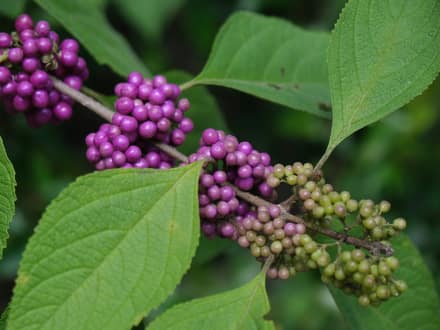
American Beautyberry
Callicarpa americana
Grown for its show-stopping clusters of electric-purple berries in fall — a feast for mockingbirds and dozens of other birds — on a graceful arching shrub..
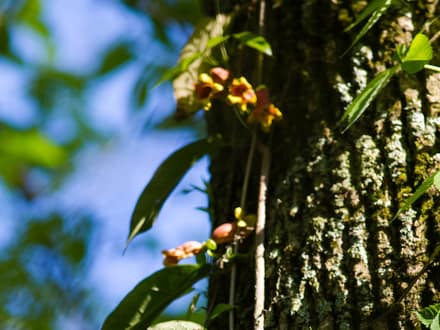
Crossvine
Bignonia capreolata
A vigorous semi-evergreen climber that covers a fence or arbor in orange-red trumpets in early spring — timed for the first returning hummingbirds.
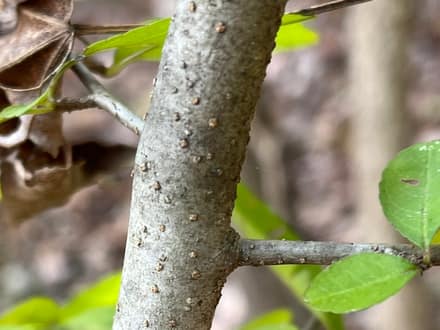
Possumhaw Holly
Ilex decidua
Drops its leaves in fall to reveal branches packed with scarlet berries that glow through winter and feed cedar waxwings and robins in late season..
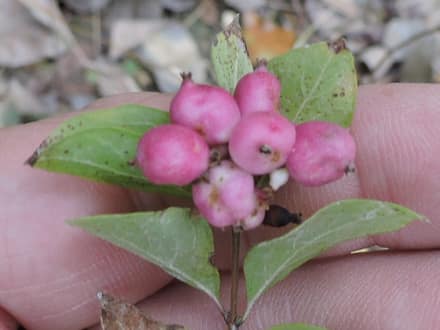
Coralberry
Symphoricarpos orbiculatus
A modest suckering shrub for shade that comes into its own in fall, when the arching branches string themselves with clusters of coral-pink berries the birds strip by spring..
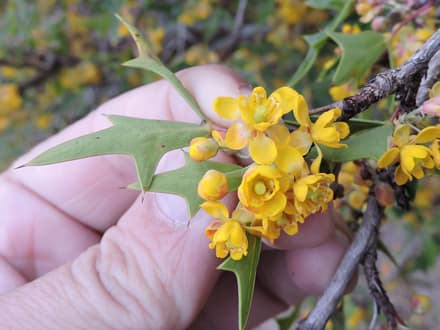
Agarita
Berberis trifoliolata
A spiny blue-grey evergreen that bees swarm in late winter and birds nest inside for protection.