Home · Texas · American Beautyberry
Shrub
American Beautyberry
Callicarpa americana
Also called: French Mulberry
Updated 2026-09-11
Grown for its show-stopping clusters of electric-purple berries in fall — a feast for mockingbirds and dozens of other birds — on a graceful arching shrub.
The berries are why anyone plants American beautyberry: dense clusters that ring the stems in an unmistakable purple right as most of the garden is fading into fall, with little else around to compete for attention. Birds strip them steadily once they ripen.
It's also one of the better native shrubs for a shadier Texas yard, tolerating conditions from full sun down to fairly deep shade as an understory plant beneath taller trees.
It's an unusual member of the mint family (Lamiaceae) by looks, since nothing about an arching, berry-covered shrub suggests mint, but the family tie shows up in the small tubular summer flowers that precede the berries.
Growing & care
Handles sun to fairly deep shade. Flowers and fruits on new wood, so cut back hard in late winter for the heaviest berry set. Even moisture gives the best fruit.
Where it grows in Texas
American beautyberry grows across the eastern half of Texas and into the Piney Woods and Gulf Coast, where rainfall is higher and soils stay more consistently moist, conditions that match its preference for moist, rich soil over the caliche and rock much of this site's other natives are built for. It is the wrong pick for a low-water xeriscape bed, but a strong one for a shadier, better-watered corner of an East or Central Texas yard.
How to plant
Part shade is its best light, though it tolerates both full sun and fairly deep shade, particularly as an understory plant beneath larger trees. It adapts to sandy, loamy, or clay soil, and prefers it moist and rich rather than lean. Unlike most natives on this site, it wants even moisture rather than drought tolerance: during a prolonged summer dry spell it may temporarily drop leaves and developing fruit, so avoid letting the soil go completely dry.
Care through the seasons
Next year's flowers and berries form on new growth, so cutting the shrub back hard, to roughly 12 inches above the ground, each year right before spring growth starts is what produces the heaviest fall berry display. Skipping that cutback still works; the plant just grows taller and looser with a lighter fruit set. Keep the soil from drying out completely through summer, since consistent moisture is what determines how good that berry crop turns out.
Common problems
The main risk is drought stress: prolonged dry spells in summer can cause the shrub to drop leaves and immature berries early, cutting into the fall display. Consistent moisture, especially during dry summer stretches, avoids this. It is not a low-water plant, so pairing it with true xeriscape natives that want to stay dry is a mismatch.
It is not deer-resistant, unlike most of the other shrubs on this site, so in a yard with heavy deer pressure it may need protection while young, particularly the tender new growth that appears after a hard winter cutback.
Wildlife value
The berries are an important late-season food source for many bird species, the Northern Bobwhite in particular, and the shrub also attracts butterflies to its early-summer flowers.
Beyond birds, the small summer flowers draw butterflies for nectar before the berries even form, so the shrub earns its keep with pollinators well before the fall display most gardeners plant it for.
Using it in the garden
Its arching form and tolerance for shade make it a natural understory or woodland-edge shrub, planted beneath larger trees where its fall berry display becomes the seasonal highlight of an otherwise quiet, shaded bed. It works well as an informal hedge or massed planting in a Central or East Texas yard with reliable moisture.
Occasionally a white-berried form turns up at native plant sales, an equally native color variant with the same growth habit and wildlife value as the more common purple-fruited form.
A mature shrub reaches 4 to 6 feet tall and wide, sizeable enough to anchor a shaded corner or a woodland-edge planting on its own rather than needing to be grouped for impact.
FAQ
Why doesn't my beautyberry have many berries?
The two usual causes are pruning at the wrong time (it fruits on new wood, so a hard cutback right before spring growth produces the heaviest crop) and drought stress during summer, which can cause it to drop developing fruit early.
Does American beautyberry need full sun?
No. It tolerates full sun to fairly deep shade and is commonly grown as an understory shrub beneath larger trees.
When should I prune American beautyberry?
Cut it back hard, to about a foot above the ground, in late winter right before new spring growth starts. It flowers and fruits on new wood, so this timing produces the fullest berry set.
Bloom season
In bloom: Jun–Aug · Colors: pink, lavender
Where to buy
Look for american beautyberry (Callicarpa americana) at: native Texas nurseries, Prairie Moon Nursery, local garden centers.
Sources
Range, nomenclature, and the USDA symbol above come from the federal plant record for this species. Check it yourself:
Good for
Plant it with
Natives that pair with american beautyberry
Same conditions, same uses — species that share american beautyberry's growing requirements and belong in the same bed.
Wax Myrtle
Morella cerifera
A fast, dense, aromatic evergreen that makes an ideal privacy screen and fixes its own nitrogen.
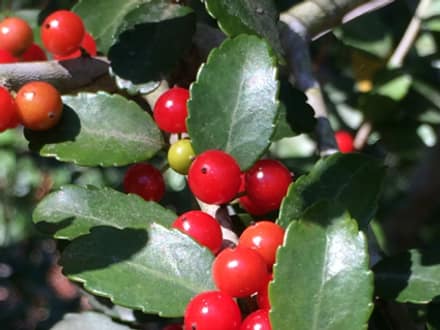
Yaupon Holly
Ilex vomitoria
An adaptable evergreen holly that takes sun or deep shade, wet or dry, and covers itself in translucent red berries that hold all winter for the birds.
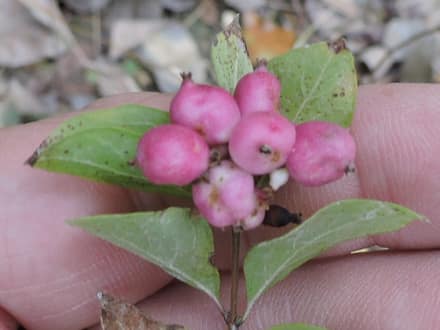
Coralberry
Symphoricarpos orbiculatus
A modest suckering shrub for shade that comes into its own in fall, when the arching branches string themselves with clusters of coral-pink berries the birds strip by spring..
Crossvine
Bignonia capreolata
A vigorous semi-evergreen climber that covers a fence or arbor in orange-red trumpets in early spring — timed for the first returning hummingbirds.
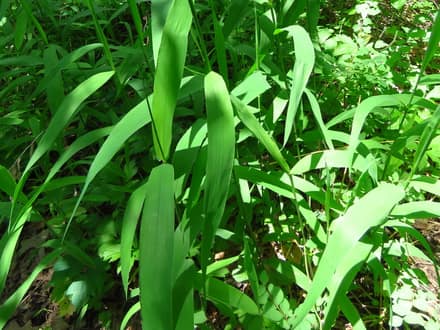
Inland Sea Oats
Chasmanthium latifolium
The rare ornamental grass that thrives in shade, dangling flat, papery seed heads that shift from green to bronze and rustle all winter.
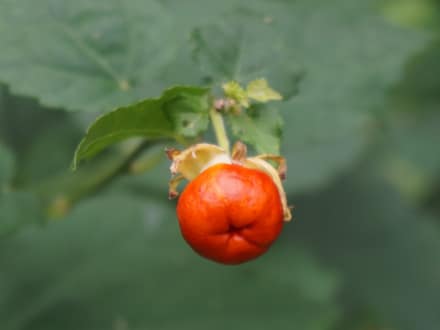
Turk's Cap
Malvaviscus arboreus var. drummondii
The go-to native for shade that still wants color.