Vine · Deer-resistant
Crossvine
Bignonia capreolata
Also called: Trumpet Flower
Updated 2026-09-23
A vigorous semi-evergreen climber that covers a fence or arbor in orange-red trumpets in early spring — timed for the first returning hummingbirds. Far better behaved than trumpet creeper.
Crossvine dresses a bare fence or arbor in trumpet-shaped red and orange blooms each spring, timed almost exactly for the first hummingbirds returning north. It climbs by tendrils with small adhesive pads rather than twining or suckering, which means it grips a flat wall or trellis about as readily as a chain-link fence, and it does the job without the aggressive spread that makes some native vines a headache to manage.
Growing & care
Climbs by tendrils; give it a fence, trellis, or wall. Holds much of its foliage in mild winters. Tough and drought tolerant once rooted.
Where crossvine grows in Texas
The Native Plant Society of Texas lists it across the East Central Texas Plains, Edwards Plateau, Western Gulf Coastal Plain, Northern Post Oak Savanna, Balcones Canyonlands and Flatwoods and Southern Tertiary Uplands, covering most of the eastern half of the state. It tolerates clay, dry, limestone, loam, moist, sandy or well-drained soil.
How to plant crossvine
Plant container stock in fall or winter next to a fence, trellis, arbor, or wall it can climb. It flowers more heavily in full sun than in shade, so give it as much direct light as the site allows, though it also tolerates part shade.
Watering crossvine the first year
Water regularly through the first year while it establishes and begins climbing. It can tolerate brief flooding but generally wants soil that drains, and once rooted in it becomes a genuinely tough, drought-tolerant vine.
Crossvine care through the seasons
Prune after the spring bloom to direct growth and keep it within bounds on its support structure, since it's a vigorous grower that will fill whatever space it's given. A mild winter leaves most of the foliage intact, with the color shifting from dark green to a reddish purple until spring growth replaces it.
Common crossvine problems
It has few serious problems, though its vigorous growth means it needs a sturdy support and occasional pruning to stay controlled on a smaller structure. It's a considerably better-behaved substitute for non-native catclaw vine or trumpet creeper, both of which spread far more aggressively.
Wildlife value of crossvine
The spring flowers are a strong hummingbird draw, timed for the birds' return migration, and they also bring in butterflies. Deer will browse the foliage as forage, which is worth knowing if deer pressure is heavy near the planting site.
Using crossvine in the garden
Use it to cover a fence, arbor, trellis, or wall where a flowering vine is wanted without the aggressive spread of trumpet creeper. It's also a strong choice for screening, since the semi-evergreen foliage holds through much of a mild Texas winter.
Crossvine FAQ
Is crossvine better than trumpet creeper for a Texas garden?
For most gardens, yes. Crossvine climbs by tendrils rather than aggressive suckering roots, covers a structure just as fully, and is considered a much better-behaved native alternative to both trumpet creeper and non-native catclaw vine.
Does crossvine stay green in winter?
It's semi-evergreen, keeping most of its leaves through a mild Texas winter rather than dropping them outright, with the color turning from dark green to a reddish purple until spring.
Do hummingbirds like crossvine?
Yes, the orange-red spring trumpet flowers are a strong hummingbird draw and are timed to coincide with the birds' return migration north.
Bloom season
In bloom: Mar–May · Colors: orange, red
Where to buy
Look for crossvine (Bignonia capreolata) at: native Texas nurseries, Prairie Moon Nursery.
Guides featuring crossvine
Sources
Range, nomenclature, and the USDA symbol above come from the federal plant record for this species. Check it yourself:
Good for
Plant it with
Natives that pair with crossvine
Same conditions, same uses — species that share crossvine's growing requirements and belong in the same bed.
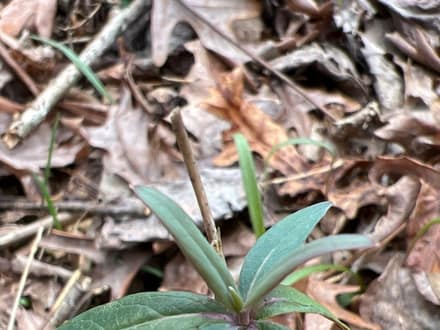
Coral Honeysuckle
Lonicera sempervirens
A well-behaved native vine — none of the invasive habit of Japanese honeysuckle — with clusters of coral trumpets that hummingbirds cannot resist..
Wax Myrtle
Morella cerifera
A fast, dense, aromatic evergreen that makes an ideal privacy screen and fixes its own nitrogen.
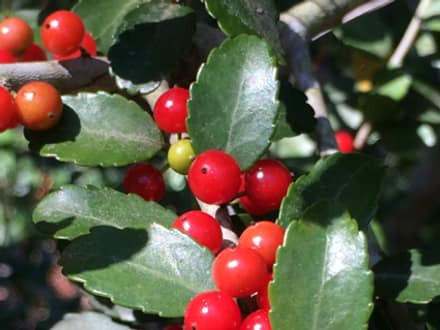
Yaupon Holly
Ilex vomitoria
An adaptable evergreen holly that takes sun or deep shade, wet or dry, and covers itself in translucent red berries that hold all winter for the birds.
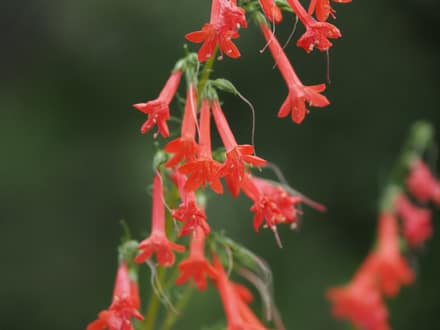
Standing Cypress
Ipomopsis rubra
A tall biennial spike of fiery red tubular flowers that hummingbirds chase up and down.
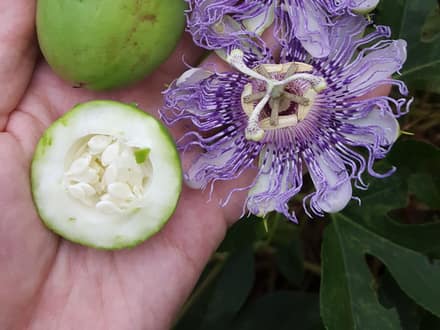
Purple Passionflower
Passiflora incarnata
An extravagant, fringed purple flower unlike anything else native, followed by egg-sized edible fruit.
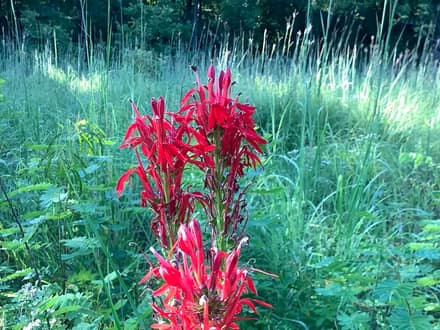
Cardinal Flower
Lobelia cardinalis
Spikes of the most intense scarlet of any native flower, rising from moist shade in late summer.