Home · Texas · Standing Cypress
Wildflower · Deer-resistant
Standing Cypress
Ipomopsis rubra
Also called: Texas Plume
Updated 2026-09-23
A tall biennial spike of fiery red tubular flowers that hummingbirds chase up and down. Ferny basal foliage the first year, a torch of bloom the second.
Standing cypress spends its first year as a modest, ferny rosette close to the ground, then surprises everyone the second year by sending up a torch of fiery red tubular flowers that hummingbirds chase from top to bottom. That two-year rhythm, a rosette then a bloom, is the single most important thing to know before planting it.
Growing & care
Sow seed on bare, sandy ground and let it reseed to keep the cycle going. Needs full sun and sharp drainage. No supplemental water once established.
Where standing cypress grows in Texas
The Native Plant Society of Texas lists it across the Central Great Plains, Cross Timbers, East Central Texas Plains, Edwards Plateau, Gulf Coast Prairies and Marshes, Texas Blackland Prairies and Western Gulf Coastal Plain. It grows in dry, sandy or rocky fields and open woods, tolerating dry, limestone, rocky or sandy soil as long as it drains well.
How to plant standing cypress
Direct sow seed on bare, sandy or rocky ground in fall, since it's a biennial that needs that first year to build a rosette before it's ready to flower. Full sun to part shade suits it best.
Watering standing cypress the first year
Beyond keeping the seedbed from drying out completely, there's little to do; it's genuinely easy to grow and asks for no supplemental water once past that first stretch.
Standing Cypress care through the seasons
Let it reseed on its own each year, and consider sowing a new batch in consecutive years so some plants are always in their second, flowering year. Without that staggered planting, a single sowing can mean a gap year with rosettes but no blooms.
Common standing cypress problems
Because it's biennial rather than a true perennial, a garden with only one age class of plants will have a year where nothing flowers; sowing seed in more than one year avoids that gap. Otherwise it's a low-problem plant on the dry, well-drained ground it wants.
Wildlife value of standing cypress
The tall red spikes are built for hummingbirds, which work their way up and down each flower stalk, and they also draw other nectar-seeking insects.
Using standing cypress in the garden
Use it toward the back of a wildflower planting or meadow where its height, 2 to 5 feet in bloom, can rise above shorter neighbors. It's especially effective repeated in a drift where staggered ages keep something blooming most years.
Standing Cypress FAQ
Why didn't my standing cypress bloom this year?
It's a biennial, spending its first year as a low rosette and blooming only in its second year. If a planting is all the same age, there can be a year with rosettes but no flowers; sowing seed across more than one year avoids that.
How do I keep standing cypress blooming every year?
Sow seed in consecutive years, or let it reseed on its own once established, so plants of different ages are always coming into their second, flowering year.
How much watering does standing cypress need?
Very little once it's up and growing. It's suited to dry, sandy or rocky ground with sharp drainage, and low to medium water covers it from there.
Bloom season
In bloom: May–Jul · Colors: red
Where to buy
Look for standing cypress (Ipomopsis rubra) at: native Texas nurseries, Eden Brothers seed.
Sources
Range, nomenclature, and the USDA symbol above come from the federal plant record for this species. Check it yourself:
Good for
Plant it with
Natives that pair with standing cypress
Same conditions, same uses — species that share standing cypress's growing requirements and belong in the same bed.
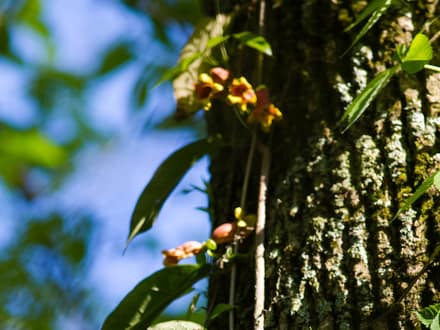
Crossvine
Bignonia capreolata
A vigorous semi-evergreen climber that covers a fence or arbor in orange-red trumpets in early spring — timed for the first returning hummingbirds.
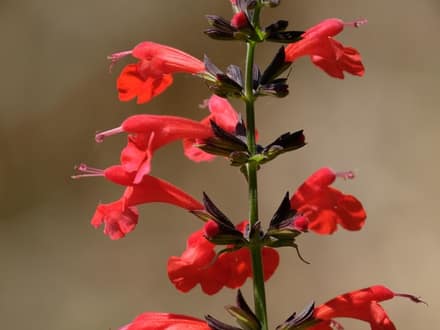
Scarlet Sage
Salvia coccinea
An easy reseeding sage that blooms scarlet from spring to frost, even in part shade — one of the few hummingbird plants that flowers reliably out of full sun..
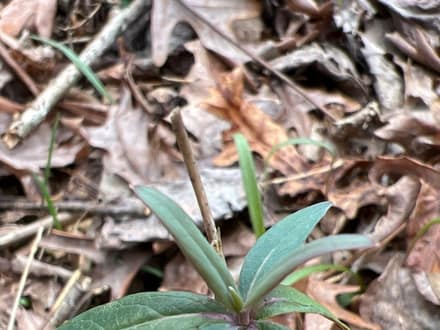
Coral Honeysuckle
Lonicera sempervirens
A well-behaved native vine — none of the invasive habit of Japanese honeysuckle — with clusters of coral trumpets that hummingbirds cannot resist..
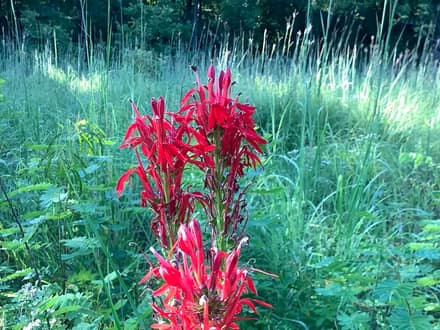
Cardinal Flower
Lobelia cardinalis
Spikes of the most intense scarlet of any native flower, rising from moist shade in late summer.
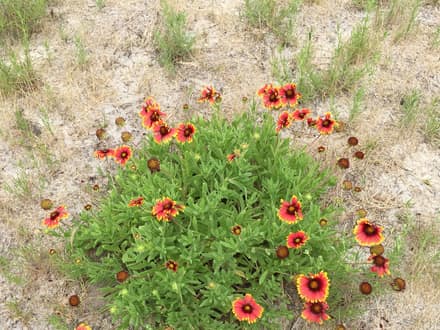
Indian Blanket
Gaillardia pulchella
The red-and-gold pinwheel daisy that blankets Texas roadsides all summer.
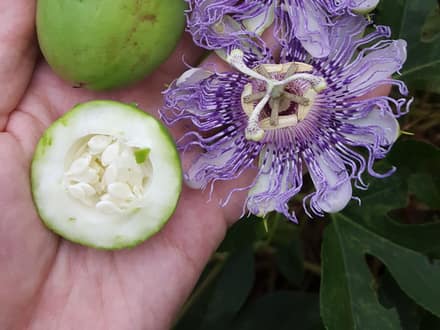
Purple Passionflower
Passiflora incarnata
An extravagant, fringed purple flower unlike anything else native, followed by egg-sized edible fruit.