Home · Texas · Cardinal Flower
Perennial · Deer-resistant
Cardinal Flower
Lobelia cardinalis
Also called: Red Lobelia
Updated 2026-09-23
Spikes of the most intense scarlet of any native flower, rising from moist shade in late summer. Its shape and color are built for hummingbirds, which pollinate it almost exclusively.
Cardinal flower carries the most intense scarlet of any Texas native, rising in tall spikes from wherever the ground stays reliably damp. It's built almost exclusively for hummingbirds, with a flower shape and color that few other pollinators bother visiting, and it's the one plant on this site that genuinely wants its feet wet.
Growing & care
The one native here that wants consistent moisture — perfect for a rain garden, pond edge, or downspout. Let it reseed, as individual plants are short-lived. Part shade in hot regions.
Where cardinal flower grows in Texas
The Native Plant Society of Texas lists it across a wide swath of the state, including the Chihuahuan Deserts, Edwards Plateau, Gulf Coast Prairies, Texas Blackland Prairies and Southwestern Tablelands. It grows naturally along ditches, ravines, stream banks, swamps, woodland edges and pond margins, and it wants clay, limestone, loam, moist, rich or sandy soil that never fully dries out.
How to plant cardinal flower
Plant container stock in fall or spring, in a spot that gets sun in cooler parts of the state but part shade to full shade further south, where summer heat is harder on it. A rain garden, pond edge, or downspout runoff area is exactly the kind of site it's built for.
Watering cardinal flower the first year
Keep the soil consistently moist while it establishes; this isn't a plant that tolerates a dry spell the way most of the site's other natives do. Once rooted in a genuinely damp site, it settles into a low-maintenance routine.
Cardinal Flower care through the seasons
Individual plants are short-lived, so let some seed drop and self-sow to keep a colony going year after year rather than expecting one planting to persist indefinitely. Deadheading isn't necessary, and the plant otherwise asks for little beyond consistent moisture.
Common cardinal flower problems
All parts of the plant are poisonous if eaten, which is worth knowing if pets or small children spend time in the garden, even though it isn't a plant most people are tempted to handle or taste. Its biggest practical risk is simply drying out; it has little tolerance for a site that isn't reliably moist.
Wildlife value of cardinal flower
Hummingbirds are its primary pollinator, drawn to both the shape and the saturated red color of the flowers, and it also draws some butterflies and other nectar-seeking birds.
Using cardinal flower in the garden
Use it at a pond edge, in a rain garden, alongside a downspout, or anywhere else that collects consistent moisture, since it's one of the few native perennials genuinely built for that kind of site. It also works in a container kept reliably watered.
Cardinal Flower FAQ
Can cardinal flower grow in a normal garden bed?
Only if that bed stays consistently moist. It's one of the few natives on this site that truly needs wet feet, and a normal dry garden bed will struggle to keep it alive.
Is cardinal flower poisonous?
Yes, all parts of the plant are poisonous if eaten. This is worth keeping in mind around pets and small children, though it isn't a plant people are typically drawn to handle or taste.
Why did my cardinal flower disappear after a couple of years?
Individual plants are naturally short-lived. Letting the seed drop and self-sow each year is the normal way a planting keeps itself going, rather than any one plant lasting indefinitely.
Bloom season
In bloom: Jul–Oct · Colors: red
Where to buy
Look for cardinal flower (Lobelia cardinalis) at: Prairie Moon Nursery, native Texas nurseries.
Guides featuring cardinal flower
Sources
Range, nomenclature, and the USDA symbol above come from the federal plant record for this species. Check it yourself:
Good for
Plant it with
Natives that pair with cardinal flower
Same conditions, same uses — species that share cardinal flower's growing requirements and belong in the same bed.
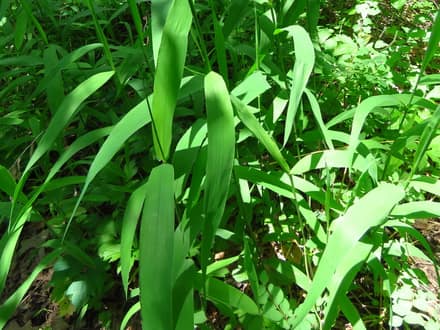
Inland Sea Oats
Chasmanthium latifolium
The rare ornamental grass that thrives in shade, dangling flat, papery seed heads that shift from green to bronze and rustle all winter.
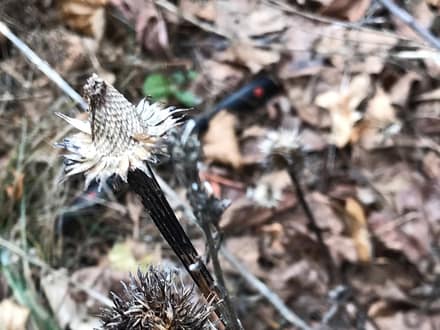
Purple Coneflower
Echinacea purpurea
A prairie staple whose big rosy daisies feed butterflies in summer and finches in winter.
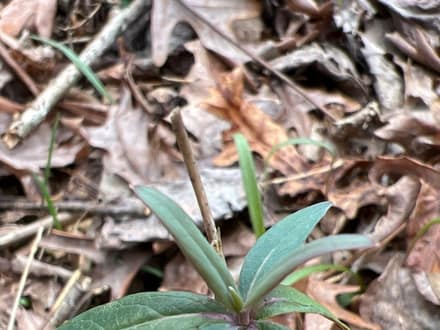
Coral Honeysuckle
Lonicera sempervirens
A well-behaved native vine — none of the invasive habit of Japanese honeysuckle — with clusters of coral trumpets that hummingbirds cannot resist..
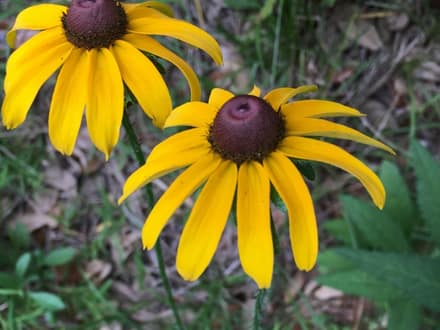
Black-eyed Susan
Rudbeckia hirta
The classic golden prairie daisy — cheerful, tough, and endlessly reseeding.
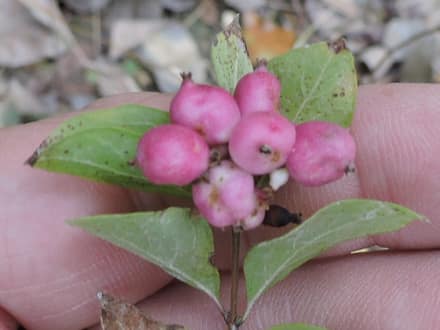
Coralberry
Symphoricarpos orbiculatus
A modest suckering shrub for shade that comes into its own in fall, when the arching branches string themselves with clusters of coral-pink berries the birds strip by spring..
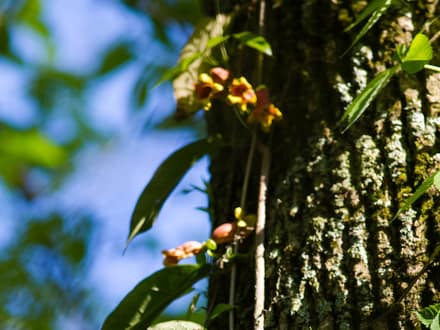
Crossvine
Bignonia capreolata
A vigorous semi-evergreen climber that covers a fence or arbor in orange-red trumpets in early spring — timed for the first returning hummingbirds.