Home · Texas · Purple Coneflower
Perennial · Deer-resistant
Purple Coneflower
Echinacea purpurea
Also called: Eastern Purple Coneflower, Echinacea
Updated 2026-09-23
A prairie staple whose big rosy daisies feed butterflies in summer and finches in winter. Long-lived, drought-tough, and beautiful in bloom or seed head.
Purple coneflower is a prairie staple across most of its range, but its actual native footprint in Texas is narrow: a small corner of the northeast part of the state, rather than statewide. That's worth knowing going in, since it explains why it performs a little differently here than the Echinacea most gardening advice describes, even though it's still a strong, long-lived garden plant once established.
Growing & care
Leave the spiky seed heads through winter for birds and structure. Divides easily every few years. Avoid soggy soil.
Where purple coneflower grows in Texas
The Native Plant Society of Texas notes its native range in Texas is limited to a small area of the northeast, though it grows well as a garden plant considerably beyond that native footprint. It tolerates clay, limestone, loam, moist, sandy or well-drained soil.
How to plant purple coneflower
Plant container stock in fall or spring, in full sun to part shade, and give it ample spacing from the start. It can be slow to get established initially, but it spreads more easily on its own once it's settled in.
Watering purple coneflower the first year
Water regularly through the first season while it establishes, since this early stage is where it's most likely to struggle. Once rooted in, it needs low to medium water and becomes considerably more self-sufficient.
Purple Coneflower care through the seasons
Deadhead if a tidier, more controlled single-plant look is wanted, or let it self-seed for a fuller mass planting over time. Divide it every few years to keep it vigorous, and avoid consistently soggy soil, which it doesn't tolerate well.
Common purple coneflower problems
Getting it established is the main early hurdle; it can be slow and somewhat finicky at first compared to some of the site's tougher, more bulletproof natives. Soggy, poorly drained soil is its other main weak point at any age.
Wildlife value of purple coneflower
The summer flowers draw bees, birds, butterflies and hummingbirds for nectar and pollen, and the spiky seed heads left standing through winter feed finches and other seed-eating birds while adding structure to the bed.
Using purple coneflower in the garden
Use it in a cutting garden, a butterfly garden, or a mixed perennial bed where its long bloom season and winter seed-head structure both earn a place. It also works well in a container.
Purple Coneflower FAQ
Is purple coneflower actually native to Texas?
Only to a small area in the northeastern part of the state. It's widely grown as a garden plant well beyond that native range, and performs well there, but its true native footprint in Texas is narrow.
Why is my purple coneflower struggling to get established?
This is a fairly common early hurdle with this plant; it can be slower and a bit more finicky to establish than many other Texas natives. Regular water through the first season and well-drained soil both help.
Should I leave purple coneflower seed heads standing in winter?
Yes, if you want to support birds. The spiky seed heads are a reliable food source for finches through winter and also add structure to the garden until you're ready to cut them back.
Bloom season
In bloom: Jun–Sep · Colors: pink, purple
Where to buy
Look for purple coneflower (Echinacea purpurea) at: Prairie Moon Nursery, Eden Brothers seed, local garden centers.
Guides featuring purple coneflower
Sources
Range, nomenclature, and the USDA symbol above come from the federal plant record for this species. Check it yourself:
Good for
Plant it with
Natives that pair with purple coneflower
Same conditions, same uses — species that share purple coneflower's growing requirements and belong in the same bed.
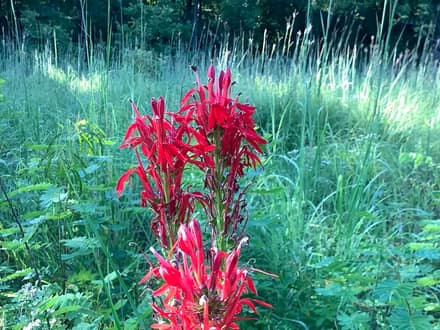
Cardinal Flower
Lobelia cardinalis
Spikes of the most intense scarlet of any native flower, rising from moist shade in late summer.
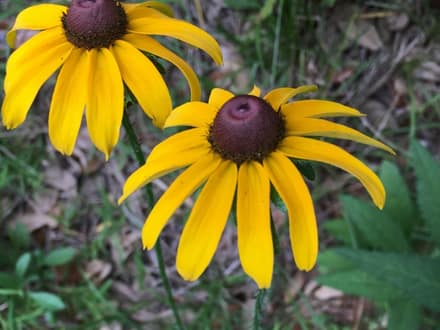
Black-eyed Susan
Rudbeckia hirta
The classic golden prairie daisy — cheerful, tough, and endlessly reseeding.
Gayfeather
Liatris mucronata
Spires of feathery purple that open top-down in fall, when Monarchs are moving through and desperate for nectar.
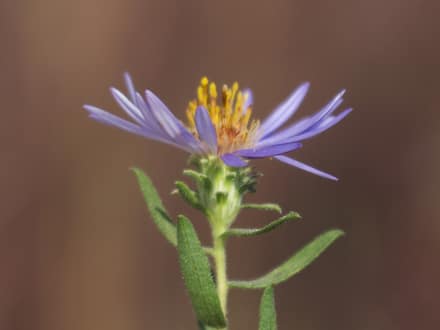
Fall Aster
Symphyotrichum oblongifolium
A mounding aster that vanishes into the background all summer, then bursts into a haze of blue-purple daisies in October — a lifeline of late nectar for pollinators..
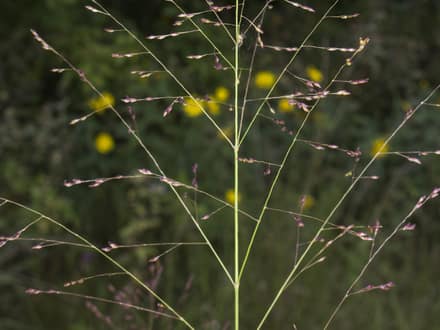
Switchgrass
Panicum virgatum
An upright prairie grass with airy pink-bronze seed clouds and gold fall color.
Coral Honeysuckle
Lonicera sempervirens
A well-behaved native vine — none of the invasive habit of Japanese honeysuckle — with clusters of coral trumpets that hummingbirds cannot resist..