Home · Texas · Coral Honeysuckle
Vine · Deer-resistant
Coral Honeysuckle
Lonicera sempervirens
Also called: Trumpet Honeysuckle, Scarlet Honeysuckle
Updated 2026-09-16
A well-behaved native vine — none of the invasive habit of Japanese honeysuckle — with clusters of coral trumpets that hummingbirds cannot resist.
Coral honeysuckle is the native honeysuckle to plant in Texas if you want hummingbirds. It carries clusters of long red trumpets, yellow inside, at the ends of its stems, starting in March, and keeps some flowers going well into summer. Hummingbirds work it constantly.
It has little in common with Japanese honeysuckle, the white and yellow import that smothers woodlands across the South. Coral honeysuckle twines politely on a trellis, does not run through the woods, and has little or no scent. It is also semi-evergreen in much of Texas, keeping some of its blue-green leaves through winter.
Growing & care
Train on a trellis, fence, or arbor. Blooms on new growth; trim after the spring flush to keep it tidy and reblooming. Not aggressive like the exotic species.
Where coral honeysuckle grows in Texas
It is native to the eastern and central parts of the state: the Cross Timbers, East Central Texas Plains, Edwards Plateau, the Blackland Prairies and the Gulf Coast, where it grows in woodland, thickets and along roadsides. It grows well in gardens across most of the state and handles cold far better than most Texas natives.
How to plant coral honeysuckle
Plant it in full sun to part shade. It blooms heaviest with at least half a day of sun, but it appreciates some afternoon shade west of I-35. Keep the root zone cool with mulch or low plants while the top climbs into the light.
It grows in caliche, clay, loam and sand. What it will not tolerate is a stagnant spot: plant where water drains and air moves, which is the main defense against powdery mildew.
The vine needs support from the start. A trellis, arbor, mailbox post or wire on a fence all work. To propagate, the Native Plant Society of Texas recommends 6-inch softwood cuttings with rooting hormone, or seed after two to three months of cold stratification at about 40°F.
Watering coral honeysuckle the first year
Unlike some of the tougher natives on this site, coral honeysuckle needs regular water to get established. Water twice a week through the first summer, then taper off. Once rooted it is fairly drought tolerant, but it flowers more and holds its leaves better with an occasional deep soak in a long dry spell.
Coral Honeysuckle care through the seasons
Tie the young stems to the support and guide them where you want them. Flowers form on new growth, so a light trim after the spring bloom tidies the vine and brings on more flowers. Take out dead or crossing stems in late winter. Older stems develop papery, peeling bark, which is normal.
Common coral honeysuckle problems
Powdery mildew is the most common issue, usually on vines in still air, heavy shade or wet soil. Improve airflow and drainage and keep the roots shaded and mulched rather than reaching for a spray. A vine that gets too little sun will also grow long bare stems with few flowers; move it or thin whatever is shading it.
Wildlife value of coral honeysuckle
Hummingbirds are the main draw, but bees, butterflies and moths also visit for nectar and pollen. The Native Plant Society of Texas lists it as a larval host for the spring azure butterfly and the snowberry clearwing, a moth that hovers like a small hummingbird. The red berries ripen from late summer into early fall and are eaten by birds.
Using coral honeysuckle in the garden
Train it up a porch post or arbor where you can watch the hummingbirds, or run it along a fence behind a pollinator bed. It also works on a tall obelisk in a large container. Combine it with Turk's cap, flame acanthus and scarlet sage for a garden that feeds hummingbirds from spring into fall.
Often confused with
Japanese honeysuckle (Lonicera japonica) has white flowers aging to yellow and a strong sweet scent, and spreads aggressively. Coral honeysuckle has red to coral tubular flowers with no real scent. If you have the invasive one, replacing it with this species gives you the same fence cover without the spread.
Coral Honeysuckle FAQ
Is coral honeysuckle invasive?
No. It is native to Texas and grows as a well-behaved climbing vine. The invasive honeysuckle in Texas is the Japanese species.
Does coral honeysuckle need full sun?
It flowers best with at least half a day of sun but grows in part shade. In West and South Texas, afternoon shade helps.
Why is my coral honeysuckle not blooming?
Usually too much shade or pruning at the wrong time. It flowers on new growth, so trim right after the spring bloom, not in early spring.
Is coral honeysuckle evergreen in Texas?
It is semi-evergreen and often keeps part of its foliage through a mild winter.
Do deer eat coral honeysuckle?
It is generally considered deer resistant.
Bloom season
In bloom: Mar–Sep · Colors: red, coral
Where to buy
Look for coral honeysuckle (Lonicera sempervirens) at: native Texas nurseries, Prairie Moon Nursery, local garden centers.
Guides featuring coral honeysuckle
- Native Alternatives to Common Non-Native Plants in Texas
- Texas Native Plant Calendar: What to Plant, Sow and Prune by Season
Sources
Range, nomenclature, and the USDA symbol above come from the federal plant record for this species. Check it yourself:
Good for
Plant it with
Natives that pair with coral honeysuckle
Same conditions, same uses — species that share coral honeysuckle's growing requirements and belong in the same bed.
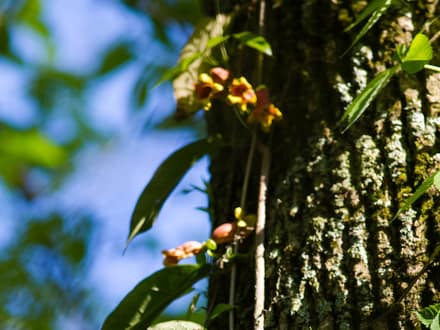
Crossvine
Bignonia capreolata
A vigorous semi-evergreen climber that covers a fence or arbor in orange-red trumpets in early spring — timed for the first returning hummingbirds.
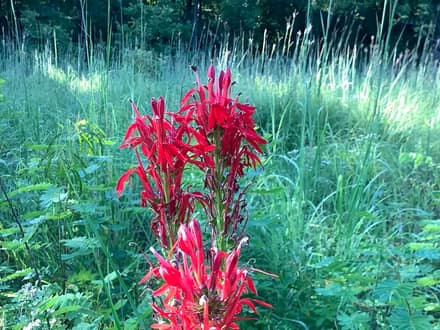
Cardinal Flower
Lobelia cardinalis
Spikes of the most intense scarlet of any native flower, rising from moist shade in late summer.
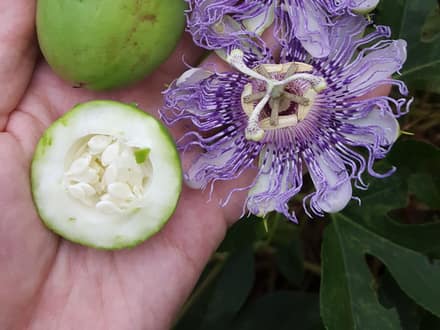
Purple Passionflower
Passiflora incarnata
An extravagant, fringed purple flower unlike anything else native, followed by egg-sized edible fruit.
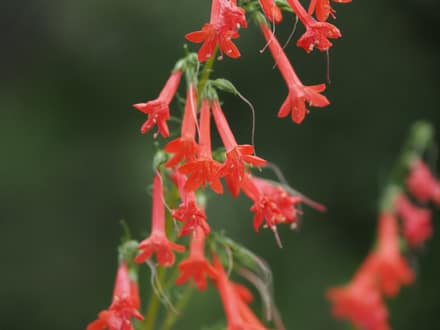
Standing Cypress
Ipomopsis rubra
A tall biennial spike of fiery red tubular flowers that hummingbirds chase up and down.
Purple Coneflower
Echinacea purpurea
A prairie staple whose big rosy daisies feed butterflies in summer and finches in winter.
Wax Myrtle
Morella cerifera
A fast, dense, aromatic evergreen that makes an ideal privacy screen and fixes its own nitrogen.