Home · Texas · For Hummingbirds
Texas · For Hummingbirds
Hummingbird Plants for Texas
Updated 2026-09-11
Ruby-throated hummingbirds pass through Texas twice a year, north in spring and south again in fall, and both migrations run on nectar. The 11 species here share the tubular red, pink, or orange flowers hummingbirds key in on, and between them they cover bloom from early spring into the first frost, which matters more for a hummingbird garden than any single spectacular bloomer would.
11 plants
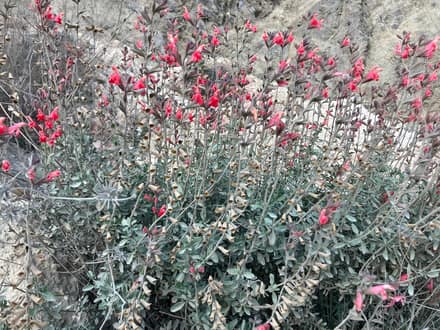
Autumn Sage
Salvia greggii
The workhorse of the water-wise Texas garden: a small evergreen shrub that blooms nearly year-round and shrugs off heat, drought, and deer..
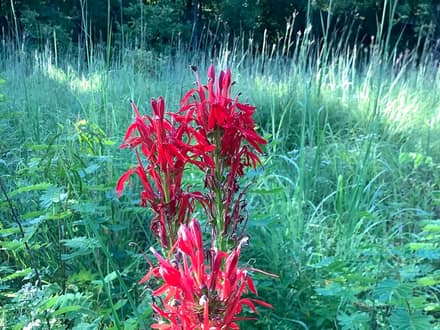
Cardinal Flower
Lobelia cardinalis
Spikes of the most intense scarlet of any native flower, rising from moist shade in late summer.
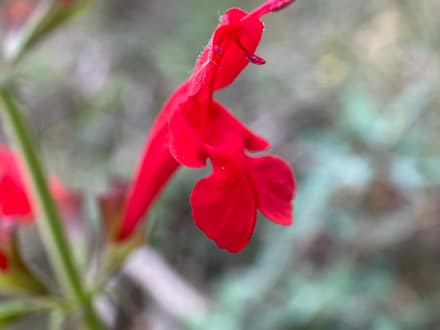
Cedar Sage
Salvia roemeriana
A little scarlet sage made for the dry shade under cedar and oak — one of the few natives that lights up those difficult spots with true red bloom..
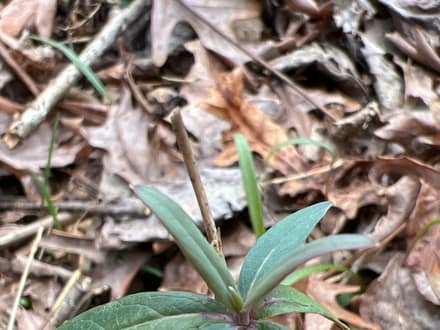
Coral Honeysuckle
Lonicera sempervirens
A well-behaved native vine — none of the invasive habit of Japanese honeysuckle — with clusters of coral trumpets that hummingbirds cannot resist..
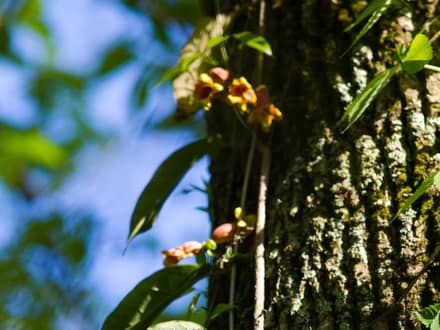
Crossvine
Bignonia capreolata
A vigorous semi-evergreen climber that covers a fence or arbor in orange-red trumpets in early spring — timed for the first returning hummingbirds.
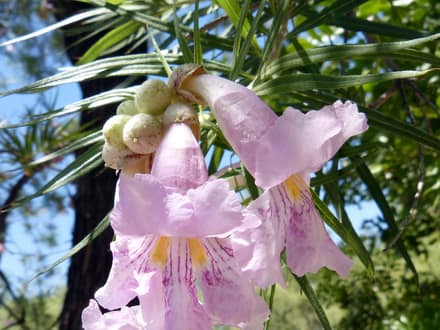
Desert Willow
Chilopsis linearis
A slender desert tree that produces orchid-like trumpet flowers all summer on almost no water.
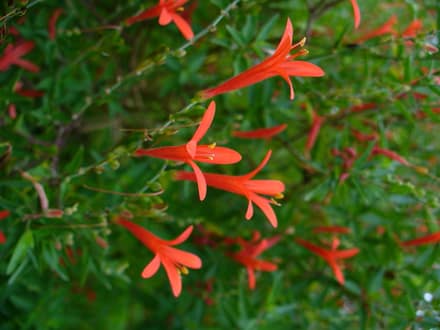
Flame Acanthus
Anisacanthus quadrifidus var. wrightii
A wispy, tough shrub that throws tubular orange-red flowers through the worst of the summer heat — exactly when hummingbirds are fueling up for migration..
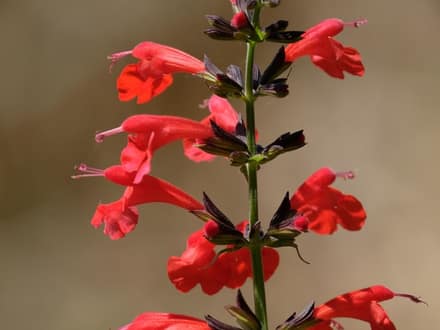
Scarlet Sage
Salvia coccinea
An easy reseeding sage that blooms scarlet from spring to frost, even in part shade — one of the few hummingbird plants that flowers reliably out of full sun..
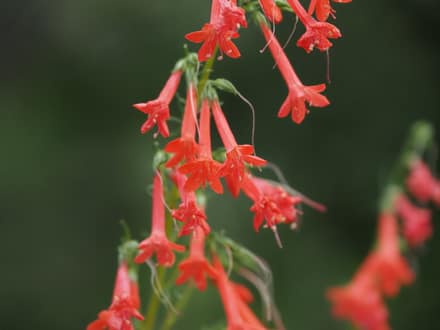
Standing Cypress
Ipomopsis rubra
A tall biennial spike of fiery red tubular flowers that hummingbirds chase up and down.
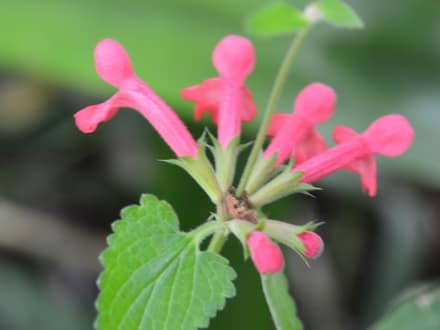
Texas Betony
Stachys coccinea
Soft mounds of felted leaves send up scarlet flower spikes for months, thriving in the part shade where few hummingbird plants will bloom..
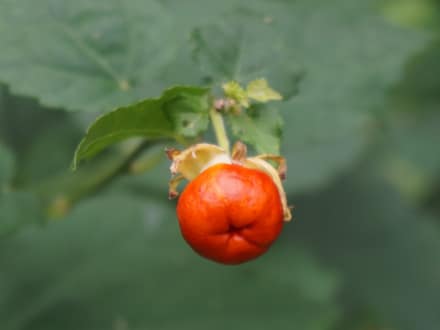
Turk's Cap
Malvaviscus arboreus var. drummondii
The go-to native for shade that still wants color.
Covering the full hummingbird season
Coral honeysuckle and crossvine open first, both flowering as early as March, ahead of most of the rest of the list and timed to greet the earliest spring migrants moving north through Texas. Autumn sage, turk's cap, and texas betony carry the middle of the season, all blooming from spring into fall on relatively little water. Flame acanthus waits until June and keeps flowering into October, which lines it up well with the fall southbound migration, when hummingbirds are feeding heavily before crossing the Gulf.
Trees, vines, shrubs, and flowers all work
This list isn't limited to one plant type. Desert willow is the one tree, blooming pink and white through summer at 15 to 25 feet. Coral honeysuckle and crossvine are vines for a fence or trellis. Autumn sage, flame acanthus, and turk's cap are shrubs that anchor a bed, and cardinal flower, cedar sage, scarlet sage, standing cypress, and texas betony are lower perennials and wildflowers for filling in around them. A hummingbird garden built from a few of each layer will feed birds longer than a bed of just one type.
FAQ
What color flowers attract hummingbirds in Texas?
Red and orange tubular flowers draw the most attention, which is why almost every plant on this page blooms in shades of red, pink, coral, or orange rather than blue or yellow.
When do hummingbirds migrate through Texas?
Ruby-throated hummingbirds move north through Texas in spring, generally March into April, and south again in fall, from around August through October, with many fueling up before an overnight crossing of the Gulf of Mexico.
What's a good hummingbird plant for part shade?
Cedar sage, scarlet sage, and texas betony all bloom in part shade to full shade, unlike most of the sun-loving plants on this list.