Shrub · Deer-resistant
Autumn Sage
Salvia greggii
Also called: Gregg's Salvia, Cherry Sage
Updated 2026-09-11
The workhorse of the water-wise Texas garden: a small evergreen shrub that blooms nearly year-round and shrugs off heat, drought, and deer.
Autumn sage keeps flowering through most of the year in Texas, cycling through flushes of red, pink, coral, or white bloom from spring into fall rather than putting on one show and stopping. It's also one of the lowest-maintenance shrubs on this site: give it sun and drainage, and it largely looks after itself.
Drainage is really the only condition it insists on. Heat, lean soil, and deer pressure it tolerates without much trouble, and hummingbirds visit it through most of that long bloom stretch.
Growing & care
Shear by a third after the spring flush to keep it dense and reblooming. Superb drainage is the only real requirement. Full sun for maximum flowers.
Where it grows in Texas
Autumn sage is native to the rocky, well-drained slopes of the Hill Country, the Edwards Plateau, and West Texas, and those same conditions (dry, rocky or sandy soil with sharp drainage) are what it wants in a garden almost anywhere in the state. It tolerates the heat of Central and South Texas without trouble; the main limiting factor is soil that stays wet, not regional climate.
How to plant
Full sun for the most flowers, though it tolerates part shade with somewhat fewer blooms. It wants dry, rocky, or sandy soil with excellent drainage, the same conditions as its native rocky-slope habitat. Start new plants from seed sown after the last frost, from 4- to 6-inch cuttings taken from healthy non-flowering stems in late spring or summer (these typically root in about three weeks in moist, well-draining soil), or by dividing mature clumps in early spring or fall.
Care through the seasons
Once the heaviest spring bloom flush fades, cut the shrub back by a third to a half; that trim is what keeps new growth dense and triggers the next round of flowering through summer and fall, rather than letting the plant go leggy. Beyond that one seasonal cutback, drainage is the condition that actually decides success here. It needs little to no fertilizer and handles Texas heat without supplemental water once established.
Common problems
Autumn sage struggles in heavy, poorly-drained soil, where it's prone to root problems; a raised bed or amended planting hole solves this in clay-heavy yards. Beyond drainage, it has few issues, deer generally leave it alone, and it isn't a fussy plant once it's sited correctly.
Wildlife value
The tubular flowers are a strong hummingbird draw through most of the growing season, and bees and butterflies work them for nectar as well.
Using it in the garden
Autumn sage's compact, rounded shape and long bloom season make it useful as a low informal hedge, a border planting, or a repeated accent through a bed, since a mass planting keeps color going nearly year-round. It pairs naturally with other rocky-soil, low-water Texas natives, and its nonstop flowers make it one of the more reliable hummingbird plants for a garden that doesn't get regular irrigation.
Because it flowers on new growth and tolerates repeated shearing well, autumn sage also takes to being kept small and dense near a walkway or entry, somewhere a leggier shrub would need constant correction.
As a cut flower, cutting stems for indoor arrangements doubles as a light deadheading that encourages more flowers to follow outside, so the two uses reinforce each other rather than trading off. It's one of the more reliable native options on this site for anyone who wants cut flowers from the same bed that's doing double duty as a pollinator planting.
Often confused with
Autumn sage is one of three salvias on this site that bloom through most of the growing season, and the easiest way to tell them apart is flower color and habit: autumn sage flowers in red, pink, coral, or white on a woody, evergreen shrub, while mealy blue sage puts up blue spikes on a softer-stemmed perennial, and scarlet sage stays reliably red and tolerates far more shade than either. All three can share a bed without competing, since each covers a different color and light niche.
FAQ
How often should I prune autumn sage?
Shear it back by a third to a half after the main spring bloom flush to keep it dense and encourage more flowers through summer and fall.
Will autumn sage grow in shade?
It tolerates part shade but flowers best in full sun. Expect fewer blooms as shade increases.
Is autumn sage deer-resistant?
Yes, it's generally left alone by deer, which is part of why it's such a reliable choice for Texas gardens.
What kills autumn sage?
Poorly-drained, waterlogged soil is the most common cause of failure. It needs sharp drainage and struggles in heavy clay that stays wet.
Bloom season
In bloom: Mar–Nov · Colors: red, pink, coral, white
Where to buy
Look for autumn sage (Salvia greggii) at: native Texas nurseries, Prairie Moon Nursery, local garden centers.
Sources
Range, nomenclature, and the USDA symbol above come from the federal plant record for this species. Check it yourself:
Good for
Plant it with
Natives that pair with autumn sage
Same conditions, same uses — species that share autumn sage's growing requirements and belong in the same bed.
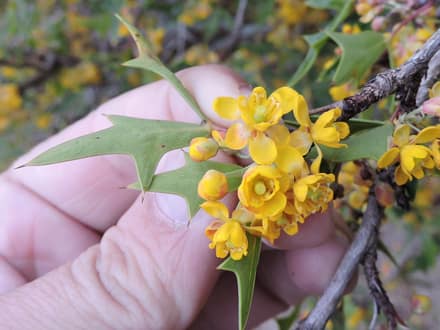
Agarita
Berberis trifoliolata
A spiny blue-grey evergreen that bees swarm in late winter and birds nest inside for protection.
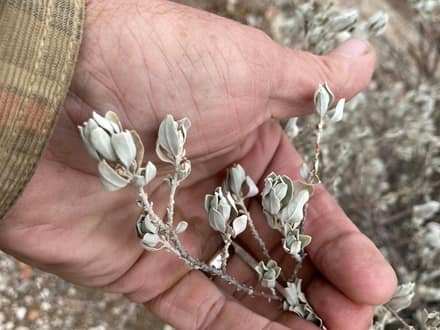
Texas Sage
Leucophyllum frutescens
A silver-leaved desert shrub that bursts into purple bloom after rain — earning its nickname 'barometer bush.' Thrives on neglect in the hottest, driest corners of a Texas yard..
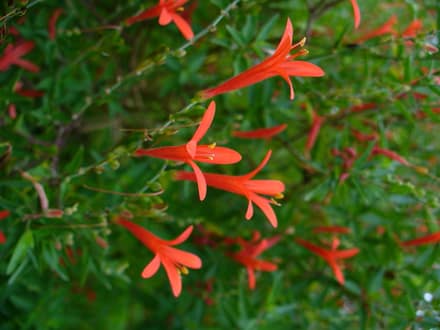
Flame Acanthus
Anisacanthus quadrifidus var. wrightii
A wispy, tough shrub that throws tubular orange-red flowers through the worst of the summer heat — exactly when hummingbirds are fueling up for migration..
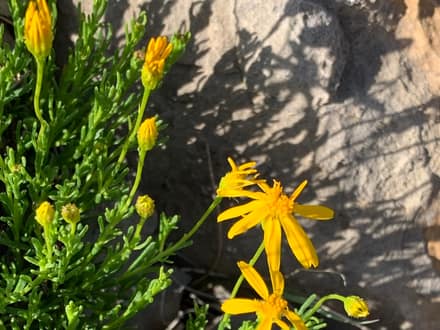
Damianita
Chrysactinia mexicana
A low evergreen cushion of fine, aromatic foliage smothered in golden daisies in spring and again in fall.
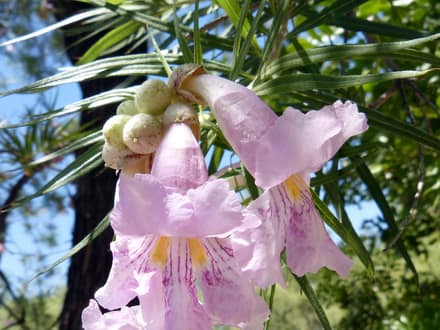
Desert Willow
Chilopsis linearis
A slender desert tree that produces orchid-like trumpet flowers all summer on almost no water.
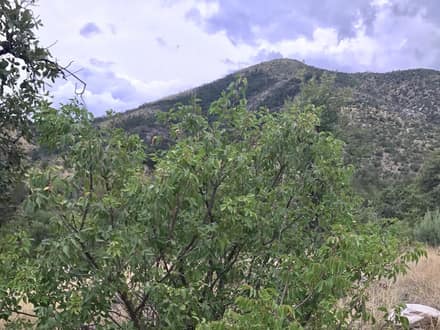
Evergreen Sumac
Rhus virens
A lush, glossy evergreen that looks far too refined for how tough it is — a superb native screen or hedge that bees work in late summer and birds fruit on in fall..