Shrub · Deer-resistant
Damianita
Chrysactinia mexicana
Also called: Damianita Daisy
Updated 2026-09-23
A low evergreen cushion of fine, aromatic foliage smothered in golden daisies in spring and again in fall. As drought- and heat-proof as any native gets.
Damianita is a low cushion of fine, resinous foliage that disappears under golden daisies twice a year, in spring and again in fall, on some of the hottest, driest ground a Texas garden can offer. It's built for the kind of rocky, reflected-heat spot that kills most other groundcovers, which is exactly where it's most often planted.
Growing & care
Absolutely requires sharp drainage and full sun — the fastest way to kill it is water. Shear lightly after bloom. Superb for hot rock gardens and parking strips.
Where damianita grows in Texas
The Native Plant Society of Texas lists its range across the Chihuahuan Deserts, Edwards Plateau and Southern Texas Plains, including the Chihuahuan Desert grasslands, Llano Uplift and semiarid Edwards Plateau. It wants caliche, limestone, loam or sandy soil that drains sharply, and it's very drought tolerant on that kind of ground.
How to plant damianita
Plant container stock in fall or spring, in full sun. Give it sharp drainage from the start, since it doesn't tolerate the reverse; a rock garden, gravel bed, or raised planting is a better fit than ordinary garden soil that holds moisture.
Watering damianita the first year
Water sparingly while it settles in and then back off quickly. Overwatering, not underwatering, is the main risk during establishment for a plant this adapted to lean, dry ground.
Damianita care through the seasons
Shear it lightly after each bloom flush to keep the mound tight and encourage the next round of flowers, and prune out dead stems in winter. Beyond that it wants to be left alone on the dry side.
Common damianita problems
Water is the single biggest threat to this plant. Overwatering or a spot that holds moisture after rain is the fastest way to lose it, far more so than heat, drought, or poor soil, none of which bother it much.
Wildlife value of damianita
The golden flowers draw bees, butterflies and other pollinators across its two bloom windows in spring and fall, and the seed and dense foliage also support birds and small mammals looking for cover and nesting material.
Using damianita in the garden
Use it in a rock garden, along a parking strip, or as a low border in a xeric bed where reflected heat from pavement would stress most other plants. It also works well spilling over a low retaining wall or edging a gravel path.
Damianita FAQ
How often does damianita bloom?
Twice a year in most seasons, once in spring and again in fall, with occasional sporadic flowers through summer depending on rainfall.
Why did my damianita die after a wet spring?
Overwatering or standing water is the most common way to lose this plant. It's built for sharp drainage and lean, dry soil, and a spot that holds moisture after rain is a much bigger risk to it than heat or drought.
Is damianita good for a parking strip or hot pavement edge?
Yes, it's one of the better choices for exactly that kind of reflected-heat spot, since it's built for hot, dry, well-drained ground and stays low and tidy with occasional shearing.
Bloom season
In bloom: Apr–Jun, Sep–Oct · Colors: yellow
Where to buy
Look for damianita (Chrysactinia mexicana) at: native Texas nurseries.
Sources
Range, nomenclature, and the USDA symbol above come from the federal plant record for this species. Check it yourself:
Good for
Plant it with
Natives that pair with damianita
Same conditions, same uses — species that share damianita's growing requirements and belong in the same bed.
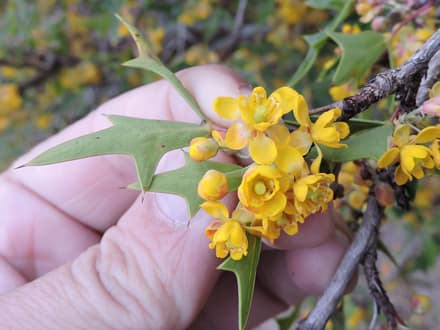
Agarita
Berberis trifoliolata
A spiny blue-grey evergreen that bees swarm in late winter and birds nest inside for protection.
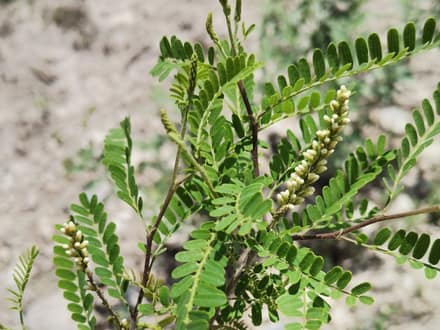
Texas Kidneywood
Eysenhardtia texana
An airy shrub that throws spikes of vanilla-scented white flowers after every rain, drawing clouds of bees and butterflies.
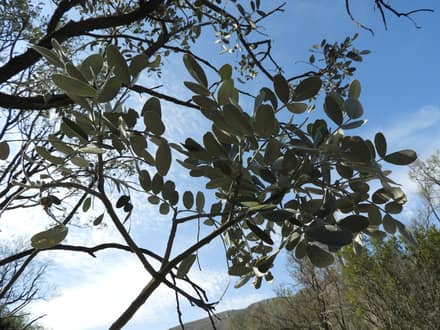
Texas Mountain Laurel
Dermatophyllum secundiflorum
A slow-growing evergreen with glossy leaves and drooping clusters of purple flowers that smell exactly like grape soda each spring.
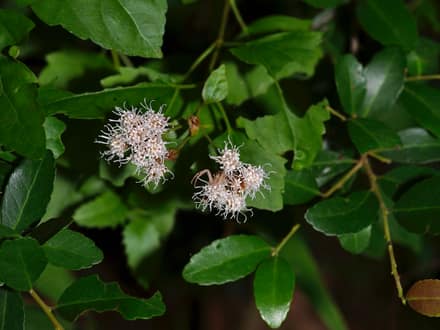
White Mistflower
Ageratina havanensis
A rounded shrub that erupts in fragrant, frothy white bloom in autumn — perfectly timed for migrating Monarchs, which can cover it in numbers..
Autumn Sage
Salvia greggii
The workhorse of the water-wise Texas garden: a small evergreen shrub that blooms nearly year-round and shrugs off heat, drought, and deer..
Blackfoot Daisy
Melampodium leucanthum
A tidy mound smothered in honey-scented white daisies for most of the year.