Home · Texas · Blackfoot Daisy
Perennial · Deer-resistant
Blackfoot Daisy
Melampodium leucanthum
Also called: Plains Blackfoot
Updated 2026-09-11
A tidy mound smothered in honey-scented white daisies for most of the year. One of the longest-blooming natives you can plant, and utterly indifferent to heat and drought.
Blackfoot daisy carries small white flowers over a low mound for most of the growing season in Texas, typically March into November in a good year. Heat and drought aren't what threaten this plant; a wet, poorly-drained spot is.
It actually performs worse, not better, in rich garden soil with regular water: it flowers harder in the short term but burns out faster. Treated like the lean, rocky-ground plant it evolved to be, it holds on for years.
Growing & care
Demands excellent drainage — plant in gravelly or rocky soil, never wet clay. No fertilizer needed. Shear back lightly if it gets leggy in midsummer.
Where it grows in Texas
Blackfoot daisy is native to the drier, rockier soils across much of Texas, especially limestone and caliche ground in the Hill Country and points west. In a garden it wants the same conditions wherever it's planted: gravelly or rocky soil, or a raised bed or berm that sheds water fast. In a heavy clay yard, it's better in a container or a built-up rock garden than in the ground as-is.
A mature clump typically spreads to a foot or two across, which is worth planning for when spacing plants in a rock garden or edging row.
How to plant
Full sun to part shade, in dry, rocky, or gravelly soil. Good drainage is the single non-negotiable requirement the Wildflower Center's growing notes emphasize. Skip amending the planting hole with compost or rich soil, since blackfoot daisy performs best in lean ground and rich soil with regular water tends to shorten its life even as it produces more flowers in the short term.
Care through the seasons
Skip fertilizer and skip amending the soil with compost; blackfoot daisy holds up longest in soil most other perennials would call too poor. If growth turns sparse or leggy by midsummer, a light shearing brings back denser new growth, and older, woodier plants can be cut back by about half in late winter to keep them compact and extend their life. Otherwise, leave it alone; it flowers most of the year without deadheading.
Common problems
The main risk is the plant rotting out in wet, poorly-drained soil, particularly over winter. A bed that looks fine in a dry Texas summer can still kill blackfoot daisy if it holds water after a wet spell. Rich soil and generous watering push more bloom in the short term but shorten the plant's overall lifespan, so it is better treated as a lean-soil plant from the start rather than fed and watered like a typical bedding perennial.
Because the plant is rated highly deer-resistant, it also holds up in yards where deer pressure rules out most flowering perennials, one more reason it shows up so often in Hill Country rock gardens specifically.
Wildlife value
The honey-scented flowers draw bees and butterflies for nectar most of the year, and the seed heads that follow feed seed-eating birds.
The bloom period runs long enough, typically March through November in Texas, that blackfoot daisy functions as a near-constant nectar source through most of the pollinator season, rather than the short spring or fall window many natives offer.
Using it in the garden
Blackfoot daisy's low, mounding habit and near-constant bloom make it a natural edging plant along a walkway or the front of a bed, and it holds up well in a rock garden or a gravel-mulched xeriscape bed where drainage is already built in. It also works tucked into gaps in a dry-stacked limestone wall or path, conditions close to where it grows on its own.
It's also rated highly deer-resistant, which matters in the Hill Country and West Texas towns where deer pressure can strip a bed of less bitter perennials overnight.
A mature mound runs 6 to 12 inches tall, low enough that it never blocks the view of anything planted behind it, which is part of why it works so well as a front-of-bed edging plant rather than something used for mass or height.
FAQ
Why did my blackfoot daisy die over the winter?
Almost always poor drainage. Blackfoot daisy tolerates heat and drought well but rots in soil that stays wet, especially during Texas's wetter winter months. Planting on a slope, berm, or amending with gravel for drainage is the fix.
Does blackfoot daisy need fertilizer?
No. It performs best in lean, rocky soil; feeding it or watering it like a typical perennial produces more flowers short-term but shortens its lifespan.
How long does blackfoot daisy bloom in Texas?
It can flower from March through November in Texas, making it one of the longest-blooming native perennials available for a sunny bed.
Bloom season
In bloom: Mar–Nov · Colors: white
Where to buy
Look for blackfoot daisy (Melampodium leucanthum) at: Prairie Moon Nursery, native Texas nurseries, Etsy seed sellers.
Sources
Range, nomenclature, and the USDA symbol above come from the federal plant record for this species. Check it yourself:
Melampodium leucanthum (MELE2) in the USDA PLANTS Database →
Good for
Plant it with
Natives that pair with blackfoot daisy
Same conditions, same uses — species that share blackfoot daisy's growing requirements and belong in the same bed.
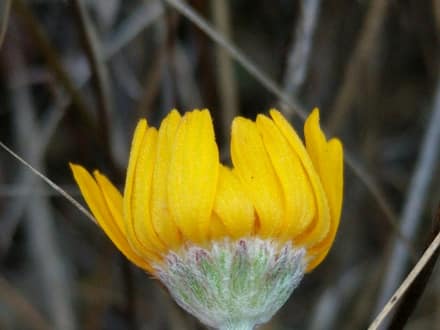
Four-nerve Daisy
Tetraneuris scaposa
A tidy evergreen tuft that lofts cheerful yellow daisies on wiry stems in nearly every month of the year.
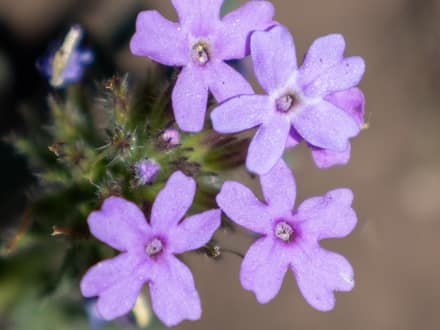
Prairie Verbena
Glandularia bipinnatifida
A low, spreading mat of purple flower clusters that bloom nearly nonstop and draw butterflies constantly.
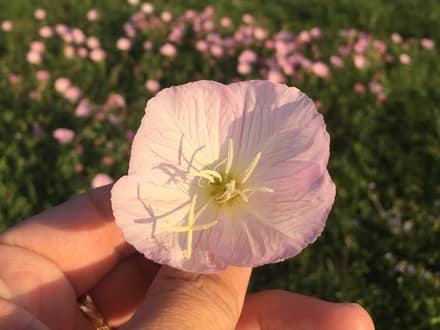
Pink Evening Primrose
Oenothera speciosa
The pink cups that wash over Texas fields and roadsides in spring.
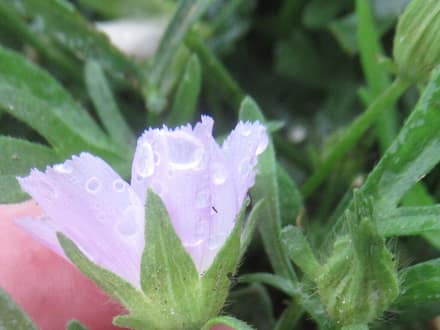
Winecup
Callirhoe involucrata
A sprawling perennial that spills chalice-shaped magenta flowers across the ground each spring.
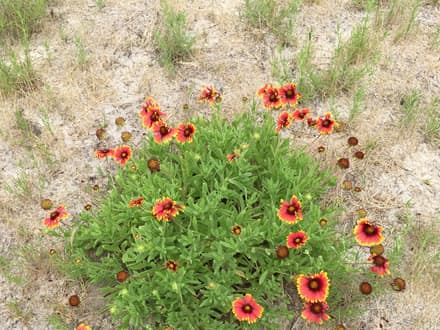
Indian Blanket
Gaillardia pulchella
The red-and-gold pinwheel daisy that blankets Texas roadsides all summer.
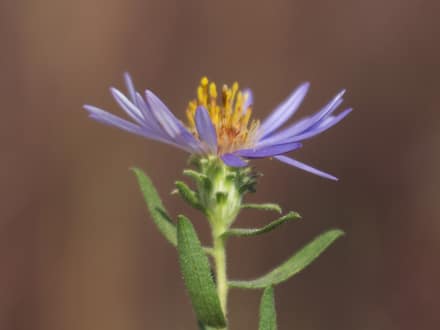
Fall Aster
Symphyotrichum oblongifolium
A mounding aster that vanishes into the background all summer, then bursts into a haze of blue-purple daisies in October — a lifeline of late nectar for pollinators..