Home · Texas · Pink Evening Primrose
Groundcover · Deer-resistant
Pink Evening Primrose
Oenothera speciosa
Also called: Showy Primrose, Buttercups
Updated 2026-09-11
The pink cups that wash over Texas fields and roadsides in spring. A vigorous spreader that fills bare ground fast and needs absolutely nothing to thrive.
Pink evening primrose is the plant responsible for the pink haze that covers so many Texas roadsides and pastures every spring. In a garden bed it behaves exactly the same way: it colonizes open ground fast and keeps going.
That's also the catch. It spreads by both root and seed well past the edges of wherever it started, so it only belongs in a spot where that kind of spread is actually wanted.
Growing & care
Spreads enthusiastically by root and seed — give it room or it will roam. Mow after bloom to tidy up. Best in spots where its wandering is welcome.
Where it grows in Texas
Pink evening primrose grows across nearly all of Texas and colonizes open ground in a wide range of well-drained soils, from clay to sand to rock, whether rich or poor. It performs about the same statewide; the more relevant question for placement isn't region but how much room a planting has to spread.
How to plant
Full sun to part shade; it can grow as a foliage groundcover in more shade than that, but it won't flower well without adequate sun. It readily colonizes open, well-drained soil, rich or poor, and spreads by root division, seed, and softwood cuttings, meaning a small planting can be all that's needed to start a colony.
Because a small start is enough to establish a colony, a single nursery pot or a handful of divided roots is typically all that's needed to begin a planting; there's rarely a reason to buy more than that up front.
Care through the seasons
A pass with the mower once the spring bloom fades keeps the planting looking tidy; letting seed mature before that cut helps it reseed further, while mowing earlier limits how much it spreads. It cannot handle extended completely dry soil and may go dormant in summer without at least occasional water, but otherwise it needs no fertilizer or regular attention.
Common problems
The main issue gardeners run into is the opposite of most natives on this site: it spreads too readily rather than too little, forming extensive colonies by root that can push into nearby beds or lawn. If it gets more aggressive than wanted, dig and divide to thin it back. Give it a contained space, like a bed with a hard edge or a spot where spreading is fine, rather than planting it next to something delicate.
The tradeoff for how little care it needs is, again, the spreading habit: a planting that's thriving is usually a planting that's also expanding, so the real maintenance decision is how much room to give it up front.
Wildlife value
The seed capsules attract seed-eating birds, finches especially, along with various small mammals, and the flowers provide nectar with particular value to native bees.
The Wildflower Center specifically flags it as having special value to native bee species, beyond the general nectar value most blooming natives offer, which is worth factoring in for anyone planting with pollinators as the priority.
Using it in the garden
Its fast spread and low height make pink evening primrose a strong choice for erosion control on a slope, a meadow-style planting, or filling a large area of bare ground quickly and cheaply. It is a poor choice for a tidy, contained border bed unless it's edged with something like a mowed strip, a hard edge, or a container to keep the roots from wandering into neighboring plantings.
It's also rated deer-resistant, one more reason it holds up as a roadside and pasture plant across Texas even under heavy grazing pressure from deer.
Because it tolerates poor soil and heat without any real care, it also works as a low-maintenance fill for a hard-to-plant spot, a parking strip, a slope too steep to mow comfortably, or the gap between a driveway and a fence line, anywhere a tidy, high-care planting isn't realistic anyway.
FAQ
Will pink evening primrose take over my garden?
It can. It spreads by both root and seed into extensive colonies, so give it a spot where spreading is welcome, or plan to divide and thin it periodically if it's in a contained bed.
Does pink evening primrose need full sun?
It can grow as a groundcover in shade, but it won't bloom well without adequate sun. For flowers, plant it in full sun to part shade.
How do I control pink evening primrose once it's established?
Dig and divide the colony if it's spreading too far, and mow after bloom rather than before if you want to limit reseeding, or before seed drops if you want to reduce next year's spread.
Bloom season
In bloom: Mar–Jun · Colors: pink
Where to buy
Look for pink evening primrose (Oenothera speciosa) at: native Texas nurseries, Eden Brothers seed.
Sources
Range, nomenclature, and the USDA symbol above come from the federal plant record for this species. Check it yourself:
Good for
Plant it with
Natives that pair with pink evening primrose
Same conditions, same uses — species that share pink evening primrose's growing requirements and belong in the same bed.
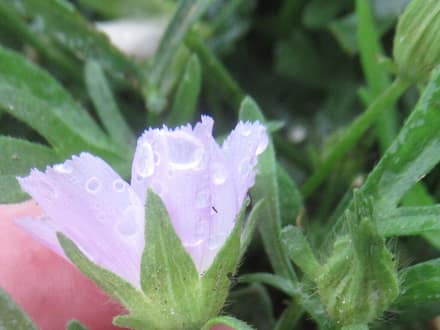
Winecup
Callirhoe involucrata
A sprawling perennial that spills chalice-shaped magenta flowers across the ground each spring.
Gayfeather
Liatris mucronata
Spires of feathery purple that open top-down in fall, when Monarchs are moving through and desperate for nectar.
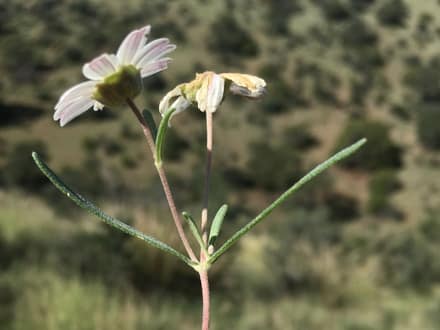
Blackfoot Daisy
Melampodium leucanthum
A tidy mound smothered in honey-scented white daisies for most of the year.
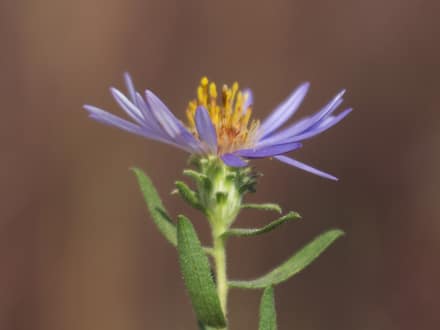
Fall Aster
Symphyotrichum oblongifolium
A mounding aster that vanishes into the background all summer, then bursts into a haze of blue-purple daisies in October — a lifeline of late nectar for pollinators..
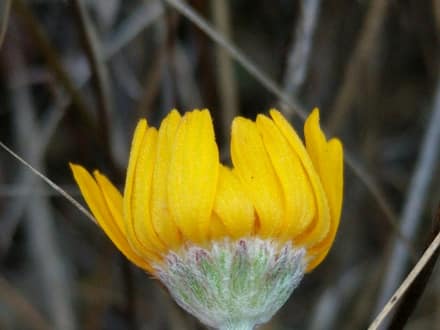
Four-nerve Daisy
Tetraneuris scaposa
A tidy evergreen tuft that lofts cheerful yellow daisies on wiry stems in nearly every month of the year.
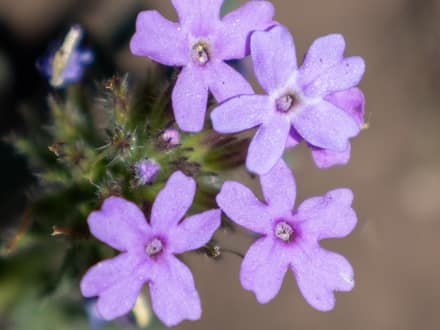
Prairie Verbena
Glandularia bipinnatifida
A low, spreading mat of purple flower clusters that bloom nearly nonstop and draw butterflies constantly.