Groundcover · Deer-resistant
Winecup
Callirhoe involucrata
Also called: Purple Poppy Mallow
Updated 2026-09-23
A sprawling perennial that spills chalice-shaped magenta flowers across the ground each spring. Deep-rooted and drought-proof once it settles in.
Winecup spills chalice-shaped magenta flowers across the ground each spring, opening fresh every morning and closing again by evening, a small daily rhythm that's part of its appeal as a groundcover. It runs on a long taproot that makes it nearly drought-proof once settled in, though that same root means it wants to be sited once and left alone.
Growing & care
Give it room to trail. Dies back in summer heat and returns — don't panic. A long taproot means it dislikes being moved; site it once and leave it.
Where winecup grows in Texas
The Native Plant Society of Texas lists its range from Central Texas west into the Chihuahuan region and south toward the Rio Grande Valley, across the Edwards Plateau, Cross Timbers, Blackland Prairies, High Plains and Gulf Coastal areas. It grows in open woods, rocky hills, shrublands and thickets, tolerating calcareous, clay, dry, gravelly or loam soil that drains well.
How to plant winecup
Sow seed or plant container stock in fall or spring, in full sun or part shade, and choose the spot with intent, since this isn't a plant you'll get a second chance to relocate once that taproot is down. Give it room to trail outward.
Watering winecup the first year
Water it through the first season to help the taproot get established, then expect it to largely manage on its own. It wants medium water and will simply go dormant in summer heat without supplemental irrigation, which is normal rather than a sign of trouble.
Winecup care through the seasons
Cut it back to the rosette in winter, and watch for rust during unusually wet seasons, which is the plant's main disease vulnerability. Otherwise it's a low-upkeep groundcover that spreads modestly on its own.
Common winecup problems
Rust can develop in wet weather, showing up on the foliage during damp stretches; it's rarely serious but worth watching for. An established plant also resents being dug up and relocated, given how deep that taproot runs, so pick its spot with the long term in mind rather than planning to move it once it's grown in.
Wildlife value of winecup
It's a larval host for the gray hairstreak and painted lady butterflies, and its spring flowers draw bees and butterflies for nectar and pollen.
Using winecup in the garden
Use it as a groundcover along a slope, in a rock garden, or trailing over the edge of a raised bed where its sprawling habit has room to spread. It also does well in a container or hanging basket.
Winecup FAQ
Why does my winecup go dormant in summer?
It's a normal response to summer heat without supplemental water. The plant will go dormant rather than struggle through the driest part of the year, and it returns the following growing season.
Can I transplant an established winecup?
Better not to try. The plant sends down a long taproot early on, and digging up an older specimen tends to sever enough of it that the transplant fails. Sow it or plant it where you want it to stay.
Why does winecup foliage look spotted or rusty?
This is likely rust, a fungal issue that shows up during unusually wet seasons. It's rarely serious, but drier conditions and good airflow help limit it.
Bloom season
In bloom: Mar–Jun · Colors: magenta, purple
Where to buy
Look for winecup (Callirhoe involucrata) at: Prairie Moon Nursery, native Texas nurseries.
Guides featuring winecup
Sources
Range, nomenclature, and the USDA symbol above come from the federal plant record for this species. Check it yourself:
Callirhoe involucrata (CAIN10) in the USDA PLANTS Database →
Good for
Plant it with
Natives that pair with winecup
Same conditions, same uses — species that share winecup's growing requirements and belong in the same bed.
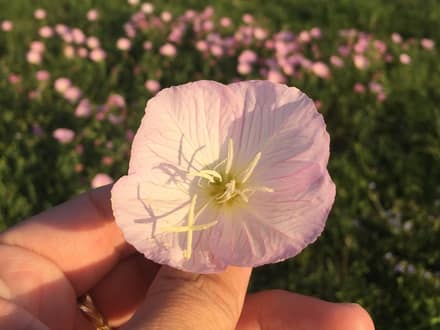
Pink Evening Primrose
Oenothera speciosa
The pink cups that wash over Texas fields and roadsides in spring.
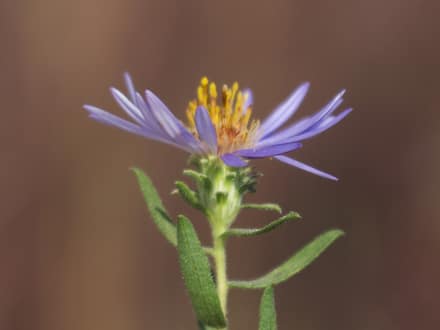
Fall Aster
Symphyotrichum oblongifolium
A mounding aster that vanishes into the background all summer, then bursts into a haze of blue-purple daisies in October — a lifeline of late nectar for pollinators..
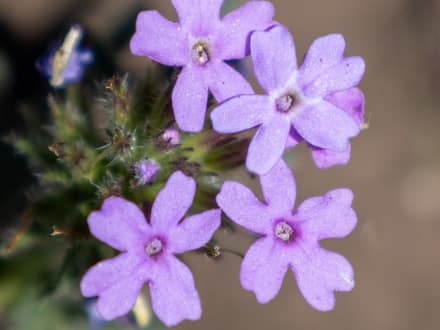
Prairie Verbena
Glandularia bipinnatifida
A low, spreading mat of purple flower clusters that bloom nearly nonstop and draw butterflies constantly.
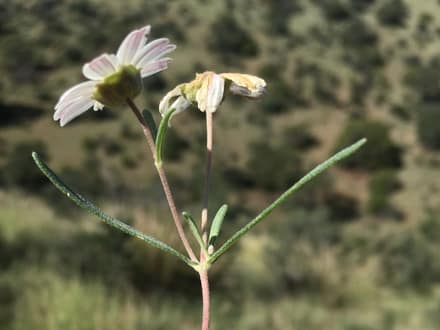
Blackfoot Daisy
Melampodium leucanthum
A tidy mound smothered in honey-scented white daisies for most of the year.
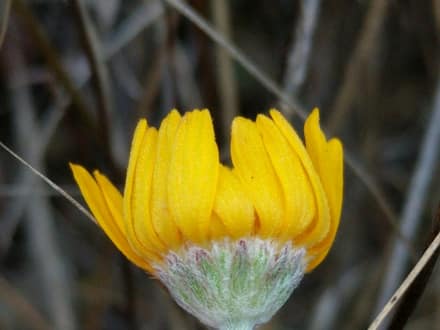
Four-nerve Daisy
Tetraneuris scaposa
A tidy evergreen tuft that lofts cheerful yellow daisies on wiry stems in nearly every month of the year.
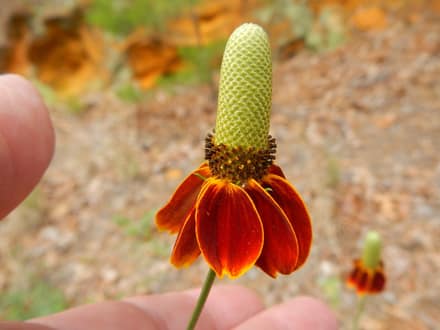
Mexican Hat
Ratibida columnifera
A whimsical prairie flower whose drooping petals form a sombrero beneath a tall central cone.