Home · Texas · Prairie Verbena
Groundcover · Deer-resistant
Prairie Verbena
Glandularia bipinnatifida
Also called: Dakota Mock Vervain
Updated 2026-09-16
A low, spreading mat of purple flower clusters that bloom nearly nonstop and draw butterflies constantly. One of the toughest native groundcovers for hot, dry ground.
In a good spring, prairie verbena paints Texas roadsides and pastures purple for miles. It is a low, sprawling plant with finely cut leaves and flat clusters of small lavender to pink flowers, and it blooms from March into October if it gets a little rain.
In the garden it is a fast, cheerful groundcover for hot, dry ground. It is often short-lived, sometimes behaving like an annual, but it reseeds so easily that a patch tends to keep itself going.
Growing & care
Trim after heavy flushes to keep it neat and reblooming. Spreads and reseeds to fill space. Full sun and drainage are all it asks.
Where prairie verbena grows in Texas
It is found in the wild over a large part of Texas: the High Plains, Central Great Plains, Cross Timbers, Edwards Plateau, South Texas and into the Chihuahuan Desert. Look for it in open grassy areas, in rocky or sandy openings in woods, and in dry wash bottoms. It handles caliche, limestone, clay and sand.
In the wild it often forms huge sheets of pink and light purple across open ground, which is a good hint about what it wants in a yard: open sun, thin soil and room to sprawl.
How to plant prairie verbena
Full sun and good drainage are what it needs. It will grow in some shade but blooms less and gets leggy.
Seed is easy. It needs no pretreatment, but it does need light to germinate, so press it onto the soil surface instead of burying it. At around 70°F it sprouts in two to three weeks. Tip cuttings about 2 inches long also root fast with hormone and misting.
Nursery plants go in in spring or fall. Space them 12 to 18 inches apart.
Watering prairie verbena the first year
Water new plants every few days for two weeks, then weekly until they spread. After that it is drought tolerant and does fine on rainfall in most of Texas. Too much water shortens its life.
Prairie Verbena care through the seasons
Shear it back by about a third after a big flush of flowers and it will bloom again. Let some flowers go to seed late in the season so the planting renews itself. It can be damaged by hard freezes, and older plants often decline after a few years; the seedlings take their place.
Common prairie verbena problems
Rot in heavy, wet soil is the main killer, so skip low spots where water sits after a storm. In a bed with rich soil and regular irrigation, expect it to stretch and flop instead of forming a tight mat. It is also sensitive to hard freezes, which is one reason plants in the northern half of the state often behave like annuals and come back from seed.
Wildlife value of prairie verbena
Butterflies are the main visitors, along with bees and other nectar insects, and the flowers supply both nectar and pollen. Birds eat the seed once the flowers fade, which is another reason to leave the late-season seed heads in place.
Using prairie verbena in the garden
Use it at the front of a sunny bed, spilling over a rock wall, in a gravel garden or along a hot driveway edge where irrigation never reaches. It is also a good plant for containers and hanging baskets, where the trailing stems hang over the rim.
For a wildflower look, mix it with blackfoot daisy, four-nerve daisy and Mexican hat, which want the same sun and dry soil. In a xeriscape it fills the gaps between shrubs like Texas sage and agarita while they grow in, and the reseeding keeps those gaps covered without replanting each year.
Prairie verbena scientific name
Prairie verbena's scientific name is Glandularia bipinnatifida. It is also called Dakota mock vervain. The low habit and deeply divided leaves set it apart from the taller, upright vervains.
Prairie Verbena FAQ
What is the scientific name of prairie verbena?
Glandularia bipinnatifida. You may also see it sold as Dakota mock vervain.
Is prairie verbena a perennial?
It is a short-lived perennial that sometimes acts like an annual, but it reseeds easily, so a planting usually persists.
Does prairie verbena spread?
It sprawls into a low mat and reseeds, so a few plants fill a sunny area over a season or two.
Is prairie verbena deer resistant?
It is rated deer resistant and is rarely browsed.
Bloom season
In bloom: Mar–Oct · Colors: purple, pink
Where to buy
Look for prairie verbena (Glandularia bipinnatifida) at: native Texas nurseries, Prairie Moon Nursery.
Guides featuring prairie verbena
Sources
Range, nomenclature, and the USDA symbol above come from the federal plant record for this species. Check it yourself:
Glandularia bipinnatifida (GLBI2) in the USDA PLANTS Database →
Good for
Plant it with
Natives that pair with prairie verbena
Same conditions, same uses — species that share prairie verbena's growing requirements and belong in the same bed.
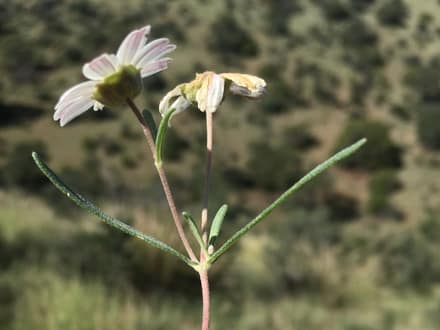
Blackfoot Daisy
Melampodium leucanthum
A tidy mound smothered in honey-scented white daisies for most of the year.
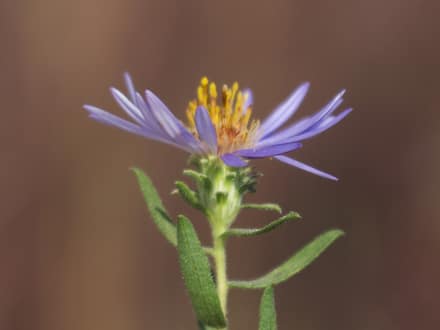
Fall Aster
Symphyotrichum oblongifolium
A mounding aster that vanishes into the background all summer, then bursts into a haze of blue-purple daisies in October — a lifeline of late nectar for pollinators..
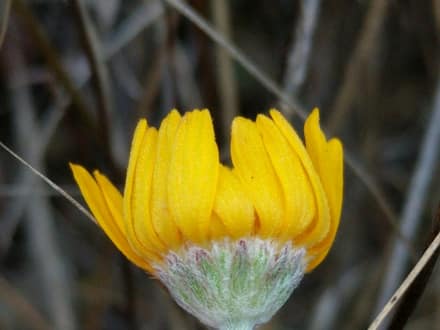
Four-nerve Daisy
Tetraneuris scaposa
A tidy evergreen tuft that lofts cheerful yellow daisies on wiry stems in nearly every month of the year.
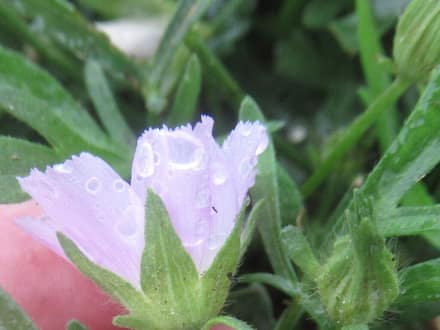
Winecup
Callirhoe involucrata
A sprawling perennial that spills chalice-shaped magenta flowers across the ground each spring.
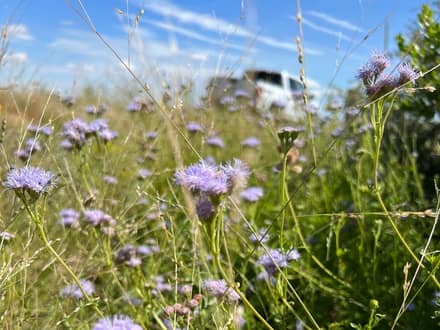
Gregg's Mistflower
Conoclinium greggii
A butterfly magnet without equal — its fuzzy blue flowers are the single best plant for pulling Queen and Monarch butterflies into a Texas garden..
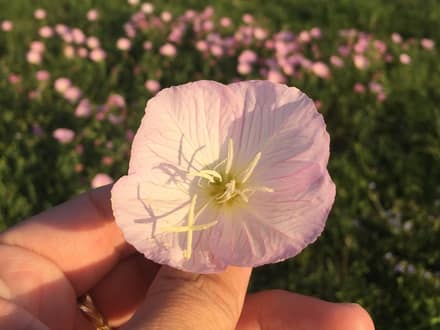
Pink Evening Primrose
Oenothera speciosa
The pink cups that wash over Texas fields and roadsides in spring.