Wildflower · Deer-resistant
Indian Blanket
Gaillardia pulchella
Also called: Firewheel, Blanketflower
Updated 2026-09-23
The red-and-gold pinwheel daisy that blankets Texas roadsides all summer. A carefree reseeding annual that blooms in the worst heat and poorest soil.
Indian blanket is the red-and-gold pinwheel daisy that blankets Texas roadsides all summer, blooming through heat and poor soil that stop most other wildflowers. It's a carefree reseeding annual that asks for nothing more than bare ground and full sun to establish a colony that comes back on its own year after year.
Growing & care
Sow in fall or spring on bare soil; it reseeds itself thereafter. Deadhead for more bloom or leave seed for goldfinches. Thrives where nothing else will.
Where Indian blanket grows in Texas
The Native Plant Society of Texas lists it across 11 ecoregions, including the Central Great Plains, Edwards Plateau, Cross Timbers, Gulf Coast Prairies and Southern Texas Plains, covering essentially the entire state. It grows in dry plains, open areas, prairies, disturbed ground and woodland edges, tolerating calcareous, clay, dry, loam or sandy soil.
How to plant Indian blanket
Sow seed directly on bare soil in fall or spring; it germinates and establishes readily without much fuss. It reseeds itself from that point on, so one planting typically becomes a self-sustaining colony.
Watering Indian blanket the first year
Water occasionally through the first season if rainfall is sparse, though it's built to tolerate both heat and dryness from the start. Established plantings need essentially no supplemental water.
Indian Blanket care through the seasons
Deadhead for a longer bloom season, or leave the seed heads for goldfinches and let the colony reseed on its own. Rich soil and heavy spring rain can push it toward legginess; trimming it back restores a more compact form.
Common Indian blanket problems
It behaves mostly as an annual or short-lived perennial in warmer coastal areas, so an individual planting isn't permanent, but the reseeding habit generally keeps a colony going without gaps. Overly rich or consistently wet soil is more likely to cause problems, like legginess, than the poor, dry ground it's built for.
Wildlife value of Indian blanket
The flowers draw bees and butterflies for nectar and pollen through a long summer bloom, and the seed heads left standing afterward feed goldfinches and other seed-eating birds.
Using Indian blanket in the garden
Use it in a wildflower meadow, a naturalized roadside planting, or scattered through a mixed bed where its reseeding habit can fill gaps season after season. It's especially well suited to a tough, poor-soil site where more demanding plants would struggle.
Indian Blanket FAQ
Does Indian blanket come back every year?
It behaves mostly as an annual or short-lived perennial, but it reseeds itself so readily that a planting usually becomes a self-sustaining colony rather than a one-time bloom.
Why is my Indian blanket floppy instead of compact?
Rich soil or a particularly wet spring is the usual cause. It's built for poor, dry ground, and better conditions than that tend to push it toward a looser, leggier form; trimming it back helps restore a tidier shape.
Should I deadhead Indian blanket?
Deadheading extends the bloom season if that's the goal, but leaving the seed heads standing instead feeds goldfinches and lets the colony reseed itself for next year.
Bloom season
In bloom: Apr–Sep · Colors: red, yellow
Where to buy
Look for indian blanket (Gaillardia pulchella) at: Eden Brothers seed, native Texas nurseries, Wildseed Farms.
Sources
Range, nomenclature, and the USDA symbol above come from the federal plant record for this species. Check it yourself:
Good for
Plant it with
Natives that pair with indian blanket
Same conditions, same uses — species that share indian blanket's growing requirements and belong in the same bed.
Gayfeather
Liatris mucronata
Spires of feathery purple that open top-down in fall, when Monarchs are moving through and desperate for nectar.
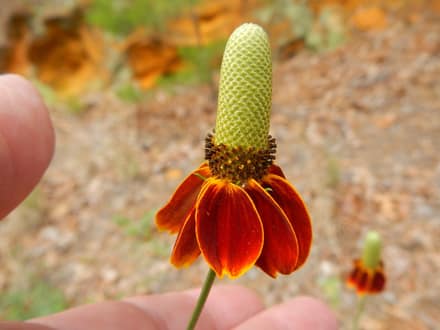
Mexican Hat
Ratibida columnifera
A whimsical prairie flower whose drooping petals form a sombrero beneath a tall central cone.
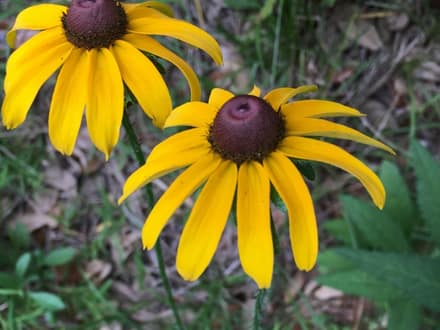
Black-eyed Susan
Rudbeckia hirta
The classic golden prairie daisy — cheerful, tough, and endlessly reseeding.
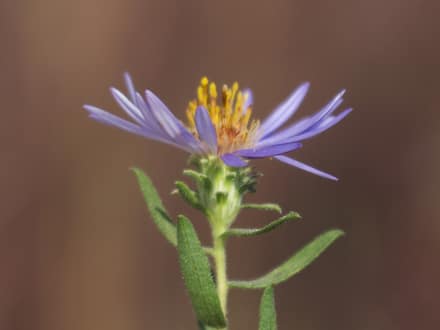
Fall Aster
Symphyotrichum oblongifolium
A mounding aster that vanishes into the background all summer, then bursts into a haze of blue-purple daisies in October — a lifeline of late nectar for pollinators..
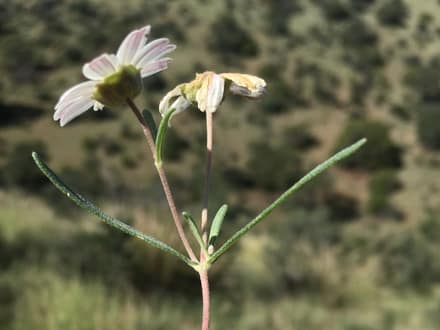
Blackfoot Daisy
Melampodium leucanthum
A tidy mound smothered in honey-scented white daisies for most of the year.
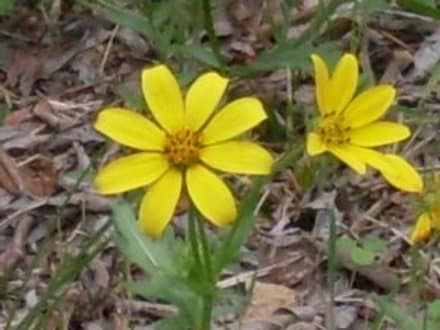
Engelmann Daisy
Engelmannia peristenia
A deep-taprooted prairie daisy that blooms yellow for months and shrugs off drought better than almost anything — its flowers even fold in the midday heat to conserve water..