Home · Texas · Engelmann Daisy
Perennial
Engelmann Daisy
Engelmannia peristenia
Also called: Cutleaf Daisy
Updated 2026-09-23
A deep-taprooted prairie daisy that blooms yellow for months and shrugs off drought better than almost anything — its flowers even fold in the midday heat to conserve water.
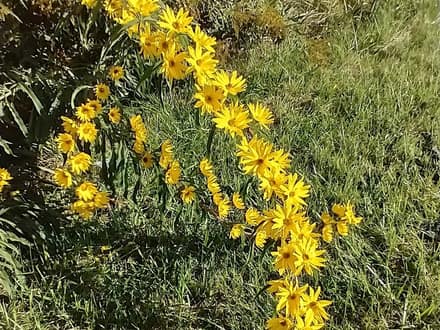
Engelmann daisy blooms yellow for months on end and shrugs off drought better than almost anything else on this site, running on a taproot deep enough to keep it going through weather that stops most prairie wildflowers cold. Its own flowers even fold shut in the worst midday heat, a small daily act of water conservation that's part of how it survives a Texas summer.
Growing & care
The long taproot makes it very drought hardy but resentful of transplanting. Cut back if it sprawls. Reseeds to form drifts.
Where Engelmann daisy grows in Texas
The Native Plant Society of Texas lists it across 11 ecoregions, including the Edwards Plateau, Cross Timbers, High Plains and Gulf Coast Prairies, covering most of Central and West Texas. It grows in open, calcareous fields, roadsides, grasslands and pinyon-juniper woodlands, and it wants calcareous, clay, limestone, sandy or well-drained loam soil.
How to plant Engelmann daisy
Direct sow seed in fall, since the long taproot that makes this plant so drought hardy also makes it resent transplanting once established. If starting from a container plant, choose a young one and site it where it will stay, rather than planning to move it later.
Watering Engelmann daisy the first year
Give it a season of occasional watering to help the taproot get down deep, after which it largely fends for itself. It spreads readily by seed and becomes noticeably larger in its second and third years, so give a young planting more room than it initially seems to need.
Engelmann Daisy care through the seasons
Cut it back after the main spring bloom to encourage a repeat flush later in summer, and thin any spot where it's spreading into space meant for other plants. Its rosette of deeply lobed leaves stays semi-evergreen through much of the year.
Common Engelmann daisy problems
Its main quirk is how much it grows into: a planting that looks appropriately spaced in year one can crowd its neighbors by year three, so it needs either more room up front or occasional thinning. Otherwise it has few real problems, being naturally suited to poor soil and heat.
Wildlife value of Engelmann daisy
The long summer bloom draws bees and butterflies for nectar and pollen across a season when many other wildflowers have already finished.
Using Engelmann daisy in the garden
Use it in a wildflower meadow, along a roadside planting, or as a long-blooming anchor in a mixed native bed, giving it room to expand into over its first few years. It's also a strong candidate for a difficult, exposed site where deep, reliable drought tolerance matters more than a tidy, compact form.
Engelmann Daisy FAQ
Can I transplant an established Engelmann daisy?
It's not recommended. The plant's long taproot, which is what makes it so drought tolerant, also makes it resent being dug up and moved once it's settled in. Starting from seed or a young container plant sited in its permanent spot works better.
Why do Engelmann daisy flowers close at midday?
It's a natural water-conservation response to intense heat. The flowers fold shut during the hottest part of the day and reopen as temperatures ease, which is part of how the plant manages a Texas summer.
How much space does Engelmann daisy need?
More than it looks like it needs at planting time. It spreads by seed and grows substantially larger in its second and third years, so a planting that looks well-spaced at first can crowd nearby plants later on.
Bloom season
In bloom: Mar–Oct · Colors: yellow
Where to buy
Look for engelmann daisy (Engelmannia peristenia) at: Prairie Moon Nursery, native Texas nurseries.
Sources
Range, nomenclature, and the USDA symbol above come from the federal plant record for this species. Check it yourself:
Engelmannia peristenia (ENPE4) in the USDA PLANTS Database →
Good for
Plant it with
Natives that pair with engelmann daisy
Same conditions, same uses — species that share engelmann daisy's growing requirements and belong in the same bed.
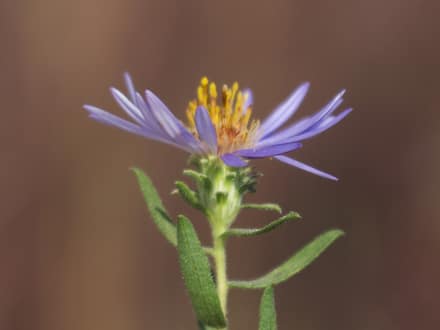
Fall Aster
Symphyotrichum oblongifolium
A mounding aster that vanishes into the background all summer, then bursts into a haze of blue-purple daisies in October — a lifeline of late nectar for pollinators..
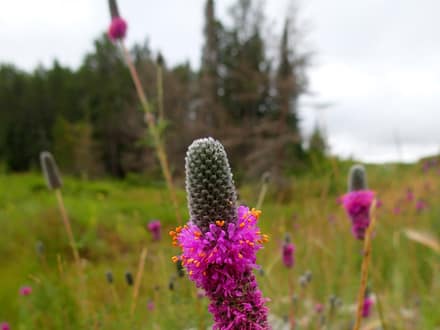
Purple Prairie Clover
Dalea purpurea
A fine-textured prairie legume with thimbles of purple bloom ringed in orange pollen.
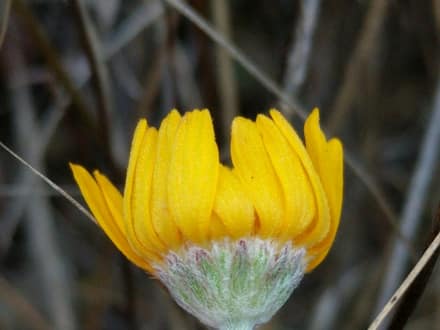
Four-nerve Daisy
Tetraneuris scaposa
A tidy evergreen tuft that lofts cheerful yellow daisies on wiry stems in nearly every month of the year.
Gayfeather
Liatris mucronata
Spires of feathery purple that open top-down in fall, when Monarchs are moving through and desperate for nectar.
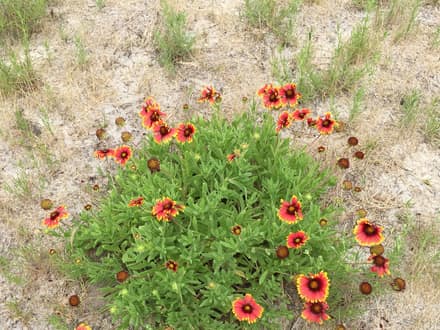
Indian Blanket
Gaillardia pulchella
The red-and-gold pinwheel daisy that blankets Texas roadsides all summer.
Maximilian Sunflower
Helianthus maximiliani
A towering prairie sunflower that lines its tall stems with gold in fall, feeding late pollinators and then a run of seed-eating birds.