Home · Texas · Purple Prairie Clover
Perennial
Purple Prairie Clover
Dalea purpurea
Also called: Violet Prairie Clover
Updated 2026-09-23
A fine-textured prairie legume with thimbles of purple bloom ringed in orange pollen. Fixes nitrogen, feeds specialist bees, and hosts several small butterflies.
Purple prairie clover is a fine-textured prairie legume that does double duty most wildflowers don't: it fixes its own nitrogen in the soil while feeding specialist bees and hosting several small butterflies. Its thimble-shaped flower spikes bloom from the bottom up, ringed in orange pollen, on a plant built to persist through drought that would kill off shallower-rooted neighbors.
Growing & care
Deep taproot makes it very drought tough but hard to move. Best sown in place. A key building block of a native meadow matrix.
Where purple prairie clover grows in Texas
The Native Plant Society of Texas notes its range across the Great Plains has a more limited and spotty distribution within Texas itself, occurring in the Central Great Plains, Chihuahuan Deserts, High Plains and Southwestern Tablelands, mostly in the western part of the state. It grows in grasslands, woodland edges, dry plains, prairies, hillsides, open woodlands, sandhills and roadsides, tolerating clay, dry, loam or sandy soil.
How to plant purple prairie clover
Sow seed directly in place in fall or spring; the deep taproot that makes this plant so drought tough also makes it a poor candidate for transplanting later. Scarifying the seed coat with sandpaper before sowing improves germination.
Watering purple prairie clover the first year
Give it occasional water its first season so the taproot can push down; beyond that it needs almost nothing, since that same deep root system is what lets it persist in dry ground where shallower-rooted plants eventually fail.
Purple Prairie Clover care through the seasons
It needs little upkeep beyond occasional thinning if it's crowding neighbors; the deep taproot means it largely takes care of itself once established. Plant it in mass rather than as scattered single plants for the fullest visual effect.
Common purple prairie clover problems
It has few real problems, though the same deep taproot that makes it so tough also makes an established plant essentially impossible to move successfully, so siting it correctly the first time matters more than with most other natives.
Wildlife value of purple prairie clover
It's a larval host for the southern dogface sulphur and Reakirt's blue butterflies, draws bees and butterflies for nectar and pollen, and fixes nitrogen in the soil as a legume, which benefits neighboring plants in a meadow planting.
Using purple prairie clover in the garden
Use it as a building block in a native meadow planting, mixed with grasses and other prairie perennials where its fine texture and nitrogen-fixing habit both contribute to the planting as a whole. Plant it in a mass rather than as an isolated specimen for the best display.
Purple Prairie Clover FAQ
Can purple prairie clover be transplanted once established?
Not successfully, in most cases. Its deep taproot, the same feature that makes it so drought tough, makes it very difficult to move once it's settled in, so direct sowing in its permanent spot is the better approach.
Does purple prairie clover improve the soil?
Yes, as a legume it fixes nitrogen in the soil, which can benefit neighboring plants in a meadow or mixed native planting, not just itself.
What butterflies use purple prairie clover as a host plant?
It serves as a larval host for the southern dogface sulphur and Reakirt's blue butterflies, in addition to drawing general bee and butterfly traffic for nectar.
Bloom season
In bloom: Jun–Aug · Colors: purple
Where to buy
Look for purple prairie clover (Dalea purpurea) at: Prairie Moon Nursery, native Texas nurseries.
Sources
Range, nomenclature, and the USDA symbol above come from the federal plant record for this species. Check it yourself:
Good for
Plant it with
Natives that pair with purple prairie clover
Same conditions, same uses — species that share purple prairie clover's growing requirements and belong in the same bed.
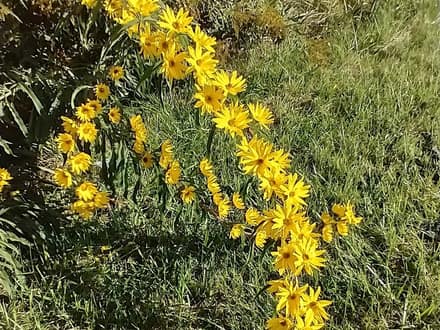
Maximilian Sunflower
Helianthus maximiliani
A towering prairie sunflower that lines its tall stems with gold in fall, feeding late pollinators and then a run of seed-eating birds.
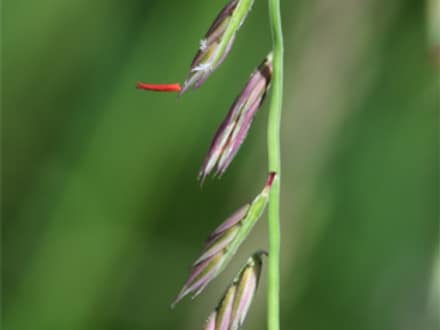
Sideoats Grama
Bouteloua curtipendula
The state grass of Texas, hanging its tiny oat-like seeds along one side of each stem, tinged with orange-red pollen.
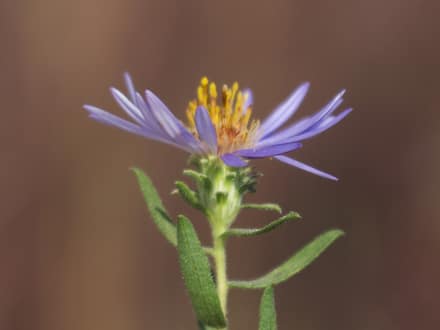
Fall Aster
Symphyotrichum oblongifolium
A mounding aster that vanishes into the background all summer, then bursts into a haze of blue-purple daisies in October — a lifeline of late nectar for pollinators..
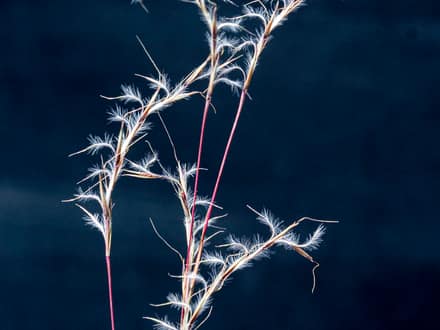
Little Bluestem
Schizachyrium scoparium
The backbone grass of the American prairie, turning coppery-mahogany in fall and silver-tufted in winter.
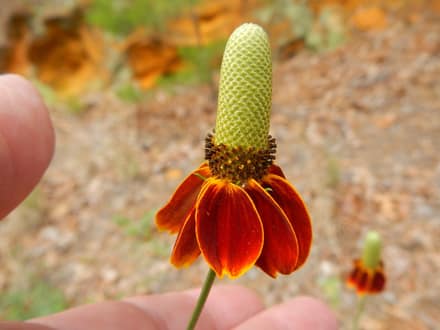
Mexican Hat
Ratibida columnifera
A whimsical prairie flower whose drooping petals form a sombrero beneath a tall central cone.
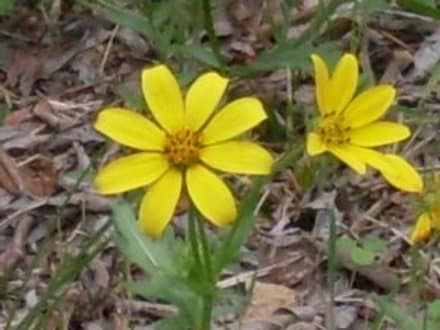
Engelmann Daisy
Engelmannia peristenia
A deep-taprooted prairie daisy that blooms yellow for months and shrugs off drought better than almost anything — its flowers even fold in the midday heat to conserve water..