6 plants
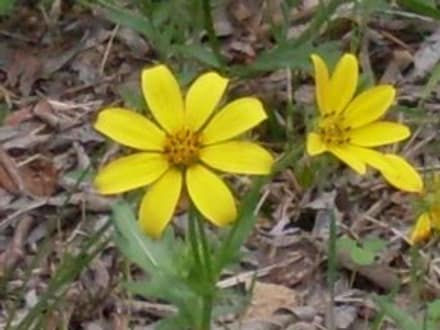
Engelmann Daisy
Engelmannia peristenia
A deep-taprooted prairie daisy that blooms yellow for months and shrugs off drought better than almost anything — its flowers even fold in the midday heat to conserve water..
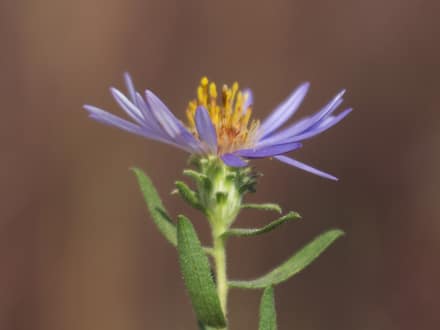
Fall Aster
Symphyotrichum oblongifolium
A mounding aster that vanishes into the background all summer, then bursts into a haze of blue-purple daisies in October — a lifeline of late nectar for pollinators..
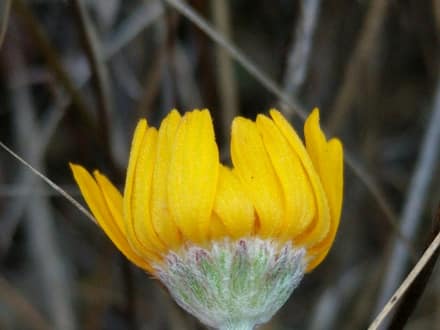
Four-nerve Daisy
Tetraneuris scaposa
A tidy evergreen tuft that lofts cheerful yellow daisies on wiry stems in nearly every month of the year.
Gayfeather
Liatris mucronata
Spires of feathery purple that open top-down in fall, when Monarchs are moving through and desperate for nectar.
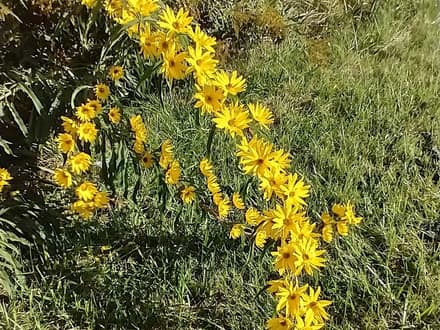
Maximilian Sunflower
Helianthus maximiliani
A towering prairie sunflower that lines its tall stems with gold in fall, feeding late pollinators and then a run of seed-eating birds.
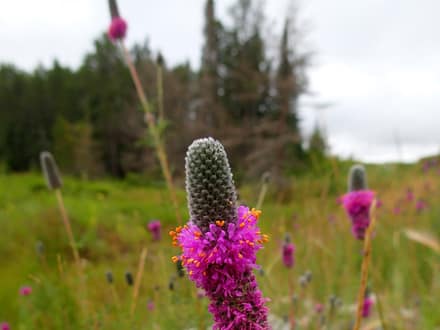
Purple Prairie Clover
Dalea purpurea
A fine-textured prairie legume with thimbles of purple bloom ringed in orange pollen.
A perennial bed with no gap in color
Four-nerve daisy and engelmann daisy both bloom the longest of the six, four-nerve daisy nearly year-round in mild winters and engelmann daisy from spring deep into fall. Purple prairie clover and gayfeather take the middle and late summer, both fine-textured plants that read as airy rather than bulky in a border. Maximilian sunflower and fall aster close out the year, maximilian sunflower topping out at up to 8 feet by late summer and fall aster following it into October and November.
Low maintenance once established
All six share the same basic pattern: full sun, low water once rooted in, and no regular fertilizer. Gayfeather and purple prairie clover both grow from a deep taproot or corm, which makes them drought-tough but means they resent being moved once planted, so it's worth deciding on a spot before putting them in the ground rather than planning to relocate them later.
FAQ
Which native Texas perennial blooms the longest?
Four-nerve daisy, which flowers nearly year-round in a mild winter, and engelmann daisy, which runs from spring into fall, are the two longest bloomers on this list.
Do these perennials come back every year on their own?
Yes, all six regrow from the same root, corm, or taproot each year rather than needing to be replanted, unlike an annual wildflower.
Can I transplant these once they're established?
Gayfeather and purple prairie clover both resent being moved once rooted in, growing from a corm or deep taproot that doesn't take well to transplanting. Choose their spot carefully the first time.