Texas · Wildflowers
Native Wildflowers of Texas
Updated 2026-09-11
Texas built its wildflower reputation on roadside bluebonnets, but the six species here cover more than one bloom season. Texas bluebonnet, indian blanket, and standing cypress are spring bloomers that reseed on their own once established. Mexican hat, black-eyed susan, and scarlet sage carry color from late spring into fall. Together they work for a mowed meadow strip, a reseeding drift along a fence line, or mixed into a regular garden bed.
6 plants
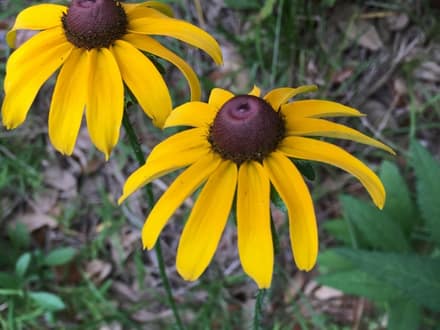
Black-eyed Susan
Rudbeckia hirta
The classic golden prairie daisy — cheerful, tough, and endlessly reseeding.
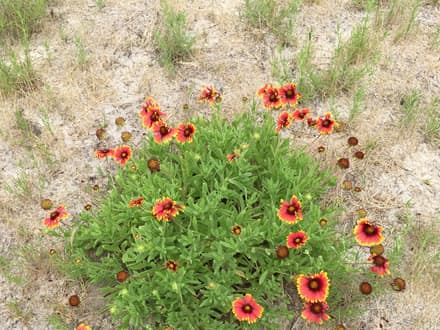
Indian Blanket
Gaillardia pulchella
The red-and-gold pinwheel daisy that blankets Texas roadsides all summer.
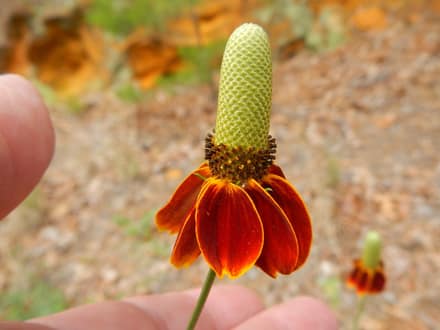
Mexican Hat
Ratibida columnifera
A whimsical prairie flower whose drooping petals form a sombrero beneath a tall central cone.
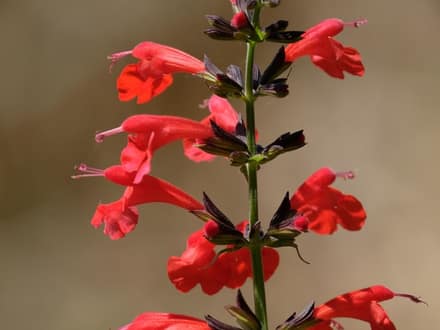
Scarlet Sage
Salvia coccinea
An easy reseeding sage that blooms scarlet from spring to frost, even in part shade — one of the few hummingbird plants that flowers reliably out of full sun..
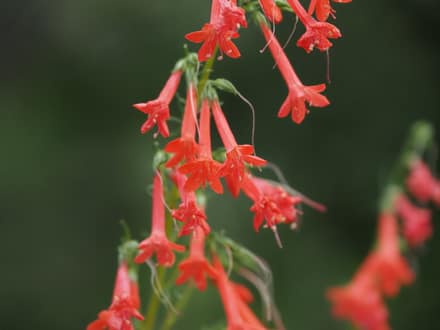
Standing Cypress
Ipomopsis rubra
A tall biennial spike of fiery red tubular flowers that hummingbirds chase up and down.
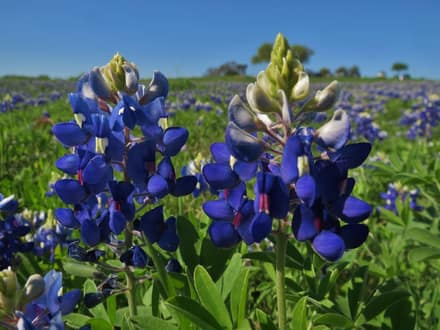
Texas Bluebonnet
Lupinus texensis
The Texas state flower — a spring-blooming annual lupine that carpets roadsides in cobalt blue.
Spring bloomers that reseed themselves
Texas bluebonnet, indian blanket, and standing cypress all germinate in fall, overwinter as a low rosette, and bloom the following spring, then set seed and die back for the summer. Left alone, a patch of any of these will thicken every year as the dropped seed germinates the next fall. The one rule that makes or breaks a reseeding patch: don't mow or cut it back until the seed pods have dried and split, usually by early summer. Mow too early and you cut off next year's plants before they've had the chance to drop seed.
Summer-into-fall color
Mexican hat and black-eyed susan pick up where the spring bloomers leave off, both flowering from late spring through summer on ordinary garden watering rather than a strict reseed-and-die cycle. Scarlet sage does the same but tolerates shade the other two won't, making it the one wildflower on this list that also works in a part-shade bed rather than needing full sun.
FAQ
When do you plant bluebonnet seeds in Texas?
Fall, typically September through November, so they can germinate and grow a root system before the first freeze and bloom the following spring. Spring-planted bluebonnet seed rarely blooms the same year.
Do Texas wildflowers come back every year on their own?
Bluebonnet, indian blanket, and standing cypress all reseed themselves if you let the seed pods mature before cutting the plants back. Mexican hat and black-eyed susan are longer-lived perennials that return from the same root each year in addition to reseeding.
Can I start a wildflower meadow from these six species alone?
Yes, and mixing spring and summer bloomers is what keeps a meadow patch from going bare in June. Sow in fall, water through the first season to get plants established, then let the patch self-sustain from dropped seed after that.