Wildflower · Deer-resistant
Scarlet Sage
Salvia coccinea
Also called: Tropical Sage, Blood Sage
Updated 2026-09-11
An easy reseeding sage that blooms scarlet from spring to frost, even in part shade — one of the few hummingbird plants that flowers reliably out of full sun.
Most sun-loving hummingbird plants stop flowering the moment they land in a shadier spot. Scarlet sage doesn't: it keeps producing red blooms in part shade and even fuller shade, which makes it one of the few dependable options for a hummingbird bed that isn't in full sun all day.
It's also about as low-effort as a native wildflower gets. Seed germinates readily, and from there the plant largely fills in on its own.
Growing & care
Grows fast from seed and reseeds gently. Shear spent spikes for continuous bloom. One of the most shade-tolerant salvias, though it flowers most in sun.
Where it grows in Texas
Scarlet sage grows across a wide range of Texas conditions and soils, from sandy ground to clay, and tolerates sun, part shade, and even full shade, though it flowers most heavily with more sun. That flexibility makes it one of the more forgiving natives for a Texas yard with mixed light, including spots under trees where most sun-loving natives won't perform.
Because it tolerates such a wide range of soil, from sandy ground through loam to clay, and both dry and consistently moist conditions, it's one of the more forgiving choices on this site for a yard with inconsistent or unimproved soil rather than a carefully prepared bed.
How to plant
Sun, part shade, or shade, in sandy, loam, or clay soil, well-drained. It grows quickly from seed and germinates readily, making it an easy, inexpensive way to fill a bed. Direct-sow after the last frost, or start indoors earlier for a head start on bloom.
A typical plant reaches roughly knee height, up to about 30 inches, by the time it's flowering heavily, so space new plants accordingly rather than packing them in as tightly as a low groundcover.
Care through the seasons
Cutting back spent flower spikes periodically keeps the plant blooming steadily rather than going to seed early and slowing down. Because it reseeds on its own, an established planting tends to refill itself year to year without deliberate replanting, though it doesn't spread aggressively enough to become a problem in most beds.
Common problems
Scarlet sage has few problems in the right conditions. It can look leggy without periodic trimming, especially in shadier spots where growth stretches toward available light, so shear it back to keep a fuller shape. It behaves as an annual in colder winters and a short-lived perennial where winters stay mild, so don't be surprised if a stand thins after a hard freeze; the self-sown seedlings typically replace it the following spring.
The main practical decision with scarlet sage is really just how much sun the planting site gets, since that determines both bloom volume and whether the plant returns reliably as a perennial or behaves more like an annual.
Wildlife value
The red tubular flowers are a strong hummingbird draw nearly year-round, and butterflies and bees work it for nectar as well.
The foliage carries a noticeably pungent scent when brushed or crushed, which is part of what makes scarlet sage fairly deer-resistant even in yards where deer browse most other soft-leaved perennials.
Bees work the flowers alongside the hummingbirds and butterflies, so a single planting draws all three of the main pollinator groups this site tracks.
Using it in the garden
Because it tolerates shade better than most sun-loving natives, scarlet sage is one of the better choices for filling color under trees or on the shadier side of a house where a hummingbird plant wouldn't otherwise work. It also self-seeds into naturalistic drifts, so it suits an informal cottage-style bed better than a tightly clipped formal one.
Often confused with
Scarlet sage is the shade-tolerant one of the site's three native salvias. Autumn sage covers red, pink, coral, and white but wants full sun and a woodier, shrubbier habit; mealy blue sage covers blue and purple spikes and also wants more sun than scarlet sage needs. If a bed has real shade and still needs hummingbird color, scarlet sage is usually the right pick of the three.
FAQ
Will scarlet sage grow in shade?
Yes, it's one of the most shade-tolerant salvias available, though it flowers most heavily in full sun.
Is scarlet sage an annual or a perennial?
It behaves as an annual where winters are hard and a short-lived perennial where winters stay mild. Either way, it reseeds readily, so a planting tends to persist from its own seedlings.
How do I keep scarlet sage blooming all season?
Shear off spent flower spikes regularly. It responds with continuous new blooms from spring through frost.
Bloom season
In bloom: Apr–Nov · Colors: red
Where to buy
Look for scarlet sage (Salvia coccinea) at: Prairie Moon Nursery, native Texas nurseries, Eden Brothers seed.
Sources
Range, nomenclature, and the USDA symbol above come from the federal plant record for this species. Check it yourself:
Good for
Plant it with
Natives that pair with scarlet sage
Same conditions, same uses — species that share scarlet sage's growing requirements and belong in the same bed.
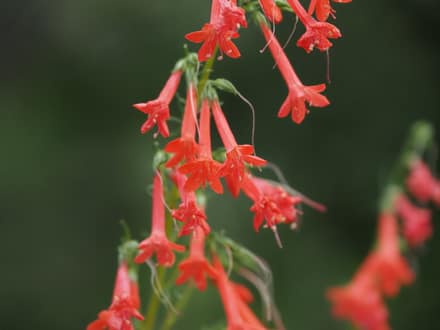
Standing Cypress
Ipomopsis rubra
A tall biennial spike of fiery red tubular flowers that hummingbirds chase up and down.
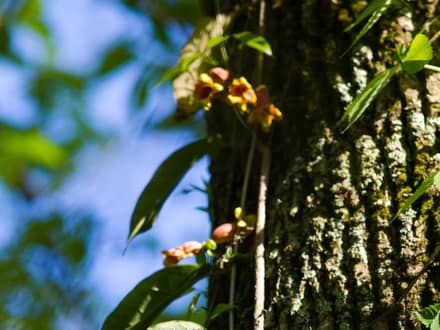
Crossvine
Bignonia capreolata
A vigorous semi-evergreen climber that covers a fence or arbor in orange-red trumpets in early spring — timed for the first returning hummingbirds.
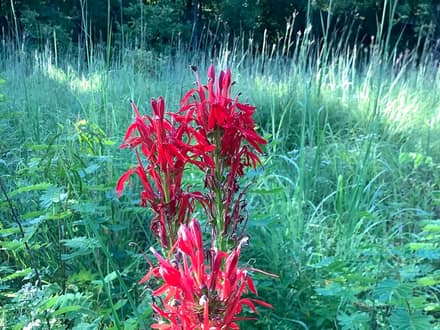
Cardinal Flower
Lobelia cardinalis
Spikes of the most intense scarlet of any native flower, rising from moist shade in late summer.
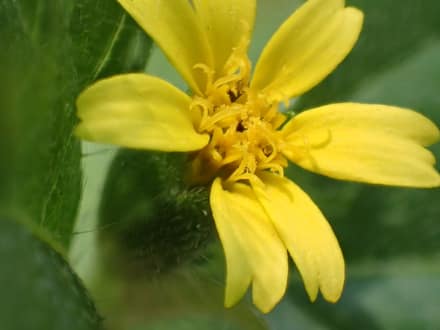
Horseherb
Calyptocarpus vialis
A soft, low groundcover that quietly replaces lawn in the shade where turf fails, threading tiny yellow flowers through its foliage for pollinators nearly year-round..
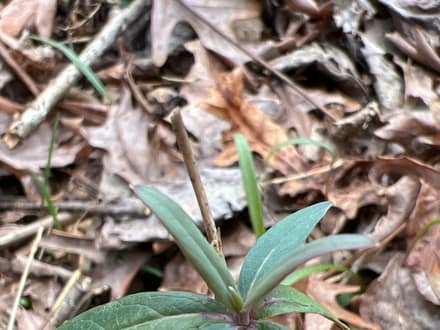
Coral Honeysuckle
Lonicera sempervirens
A well-behaved native vine — none of the invasive habit of Japanese honeysuckle — with clusters of coral trumpets that hummingbirds cannot resist..
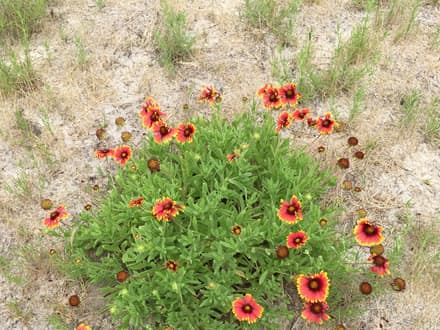
Indian Blanket
Gaillardia pulchella
The red-and-gold pinwheel daisy that blankets Texas roadsides all summer.