Home · Texas · Texas Mountain Laurel
Shrub · Deer-resistant
Texas Mountain Laurel
Dermatophyllum secundiflorum
Also called: Mescal Bean, Frijolito
A slow-growing evergreen with glossy leaves and drooping clusters of purple flowers that smell exactly like grape soda each spring. Bulletproof once established.
Growing & care
Needs excellent drainage and alkaline soil; hates wet feet. Very slow — buy the biggest you can afford. The seeds are toxic, so site away from young children.
Bloom season
In bloom: Mar–Apr · Colors: purple
Where to buy
Look for texas mountain laurel (Dermatophyllum secundiflorum) at: native Texas nurseries.
Sources
Range, nomenclature, and the USDA symbol above come from the federal plant record for this species. Check it yourself:
Dermatophyllum secundiflorum (DESE7) in the USDA PLANTS Database →
Good for
Plant it with
Natives that pair with texas mountain laurel
Same conditions, same uses — species that share texas mountain laurel's growing requirements and belong in the same bed.
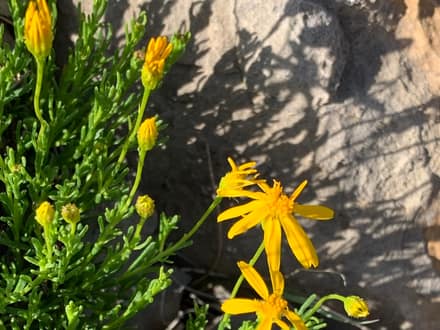
Damianita
Chrysactinia mexicana
A low evergreen cushion of fine, aromatic foliage smothered in golden daisies in spring and again in fall.
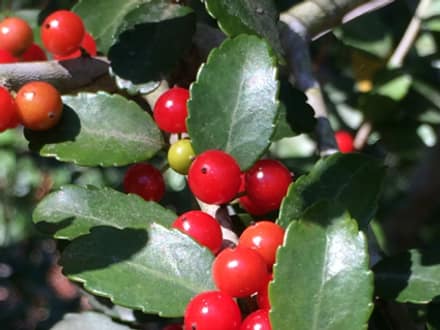
Yaupon Holly
Ilex vomitoria
An adaptable evergreen holly that takes sun or deep shade, wet or dry, and covers itself in translucent red berries that hold all winter for the birds.
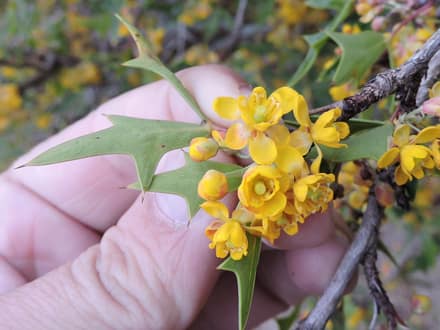
Agarita
Berberis trifoliolata
A spiny blue-grey evergreen that bees swarm in late winter and birds nest inside for protection.
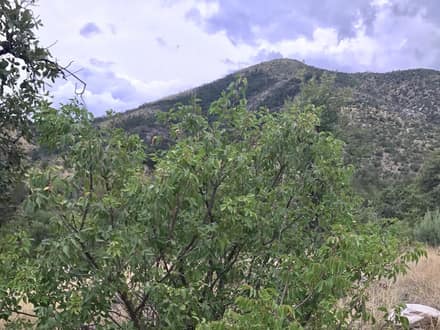
Evergreen Sumac
Rhus virens
A lush, glossy evergreen that looks far too refined for how tough it is — a superb native screen or hedge that bees work in late summer and birds fruit on in fall..
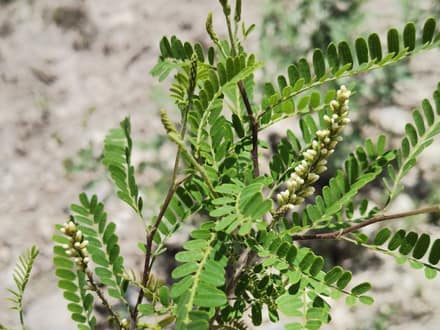
Texas Kidneywood
Eysenhardtia texana
An airy shrub that throws spikes of vanilla-scented white flowers after every rain, drawing clouds of bees and butterflies.
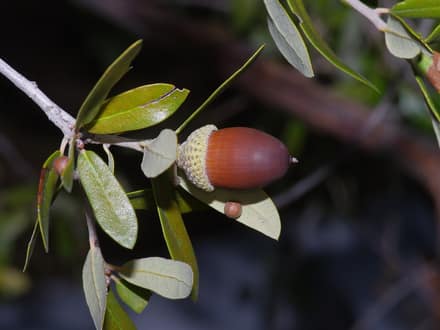
Escarpment Live Oak
Quercus fusiformis
The iconic sprawling evergreen oak of the Hill Country, holding its leaves through winter and dropping acorns that feed everything from jays to deer..