Shrub · Deer-resistant
Agarita
Berberis trifoliolata
Also called: Agarito, Algerita
Updated 2026-09-11
A spiny blue-grey evergreen that bees swarm in late winter and birds nest inside for protection. The tart red berries make a prized jelly.
Agarita covers the caliche hillsides of the Hill Country and West Texas in a spiny, silvery-blue thicket that flowers weeks before most of the garden wakes up, typically by February. That early timing matters more than it looks: it's one of the only nectar sources around for bees that early in the year.
The plant asks for almost nothing in return. Once it's rooted, it needs no irrigation and holds up on ground too poor and rocky for most other shrubs to bother with.
Growing & care
Holly-like prickly leaves make it a superb barrier hedge. Thrives on rocky ground and neglect. Nearly impossible to kill once rooted; no supplemental water needed.
Where it grows in Texas
Agarita is native to the caliche and limestone ground of the Hill Country, the Edwards Plateau, and much of West and South Texas, and it performs the same way in a garden as it does on a hillside: full sun to part shade, on rocky, well-drained soil that other shrubs struggle in. It needs no irrigation once established almost anywhere in the state, since it is built for the driest, rockiest ground Texas has to offer.
How to plant
Plant in full sun to part shade, in rocky, caliche, or limestone-based soil with good drainage; agarita is not picky about soil richness and does better in lean ground than in a rich, amended bed. It grows at a fast rate for a shrub once established and often forms thickets by suckering, so give it room. From seed, expect a cold stratification period of two to three months before spring germination, and a slow start: seedlings can take a minimum of three years to reach a five-gallon-size plant, which is why most gardeners buy an established shrub rather than starting from seed.
Care through the seasons
Established agarita gets by entirely on rainfall and needs no regular feeding. The one real timing rule is pruning: do any shaping no later than fall, since next February's flower buds form on this year's wood, and cutting into winter or spring removes the coming bloom before it opens. Left alone, an established planting spreads slowly by suckering and widens over the years unless the spreading shoots are cut back.
Common problems
Agarita has few real problems. Its holly-like, spine-tipped leaves make it unpleasant to work around or brush past, so keep it away from walkways, patios, and anywhere people or pets pass close by. The unripe green berries contain alkaloids that cause gastrointestinal upset, so only the ripe red berries should be used for jelly.
Wildlife value
Bees work the late-winter flowers hard, at a time of year when few other nectar sources are available. Small birds nest inside the dense, thorny branches for protection from predators, and the red berries feed birds and small mammals through late spring.
The flowers are yellow and cup-shaped, opening in dense clusters along the stems rather than singly, which is part of what makes the late-winter bloom so visible to foraging bees even from a distance.
Using it in the garden
The spiny, dense growth habit makes agarita one of the better living security hedges available to a Texas garden, planted along a fence line or under a window where its thorns discourage both foot traffic and intruders. It also works as an evergreen anchor in a rock garden or xeriscape bed, holding structure and blue-gray color through winter when most native perennials have died back.
Because it holds its blue-gray color and dense form through winter when most perennials have died back, a row or cluster of agarita also works as a structural anchor at the back of a bed, giving something to look at in the coldest months while everything else is dormant.
Often confused with
Agarita shares its genus with Oregon grape, a Pacific Northwest shrub that looks nothing like it: Oregon grape wants shade and consistent moisture, while agarita is built for heat, sun, and rocky, dry ground. The resemblance is mostly in the leaf structure and the yellow flowers, not in what either plant needs to thrive.
FAQ
When should I prune agarita?
No later than fall. Agarita sets its February-to-April flower buds on the previous year's growth, so pruning in winter or spring cuts off the coming bloom.
Are agarita berries safe to eat?
The ripe red berries are used for jelly, but unripe green berries contain alkaloids that can cause gastrointestinal distress, so only harvest berries once they've turned red.
Why does agarita have thorns?
Its leaves are holly-like with spine-tipped edges, which is exactly what makes it effective as a barrier hedge. Plant it away from walkways and high-traffic areas.
Does agarita need water once it's established?
No. It is one of the most drought-tolerant native shrubs for Texas and needs no supplemental irrigation once rooted.
Bloom season
In bloom: Feb–Apr · Colors: yellow
Where to buy
Look for agarita (Berberis trifoliolata) at: native Texas nurseries.
Sources
Range, nomenclature, and the USDA symbol above come from the federal plant record for this species. Check it yourself:
Good for
Plant it with
Natives that pair with agarita
Same conditions, same uses — species that share agarita's growing requirements and belong in the same bed.
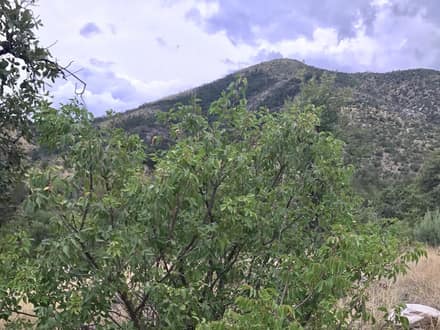
Evergreen Sumac
Rhus virens
A lush, glossy evergreen that looks far too refined for how tough it is — a superb native screen or hedge that bees work in late summer and birds fruit on in fall..
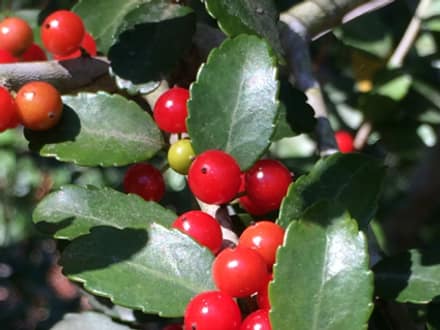
Yaupon Holly
Ilex vomitoria
An adaptable evergreen holly that takes sun or deep shade, wet or dry, and covers itself in translucent red berries that hold all winter for the birds.
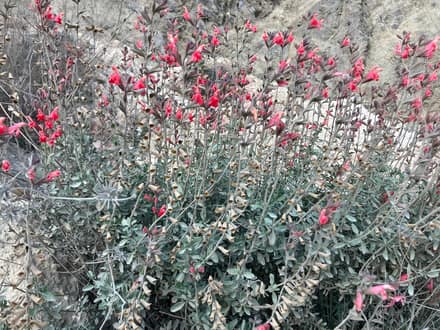
Autumn Sage
Salvia greggii
The workhorse of the water-wise Texas garden: a small evergreen shrub that blooms nearly year-round and shrugs off heat, drought, and deer..
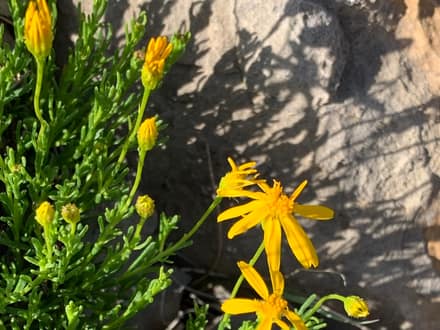
Damianita
Chrysactinia mexicana
A low evergreen cushion of fine, aromatic foliage smothered in golden daisies in spring and again in fall.
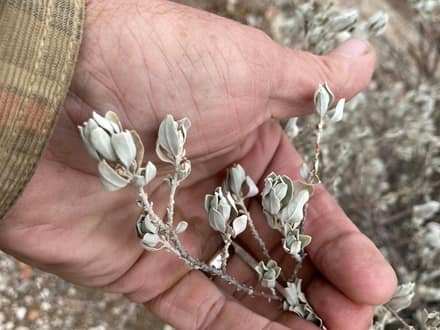
Texas Sage
Leucophyllum frutescens
A silver-leaved desert shrub that bursts into purple bloom after rain — earning its nickname 'barometer bush.' Thrives on neglect in the hottest, driest corners of a Texas yard..
Wax Myrtle
Morella cerifera
A fast, dense, aromatic evergreen that makes an ideal privacy screen and fixes its own nitrogen.