Home · Texas · Hedges & Screens
Texas · Hedges & Screens
Native Hedge Plants for Texas
Updated 2026-09-11
A hedge doesn't have to mean the same clipped boxwood or ligustrum wall in every yard. The 6 shrubs here split into two approaches: a couple take shearing well enough for a formal, clipped hedge, and the rest work better left informal, growing into their natural shape as a looser screen.
6 plants
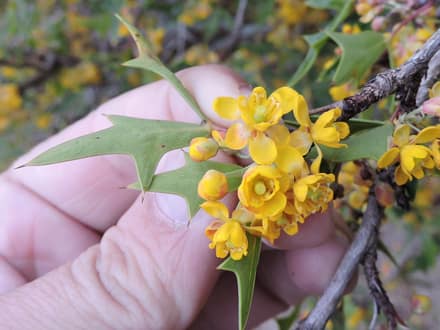
Agarita
Berberis trifoliolata
A spiny blue-grey evergreen that bees swarm in late winter and birds nest inside for protection.
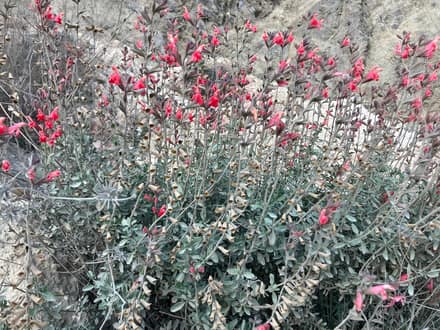
Autumn Sage
Salvia greggii
The workhorse of the water-wise Texas garden: a small evergreen shrub that blooms nearly year-round and shrugs off heat, drought, and deer..
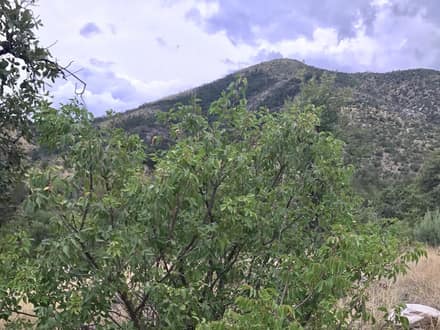
Evergreen Sumac
Rhus virens
A lush, glossy evergreen that looks far too refined for how tough it is — a superb native screen or hedge that bees work in late summer and birds fruit on in fall..
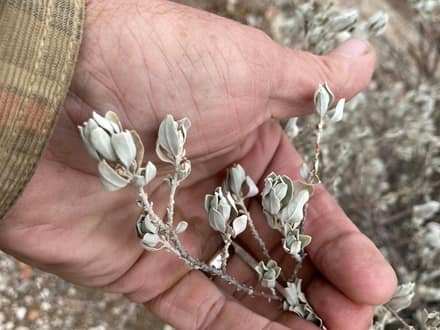
Texas Sage
Leucophyllum frutescens
A silver-leaved desert shrub that bursts into purple bloom after rain — earning its nickname 'barometer bush.' Thrives on neglect in the hottest, driest corners of a Texas yard..
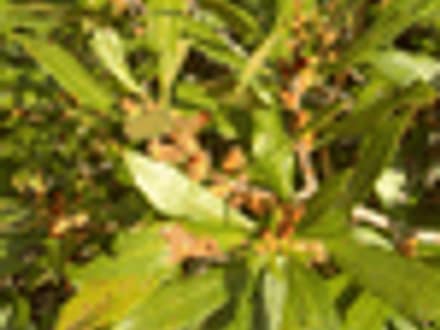
Wax Myrtle
Morella cerifera
A fast, dense, aromatic evergreen that makes an ideal privacy screen and fixes its own nitrogen.
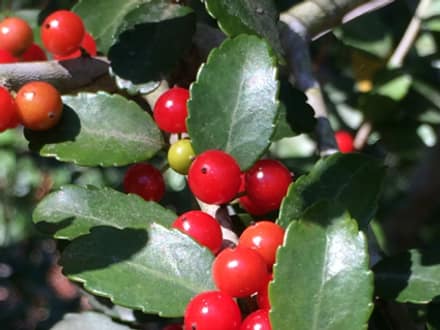
Yaupon Holly
Ilex vomitoria
An adaptable evergreen holly that takes sun or deep shade, wet or dry, and covers itself in translucent red berries that hold all winter for the birds.
Formal, clipped hedges
Yaupon holly is the site's best candidate for a true clipped hedge, tolerating hard, repeated shearing into a dense wall at almost any height. Agarita takes shearing too, and its spiny leaves make it double as a barrier hedge, useful along a property line where you also want to discourage foot traffic. Evergreen sumac holds a clipped shape reasonably well and works where a taller screen is the goal.
Informal, flowering screens
Autumn sage and texas sage both flower better left unclipped, since shearing removes the new growth each does most of its blooming on. Texas sage in particular is usually grown as a loose, silvery-leaved screen rather than a hedge in the traditional sense, often triggered into a flush of purple bloom right after rain. Wax myrtle grows large and fast enough to close a gap quickly as an informal screen, though it also takes shearing if a more defined edge is wanted later.
FAQ
What's a good native alternative to a boxwood hedge in Texas?
Yaupon holly is the closest match, since it tolerates the same hard, regular shearing boxwood does and holds a dense, clipped form.
Can these native hedges also work as a privacy screen?
Yes. Wax myrtle and evergreen sumac both grow tall and dense enough for privacy screening, whether kept informal or sheared into a more defined shape.
Do I need to shear these shrubs to keep them hedge-like?
Only the ones grown as formal hedges, yaupon holly, agarita, and evergreen sumac. Autumn sage and texas sage bloom better left unclipped and are usually grown as an informal screen instead.