Home · Texas · Evergreen Sumac
Shrub · Deer-resistant
Evergreen Sumac
Rhus virens
Also called: Tobacco Sumac
Updated 2026-09-23
A lush, glossy evergreen that looks far too refined for how tough it is — a superb native screen or hedge that bees work in late summer and birds fruit on in fall.
Evergreen sumac looks too polished for how little it asks of a gardener: glossy, leathery leaflets on a dense multi-trunked shrub that holds its color year-round and takes shearing into a formal hedge as easily as it grows wild and loose. It's a genuine native substitute for the non-native pyracantha and privet hedges seen all over Texas landscaping.
Growing & care
Fast, dense, and drought-proof on rocky ground. Takes shearing well for a formal hedge or leave it natural. New growth flushes an attractive reddish tint.
Where evergreen sumac grows in Texas
The Native Plant Society of Texas lists it across the Chihuahuan Deserts, Cross Timbers and Edwards Plateau, with specific distribution through the Chihuahuan Basin, desert grasslands, the Stockton Plateau, Balcones Canyonlands and the Llano Uplift. It wants dry, limestone or rocky soil that drains well.
How to plant evergreen sumac
Plant container stock in fall or winter, in full sun to part shade. New growth flushes with an attractive reddish tint before settling into its mature glossy green, which is worth expecting rather than mistaking for a problem.
Watering evergreen sumac the first year
Water regularly through the first year or two while it establishes; growth is moderate to fast once it's rooted in. Avoid overwatering in summer specifically, since consistently wet conditions in the heat can lead to leggy branches or fungal issues.
Evergreen Sumac care through the seasons
It takes shearing well for a tight, formal hedge, or can simply be left to grow into its natural multi-trunked, rounded form. Prune mainly to manage size and shape rather than out of any real necessity.
Common evergreen sumac problems
Wet, poorly drained soil in warm weather is the main risk, since it can lead to fungal infection; sharp drainage largely prevents this. Overwatering generally, even without standing water, tends to produce leggy, weaker growth compared to a plant grown lean.
Wildlife value of evergreen sumac
The summer flower clusters draw bees, and the small fuzzy berries that follow feed birds in fall. It also provides forage, nesting material and cover for a range of birds and small mammals.
Using evergreen sumac in the garden
Use it as a sheared hedge or privacy screen where a native alternative to pyracantha or privet is wanted, or let it grow into its natural rounded shrub form as a specimen or background planting. Its evergreen structure makes it valuable for year-round screening in a way few other native shrubs of this size can match.
Evergreen Sumac FAQ
Is evergreen sumac a good hedge plant?
Yes, it takes shearing well and is often used as a native substitute for non-native hedge shrubs like pyracantha and privet, while asking for less water and care once established.
Why is my evergreen sumac getting leggy?
Overwatering, especially in summer, is the most common cause. It's built for lean, well-drained conditions, and consistently wet soil tends to produce weaker, more open growth than it would on drier ground.
Does evergreen sumac stay red year-round?
No, the reddish tint only shows up on new growth as it flushes out. The foliage settles into a glossy dark green as it matures, with fresh red growth appearing again at each new flush.
Bloom season
In bloom: Jul–Sep · Colors: white
Where to buy
Look for evergreen sumac (Rhus virens) at: native Texas nurseries.
Guides featuring evergreen sumac
Sources
Range, nomenclature, and the USDA symbol above come from the federal plant record for this species. Check it yourself:
Good for
Plant it with
Natives that pair with evergreen sumac
Same conditions, same uses — species that share evergreen sumac's growing requirements and belong in the same bed.
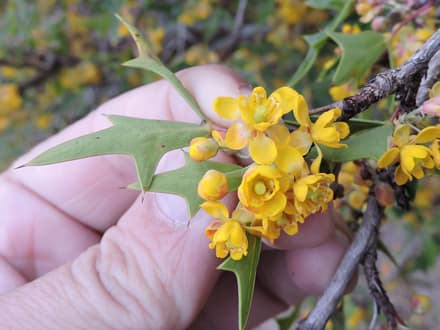
Agarita
Berberis trifoliolata
A spiny blue-grey evergreen that bees swarm in late winter and birds nest inside for protection.
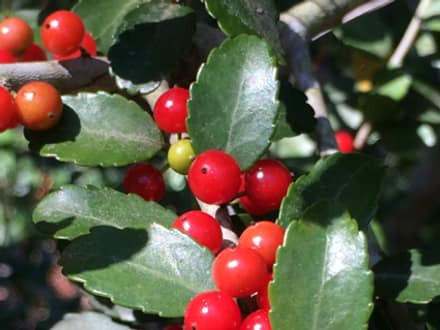
Yaupon Holly
Ilex vomitoria
An adaptable evergreen holly that takes sun or deep shade, wet or dry, and covers itself in translucent red berries that hold all winter for the birds.
Wax Myrtle
Morella cerifera
A fast, dense, aromatic evergreen that makes an ideal privacy screen and fixes its own nitrogen.
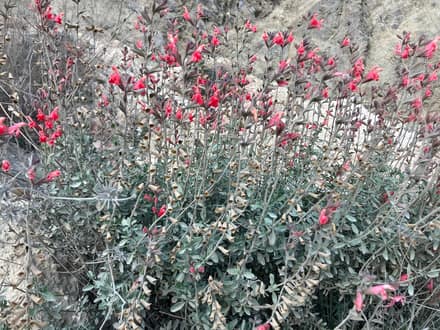
Autumn Sage
Salvia greggii
The workhorse of the water-wise Texas garden: a small evergreen shrub that blooms nearly year-round and shrugs off heat, drought, and deer..
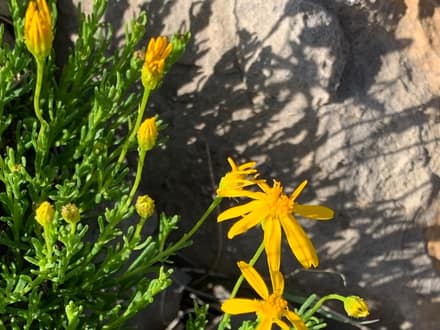
Damianita
Chrysactinia mexicana
A low evergreen cushion of fine, aromatic foliage smothered in golden daisies in spring and again in fall.
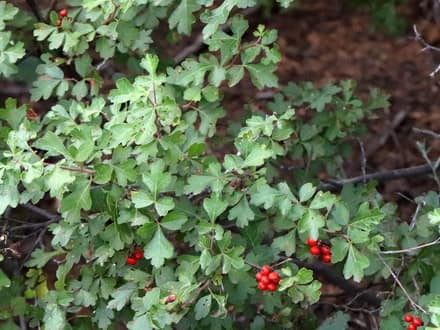
Fragrant Sumac
Rhus aromatica
A low, spreading shrub that blazes orange-red in fall and holds slopes with its suckering roots.