Shrub · Deer-resistant
Texas Sage
Leucophyllum frutescens
Also called: Cenizo, Barometer Bush, Purple Sage
Updated 2026-09-16
A silver-leaved desert shrub that bursts into purple bloom after rain — earning its nickname 'barometer bush.' Thrives on neglect in the hottest, driest corners of a Texas yard.
Texas sage, or cenizo, is the silver-gray shrub planted in yards and commercial landscapes all over Texas. Most of the year it is a soft, evergreen mound. Then, after a summer rain or a stretch of humid weather, it suddenly covers itself in small bell-shaped flowers in purple, pink or white. That habit gives it another common name, barometer bush.
Despite the name, it is not a true sage or a salvia. It is also called purple sage, which adds to the confusion.
Growing & care
Plant in fast-draining soil and full sun. Never overwater — root rot is the only thing that kills it. Prune lightly in late winter; avoid shearing into tight balls.
Where Texas sage grows in Texas
Cenizo is native to the Rio Grande Plain, the Edwards Plateau and the Chihuahuan Desert, where it grows on arid hillsides, in ravines and along ditches. It is now planted all over the state. It is rated for zones 8 to 11, so it is dependable in Central, South and West Texas and chancier in the coldest parts of North Texas and the Panhandle.
How to plant Texas sage
Full sun and fast drainage decide whether it thrives. It wants dry, rocky, alkaline soil. It can grow in clay if the site drains, but in a low, wet spot it will not last. Raised beds or a slope help in heavy soils.
Give it space. Mature shrubs reach 4 to 8 feet tall and 4 to 6 feet wide. Plant in spring or fall. The Native Plant Society of Texas notes you can sow seed after the last spring frost (collect it before the capsules split) or root softwood or semi-hardwood cuttings with rooting powder.
Watering Texas sage the first year
Water every week or two through the first summer, only when the top few inches of soil are dry. After that, leave it alone. An established cenizo in native soil needs no irrigation, and regular watering is the most common way to kill it.
Texas Sage care through the seasons
If it needs shaping, do it with a light hand at the end of winter, and cut some of the oldest stems out of older shrubs to keep them full. Avoid shearing it into balls or boxes. That removes flowering wood and leaves a dense shell with a bare interior. Do not fertilize.
Common Texas sage problems
Too much water is the big one. Kept moist, cenizo is prone to cotton root rot, a soil fungus that can kill an established shrub quickly in summer. Keep it out of reach of lawn sprinklers and away from beds that get regular irrigation. Leggy, sparse plants usually mean too much shade.
Wildlife value of Texas sage
Bees and butterflies work the flowers during each bloom. The Native Plant Society of Texas lists it as a larval host for the theona checkerspot butterfly and the calleta silkmoth. Deer rarely touch it.
Using Texas sage in the garden
Use it as an informal hedge or screen, as a silver backdrop for red and purple flowers, or as a replacement for Japanese ligustrum, which the Native Plant Society of Texas suggests it can replace. It pairs well with agarita, flame acanthus, blackfoot daisy and autumn sage in a low-water bed.
Often confused with
Texas sage is often confused with true sages (Salvia) because of the name. Salvias have square stems and two-lipped flowers; cenizo has round woody stems, silvery hairy leaves and bell-shaped flowers. There are also several Leucophyllum cultivars and related species sold in Texas nurseries with greener leaves or different flower colors.
Texas Sage FAQ
Do deer eat Texas sage?
Rarely. It is considered deer resistant.
Why is my Texas sage not blooming?
It blooms in flushes after rain or high humidity, so dry stretches mean no flowers. Too much shade or heavy shearing also cuts bloom.
When should I prune Texas sage?
At the end of winter, and only lightly. Thin old stems rather than shearing the outside into a ball.
Is Texas sage evergreen?
Yes, it keeps its silver-gray leaves through winter in most of Texas.
What kills Texas sage?
Overwatering. Wet soil invites cotton root rot, which can kill it quickly.
Bloom season
In bloom: Jun–Oct · Colors: purple, pink
Where to buy
Look for texas sage (Leucophyllum frutescens) at: Native Texas nurseries, Prairie Moon Nursery, local independent garden centers.
Guides featuring Texas sage
- Native Alternatives to Common Non-Native Plants in Texas
- Texas Native Plant Calendar: What to Plant, Sow and Prune by Season
- Texas Native Salvias: Autumn, Mealy Blue, Scarlet and Cedar Sage
Sources
Range, nomenclature, and the USDA symbol above come from the federal plant record for this species. Check it yourself:
Leucophyllum frutescens (LEFR3) in the USDA PLANTS Database →
Good for
Plant it with
Natives that pair with texas sage
Same conditions, same uses — species that share texas sage's growing requirements and belong in the same bed.
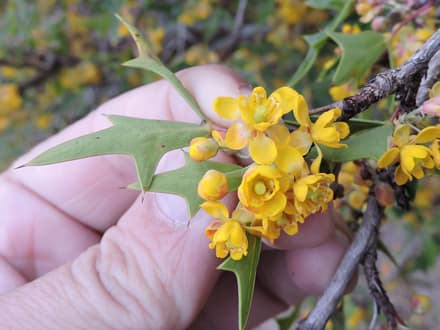
Agarita
Berberis trifoliolata
A spiny blue-grey evergreen that bees swarm in late winter and birds nest inside for protection.
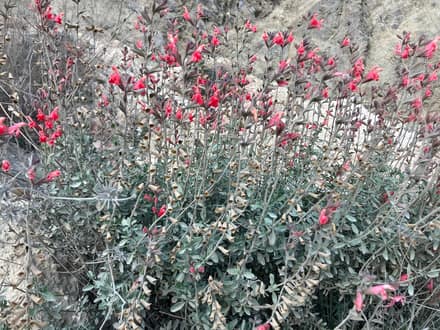
Autumn Sage
Salvia greggii
The workhorse of the water-wise Texas garden: a small evergreen shrub that blooms nearly year-round and shrugs off heat, drought, and deer..
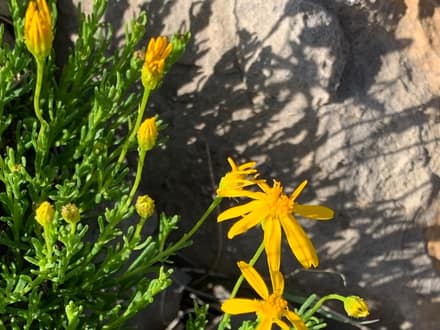
Damianita
Chrysactinia mexicana
A low evergreen cushion of fine, aromatic foliage smothered in golden daisies in spring and again in fall.
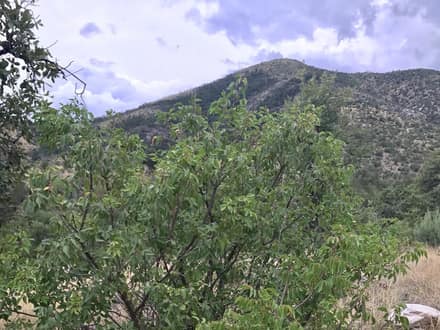
Evergreen Sumac
Rhus virens
A lush, glossy evergreen that looks far too refined for how tough it is — a superb native screen or hedge that bees work in late summer and birds fruit on in fall..
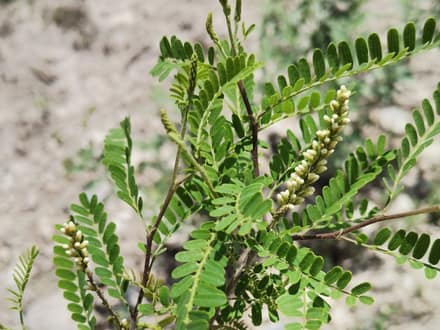
Texas Kidneywood
Eysenhardtia texana
An airy shrub that throws spikes of vanilla-scented white flowers after every rain, drawing clouds of bees and butterflies.
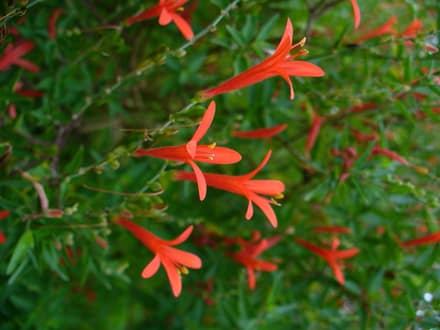
Flame Acanthus
Anisacanthus quadrifidus var. wrightii
A wispy, tough shrub that throws tubular orange-red flowers through the worst of the summer heat — exactly when hummingbirds are fueling up for migration..