Shrub · Deer-resistant
Flame Acanthus
Anisacanthus quadrifidus var. wrightii
Also called: Hummingbird Bush, Wright's Desert Honeysuckle
Updated 2026-09-16
A wispy, tough shrub that throws tubular orange-red flowers through the worst of the summer heat — exactly when hummingbirds are fueling up for migration.
Flame acanthus is a small, twiggy shrub covered in narrow orange-red tubular flowers from June until frost. It blooms hardest in the hottest part of the year and keeps going through fall, when hummingbirds are passing through Texas on migration. That is why it is also called hummingbird bush.
It looks delicate but it is one of the toughest shrubs you can plant in Texas. It needs little water once rooted, deer almost never eat it, and a hard pruning each winter is about all the care it asks for.
Growing & care
Blooms on new wood, so cut back hard in late winter. Needs almost no water once rooted. Full sun gives the heaviest bloom.
Where flame acanthus grows in Texas
In the wild flame acanthus grows only in South and West Texas: the South Texas Plains, the Edwards Plateau and the Chihuahuan Desert, on rocky banks, floodplains, shrublands and grasslands. It grows well far outside that range. The Native Plant Society of Texas notes it survives as far north as Dallas, where it may freeze to the ground and come back from the roots in spring. It is rated for zones 7 through 10.
How to plant flame acanthus
Full sun gives the most flowers; part shade works with some loss of bloom. It grows in rocky, sandy or limestone soil and in clay if it drains.
Growing your own is easy. Sow fresh seed about 1/3 to 1/2 inch deep in moist, well-drained soil, or take 4 to 6 inch softwood cuttings, which root within about three weeks with rooting hormone. Container shrubs can be planted any time from fall through spring.
It is a medium-sized plant, usually 2 to 4 feet tall and 3 to 4 feet wide in gardens, so space plants about 3 feet apart for a low hedge.
Watering flame acanthus the first year
Water weekly through the first summer. After that it is very drought tolerant. Central Texas Gardener notes it flowers more with an occasional deep watering during the hottest weeks, so a soak every couple of weeks in a dry August pays off in bloom.
Flame Acanthus care through the seasons
Flame acanthus flowers on new growth, so cut it back hard in late winter, around February, before new leaves appear. A hard cut gives a dense, rounded shrub covered in flowers by midsummer. In the northern part of its range, winter often does the pruning for you; just cut away the dead stems.
If you prefer it a little larger, the Native Plant Society of Texas suggests trimming by about a third in early winter instead.
Common flame acanthus problems
Few. Unpruned plants get leggy and sparse at the base, and plants in heavy shade flower poorly. It is deciduous, so it looks like a bundle of sticks in winter; that is normal. In poorly drained clay that stays wet, roots can struggle.
Wildlife value of flame acanthus
Hummingbirds are the headline, and butterflies and other insects also feed on the nectar. The Native Plant Society of Texas lists it as a larval host for the Janais patch and Texas crescent butterflies. Central Texas Gardener describes it as extremely deer resistant.
Using flame acanthus in the garden
Use it as a low informal hedge, in a hummingbird garden with Turk's cap and coral honeysuckle, or in a hot, dry corner that gets no irrigation. It also grows well in large containers. The fine texture and orange flowers pair well with silver plants like Texas sage and with purple flowers like mealy blue sage.
Flame Acanthus FAQ
When should I prune flame acanthus?
In late winter, around February, before new growth starts. It flowers on new wood, so a hard cut produces more blooms.
Is flame acanthus deer resistant?
Yes, it is considered highly deer resistant.
Does flame acanthus lose its leaves in winter?
Yes. It is deciduous and may freeze to the ground in colder areas, then regrow from the roots.
Why is it called hummingbird bush?
Its tubular orange-red flowers bloom through summer and fall and are a heavy draw for hummingbirds.
Bloom season
In bloom: Jun–Oct · Colors: orange, red
Where to buy
Look for flame acanthus (Anisacanthus quadrifidus var. wrightii) at: native Texas nurseries, Prairie Moon Nursery.
Guides featuring flame acanthus
Sources
Range, nomenclature, and the USDA symbol above come from the federal plant record for this species. Check it yourself:
Anisacanthus quadrifidus var. wrightii (ANQUW) in the USDA PLANTS Database →
Good for
Plant it with
Natives that pair with flame acanthus
Same conditions, same uses — species that share flame acanthus's growing requirements and belong in the same bed.
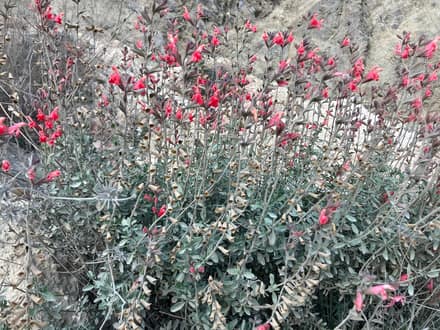
Autumn Sage
Salvia greggii
The workhorse of the water-wise Texas garden: a small evergreen shrub that blooms nearly year-round and shrugs off heat, drought, and deer..
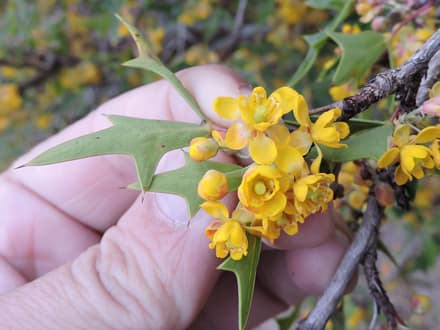
Agarita
Berberis trifoliolata
A spiny blue-grey evergreen that bees swarm in late winter and birds nest inside for protection.
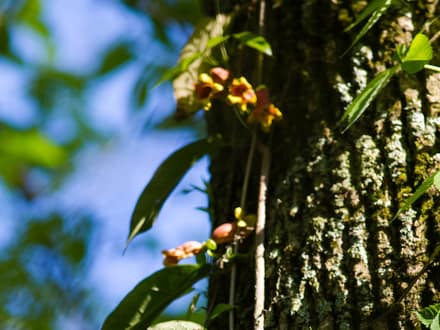
Crossvine
Bignonia capreolata
A vigorous semi-evergreen climber that covers a fence or arbor in orange-red trumpets in early spring — timed for the first returning hummingbirds.
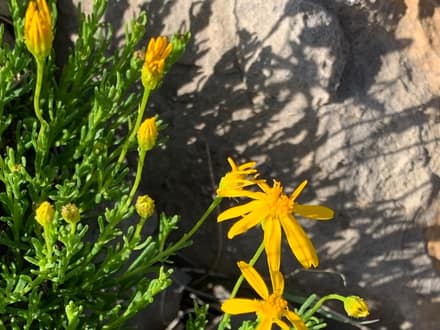
Damianita
Chrysactinia mexicana
A low evergreen cushion of fine, aromatic foliage smothered in golden daisies in spring and again in fall.
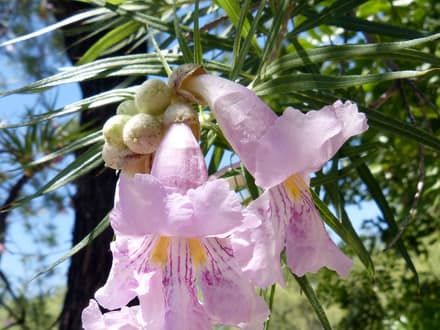
Desert Willow
Chilopsis linearis
A slender desert tree that produces orchid-like trumpet flowers all summer on almost no water.
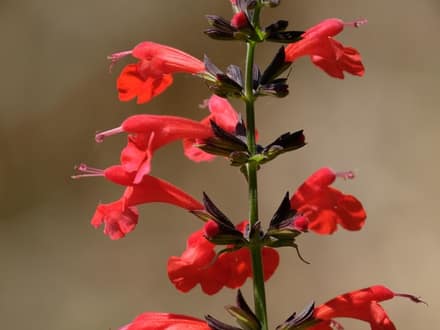
Scarlet Sage
Salvia coccinea
An easy reseeding sage that blooms scarlet from spring to frost, even in part shade — one of the few hummingbird plants that flowers reliably out of full sun..