Home · Texas · Escarpment Live Oak
Tree · Deer-resistant
Escarpment Live Oak
Quercus fusiformis
Also called: Plateau Live Oak, Texas Live Oak
The iconic sprawling evergreen oak of the Hill Country, holding its leaves through winter and dropping acorns that feed everything from jays to deer.
Growing & care
Extremely drought tough once established. Prune only in the coldest months and paint cuts to reduce oak wilt risk. Give it room — the canopy spreads wide.
Bloom season
In bloom: Mar–Apr · Colors: green
Where to buy
Look for escarpment live oak (Quercus fusiformis) at: native Texas nurseries.
Sources
Range, nomenclature, and the USDA symbol above come from the federal plant record for this species. Check it yourself:
Good for
Plant it with
Natives that pair with escarpment live oak
Same conditions, same uses — species that share escarpment live oak's growing requirements and belong in the same bed.
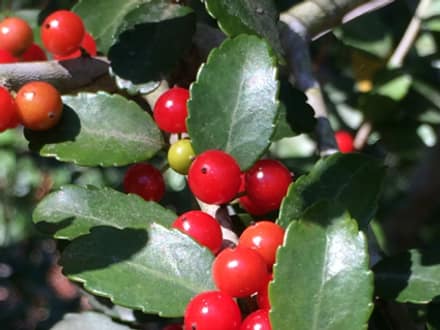
Yaupon Holly
Ilex vomitoria
An adaptable evergreen holly that takes sun or deep shade, wet or dry, and covers itself in translucent red berries that hold all winter for the birds.
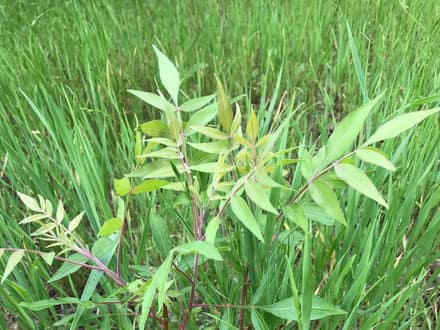
Flameleaf Sumac
Rhus lanceolata
A small native tree grown for the best red-orange fall color in central Texas, plus summer flower panicles for bees and red berry clusters that feed birds into winter..
Wax Myrtle
Morella cerifera
A fast, dense, aromatic evergreen that makes an ideal privacy screen and fixes its own nitrogen.
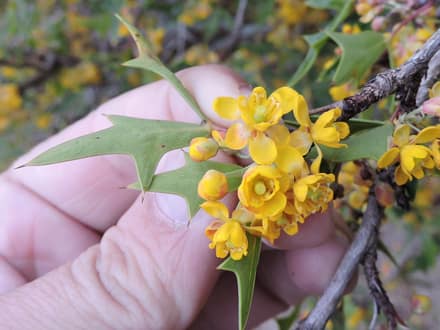
Agarita
Berberis trifoliolata
A spiny blue-grey evergreen that bees swarm in late winter and birds nest inside for protection.
Evergreen Sumac
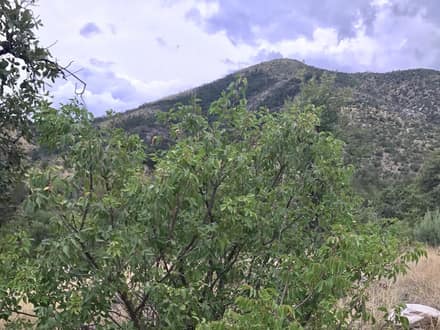
Rhus virens
A lush, glossy evergreen that looks far too refined for how tough it is — a superb native screen or hedge that bees work in late summer and birds fruit on in fall..
Texas Mountain Laurel
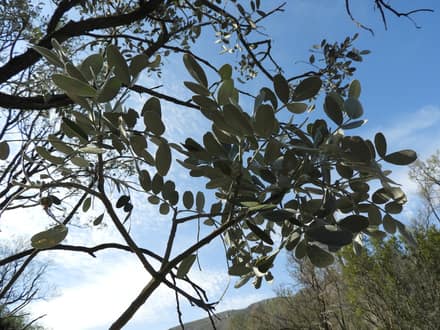
Dermatophyllum secundiflorum
A slow-growing evergreen with glossy leaves and drooping clusters of purple flowers that smell exactly like grape soda each spring.