Home · Texas · Inland Sea Oats
Grass · Deer-resistant
Inland Sea Oats
Chasmanthium latifolium
Also called: Wild Oats, River Oats
Updated 2026-09-23
The rare ornamental grass that thrives in shade, dangling flat, papery seed heads that shift from green to bronze and rustle all winter. Superb under trees.
Most ornamental grasses want full sun, which leaves shade gardeners with slim options. Inland sea oats is the exception: a grass genuinely built for growing under a tree canopy, its arching stems carrying rows of flattened seed spikelets that turn from green to a warm bronze and keep rustling well into winter, when almost nothing else in a shaded bed is offering that kind of movement or texture.
The tradeoff is that it reseeds itself enthusiastically, especially with more light and water than a true shade spot provides, so it takes a small amount of management to keep it where you want it.
Growing & care
One of the best natives for shade and stream banks; holds soil well. Reseeds freely — pull extras or let it colonize. Cut back in late winter.
Where inland sea oats grows in Texas
It's native to North Central Texas and beyond, from the eastern edge of the state to roughly Wichita Falls in the west, and it's naturally found along riverbanks, floodplains, limestone glades and moist woodland edges. That habitat is the model for where it performs best in a garden: shaded, with soil that holds some moisture without staying waterlogged.
How to plant inland sea oats
Plant it in part shade to full shade; more than partial shade combined with plentiful water is what pushes it toward aggressive self-seeding, so a drier or shadier spot keeps it better behaved. It transplants easily from containers with minimal fuss, and fall or late winter planting gives roots time to settle before the next growing season.
Watering inland sea oats the first year
Water regularly through the first season while roots establish, then let rainfall carry it in most years. It tolerates both the dry shade under a mature tree and the wetter soil near a stream bank, which is part of what makes it so adaptable once it's in the ground.
Inland Sea Oats care through the seasons
Shear it back to the basal rosette in mid-winter once the foliage has died back on its own, which keeps the planting tidy going into spring. If it's reseeding more than you want, collecting the seed heads in fall before they drop, or cutting back on supplemental water, are the two most direct ways to slow it down.
Common inland sea oats problems
Self-seeding is the one real issue gardeners run into, and it gets worse the more sun and water the planting receives. In a genuinely shaded, drier spot it stays far more restrained. It isn't a problem for a naturalized woodland area where volunteer seedlings are welcome, but it's worth knowing before planting it next to a tidy formal bed.
Wildlife value of inland sea oats
Three skipper butterfly species use it as a larval host, its seeds feed small mammals and seed-eating birds, and the foliage itself is browsed by mammals and used by birds as nesting material.
Using inland sea oats in the garden
Use it as the go-to grass for underplanting trees, filling the gap where a sunnier ornamental grass would fail. It also does well along a stream bank or the wetter edge of a rain garden, and pairs naturally with other shade natives like cedar sedge, cedar sage and Turk's cap in a layered woodland planting.
Inland Sea Oats FAQ
Is inland sea oats invasive?
It's a native Texas grass, not an introduced invasive species, but it does reseed aggressively when given more sun and water than it needs. Keeping it in genuine shade with moderate water keeps it well behaved.
Will inland sea oats grow in dry shade under a tree?
Yes, it's one of the few ornamental grasses that actually performs well there, though it also tolerates a moister, streamside setting equally well.
How do I stop inland sea oats from spreading too much?
Collect the seed heads before they drop in fall, or cut back on the water and sun it's getting. Both slow down the self-seeding that causes it to spread further than intended.
Bloom season
In bloom: Jul–Sep · Colors: green, bronze
Where to buy
Look for inland sea oats (Chasmanthium latifolium) at: Prairie Moon Nursery, native Texas nurseries.
Guides featuring inland sea oats
Sources
Range, nomenclature, and the USDA symbol above come from the federal plant record for this species. Check it yourself:
Chasmanthium latifolium (CHLA5) in the USDA PLANTS Database →
Good for
Plant it with
Natives that pair with inland sea oats
Same conditions, same uses — species that share inland sea oats's growing requirements and belong in the same bed.
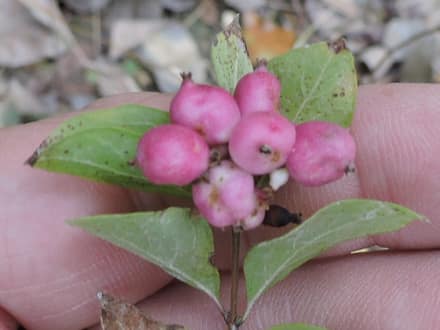
Coralberry
Symphoricarpos orbiculatus
A modest suckering shrub for shade that comes into its own in fall, when the arching branches string themselves with clusters of coral-pink berries the birds strip by spring..
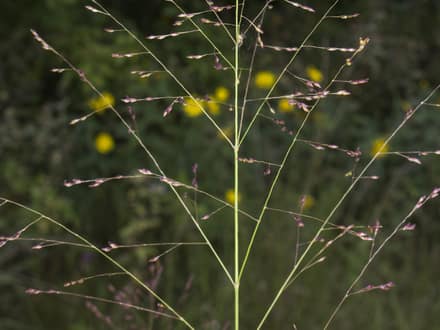
Switchgrass
Panicum virgatum
An upright prairie grass with airy pink-bronze seed clouds and gold fall color.
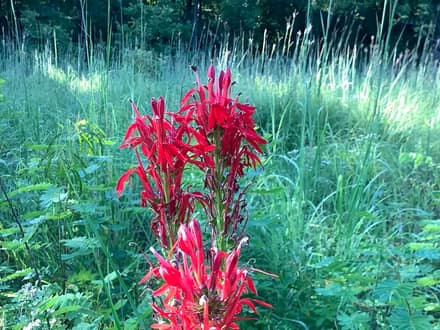
Cardinal Flower
Lobelia cardinalis
Spikes of the most intense scarlet of any native flower, rising from moist shade in late summer.
Wax Myrtle
Morella cerifera
A fast, dense, aromatic evergreen that makes an ideal privacy screen and fixes its own nitrogen.
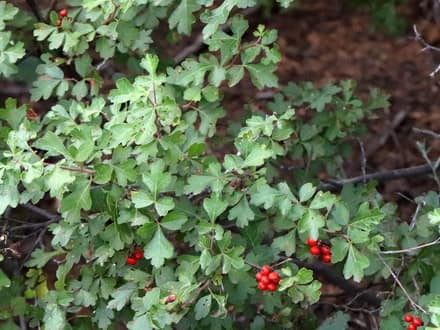
Fragrant Sumac
Rhus aromatica
A low, spreading shrub that blazes orange-red in fall and holds slopes with its suckering roots.
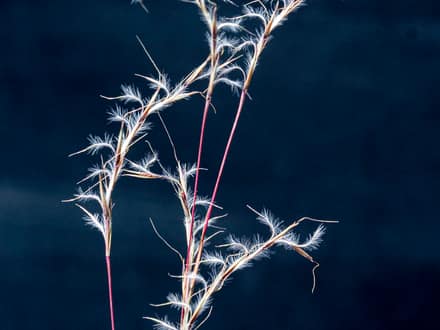
Little Bluestem
Schizachyrium scoparium
The backbone grass of the American prairie, turning coppery-mahogany in fall and silver-tufted in winter.