Grass · Deer-resistant
Buffalograss
Bouteloua dactyloides
Also called: Buffalo Grass
Updated 2026-09-11
North America's true native turf grass — a fine, soft, blue-green sod that forms a low lawn on a fraction of the water Bermuda or St. Augustine demand.
Buffalograss (Bouteloua dactyloides) is the only turf grass that's actually native to Texas, not adapted from Africa or the Mediterranean like Bermuda and St. Augustine, but a shortgrass prairie species that's been growing on the Blackland Prairie and the Rolling Plains for thousands of years. It forms a fine, curling, blue-green sod between 4 and 10 inches tall if you never touch a mower, and it spreads on its own through surface runners called stolons rather than relying on seed alone, so a thin patch fills in without reseeding.
What makes it worth the switch from Bermuda or St. Augustine is the water bill: established buffalograss gets by on one to two inches of rain or irrigation every two to four weeks through a Texas summer, and it will survive with none at all. It just goes dormant and tan until the next rain, the same way it did on the unwatered prairie. That's a real trade: a dormant lawn in August, not a green one, for a fraction of what a St. Augustine yard drinks.
It isn't a universal replacement, though. Buffalograss wants full sun and decent drainage, and it struggles anywhere shade or humidity sticks around, which rules it out for part of the state.
Growing & care
The native lawn: mow high and rarely, or leave unmowed for a soft meadow look. Needs full sun and good drainage; goes dormant tan in drought and winter, then greens back up. Establish from plugs or seed.
Where it grows in Texas
Buffalograss is native across most of Texas west of the Piney Woods: the Blackland Prairie, the Hill Country, the Rolling Plains, and West Texas all sit inside its natural range, and those are also the conditions it performs best in, full sun, alkaline clay or caliche soil, and a dry summer. Texas A&M AgriLife's turf program notes it doesn't do well in East Texas where annual rainfall runs past 30 inches. The Piney Woods and much of the Gulf Coast are too wet and shaded for it to compete with weeds and hold a dense stand. In those regions it's better used in a sunny, well-drained spot than as a whole-yard lawn replacement.
How to plant
Texas A&M and Colorado State's turf programs both put the planting window at spring through late July (soil needs to be above roughly 55°F before seed will germinate, so an April planting typically beats one in March). There are three ways in: seed, plugs, or sod.
Seed is the cheapest and slowest. Sow treated seed at 3 to 5 lb per 1,000 sq ft, about ½ inch deep, into a prepared clay-loam bed; expect germination in 7 to 21 days with warm soil and steady moisture. Plugs, set on 12- to 18-inch centers after the last spring frost, close into full cover in 6 to 12 weeks and give you a head start over seed. They'll often brown off right after planting even with good watering, which is normal transplant stress, not failure. Sod is the fast, expensive option: instant coverage, though it can sit dormant-brown for one to two weeks while new roots knit into the soil underneath.
First-year watering
New buffalograss needs frequent, shallow watering while roots are forming: three to five short cycles a day, every two to four hours, for seven to ten days after planting plugs or sod, tapering off as roots take hold. Keep seed beds consistently moist the same way until germination is done. Once the grass has knit into a solid stand, usually by the end of the first growing season, cut back to the one to two inches of water every two to four weeks that an established lawn needs, and stop entirely once it's dormant for winter.
Care through the seasons
Established buffalograss asks for almost nothing. Mow every 7 to 14 days with a rotary mower at 2.5 to 4 inches for a home lawn, or skip mowing and let it billow to its natural 4- to 10-inch height for a meadow look. It needs little to no fertilizer: 0 to 2 lb of nitrogen per 1,000 sq ft per year during summer is the ceiling AgriLife recommends, split across one or two light feedings rather than one heavy one, and plenty of Texas lawns do fine skipping it entirely. It goes dormant and turns tan with the first hard freeze and greens back up on its own in spring; that color change is normal winter dormancy, not a dead lawn.
Common problems
The two mistakes that kill a new buffalograss lawn are overwatering and shade. Water it on a St. Augustine schedule and you'll grow weeds and disease faster than grass. Buffalograss thins out under regular irrigation and heavy fertilizer, both of which favor faster-growing weeds it can't outcompete. Shade is the other one: AgriLife lists shade tolerance as one of its weak points, and a buffalograss lawn under tree canopy will thin and die back no matter how it's watered.
During establishment, weed pressure is the main risk, since the grass hasn't spread enough yet to crowd anything out. Expect to hand-pull or spot-treat through the first season. It also doesn't hold up to heavy foot traffic or salt exposure, so it's a poor choice for a well-worn dog run or a strip along a salted winter walkway.
Wildlife value
Buffalograss is a larval host plant for the green skipper butterfly, and its seed heads feed birds through fall and winter. Left unmowed, it also provides winter browse for grazing mammals and nesting material for ground-nesting birds, value that a regularly mowed lawn mostly gives up. That's one more reason to consider leaving at least a section unmowed.
Using it in the garden
For a lawn, buffalograss generally works best on its own rather than blended with turf-type Bermuda, which will crowd it out under regular watering. It's commonly overseeded or blended with blue grama for a native lawn mix. Blue grama fills the gaps between buffalograss's stolons and adds texture without competing for the same water and light, and mixes like this are sold specifically as low-water native lawn seed. Outside the mowed lawn, it works as a groundcover on a slope for erosion control, or as the "meadow" base in a xeriscape planted alongside wildflowers and bunchgrasses that can also go unmowed.
FAQ
Is buffalograss good for a Texas lawn, or is it only for pastures?
It's used for both. Cultivars like 'Stampede,' 'Prairie,' and '609' were bred specifically as low mowing-height lawn grasses, while taller straight-species seed is common on rangeland. For a home lawn, a lawn-type cultivar mowed at 2.5-4 inches gives a denser, more even turf than unselected seed.
Should I plant buffalograss from seed or plugs?
Plugs establish faster (full cover in 6 to 12 weeks versus a full season for seed) but cost more per square foot. Seed is the cheaper route if you can wait and keep the bed consistently moist through germination.
Does buffalograss go dormant in winter?
Yes. It turns tan with the first hard freeze and stays dormant until spring warm-up, which is normal, not a sign the lawn has died. It also goes dormant and tan during summer drought if it isn't watered.
Can I mix buffalograss with blue grama for a lawn?
Yes. Buffalograss and blue grama are commonly sold together as a native lawn seed mix. Blue grama fills the gaps between buffalograss's spreading stolons, and both share the same low-water, full-sun requirements, so neither crowds out the other.
Will buffalograss grow in shade?
No. It needs full sun and thins out quickly under tree canopy or part shade. Texas A&M AgriLife lists shade tolerance as one of its weak points.
Bloom season
In bloom: May–Jul · Colors: green
Where to buy
Look for buffalograss (Bouteloua dactyloides) at: native Texas nurseries, Native American Seed, sod farms.
Sources
Range, nomenclature, and the USDA symbol above come from the federal plant record for this species. Check it yourself:
Good for
Plant it with
Natives that pair with buffalograss
Same conditions, same uses — species that share buffalograss's growing requirements and belong in the same bed.
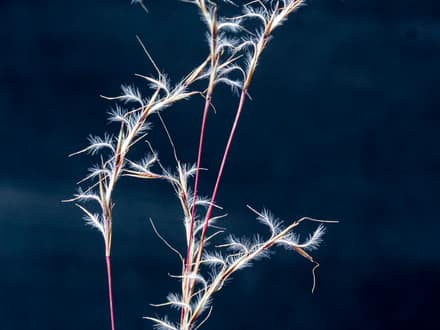
Little Bluestem
Schizachyrium scoparium
The backbone grass of the American prairie, turning coppery-mahogany in fall and silver-tufted in winter.
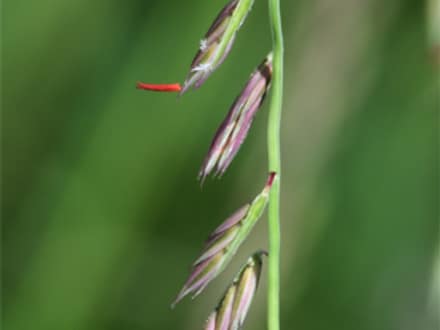
Sideoats Grama
Bouteloua curtipendula
The state grass of Texas, hanging its tiny oat-like seeds along one side of each stem, tinged with orange-red pollen.
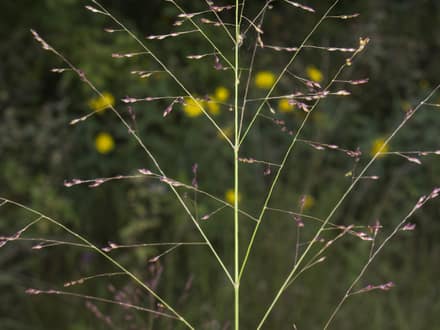
Switchgrass
Panicum virgatum
An upright prairie grass with airy pink-bronze seed clouds and gold fall color.
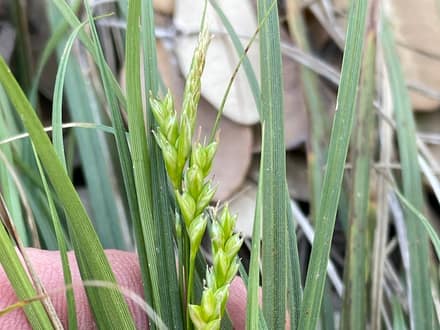
Cedar Sedge
Carex planostachys
A fine, arching native sedge that forms a soft green carpet in the dry shade beneath cedars and oaks — one of the very few things that will grow, and hold soil, there..
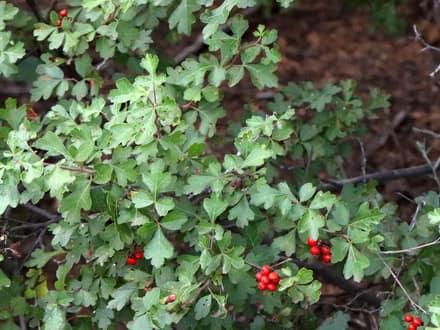
Fragrant Sumac
Rhus aromatica
A low, spreading shrub that blazes orange-red in fall and holds slopes with its suckering roots.
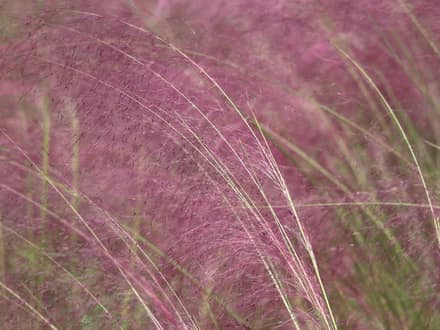
Gulf Muhly
Muhlenbergia capillaris
For a few weeks each fall this clump grass erupts into a cloud of glowing pink — the most spectacular native ornamental grass for the South..