Home · Texas · Lindheimer's Muhly
Grass · Deer-resistant
Lindheimer's Muhly
Muhlenbergia lindheimeri
Also called: Big Muhly
Updated 2026-09-23
A big, fountain-shaped clump grass topped with silver-blond plumes in fall. A refined, near-evergreen structural anchor that stands through winter.
Lindheimer's muhly is a big, fountain-shaped clump grass that tops itself with silvery-blond plumes each fall and holds its form as a near-evergreen structural anchor straight through winter. It's a native substitute for non-native pampas grass, reaching a similar scale without the aggressive spread pampas grass is known for.
Growing & care
Cut back to a few inches only every few years in late winter — it's largely evergreen. Full sun for the best form. Drought and clay tolerant.
Where Lindheimer's muhly grows in Texas
The Native Plant Society of Texas lists it across the Edwards Plateau, Southern Texas Plains, Texas Blackland Prairies, Balcones Canyonlands, Llano Uplift and Northern Nueces Alluvial Plains. It grows from sandy draws to rocky, calcareous soils in open areas, wanting calcareous, rocky, sandy or well-drained ground.
How to plant Lindheimer's muhly
Plant container stock in fall or spring, in full sun for the best form. Give it real room from the start, since it reaches 3 to 6 feet tall as a mature clump.
Watering Lindheimer's muhly the first year
Water regularly through the first season while it establishes. It's medium-water once rooted in, needing less coddling than many perennials but more consistency than a true xeric grass.
Lindheimer's Muhly care through the seasons
Don't cut it back hard, since it doesn't recover well from that kind of pruning; it's largely evergreen and holds its foliage through winter. Leave the dead leaves standing through the cold months and rake them away as new spring growth comes in, rather than shearing the whole clump.
Common Lindheimer's muhly problems
The main mistake gardeners make is cutting it back the way they would a fully deciduous grass like little bluestem or switchgrass; because it doesn't recover well from a hard cutback, that habit can set it back significantly. Otherwise it's a tough, low-problem grass on well-drained ground.
Wildlife value of Lindheimer's muhly
Birds work the silvery seed heads for food, and the grass also provides nesting material. Deer and small mammals will browse it for forage, though the coarser texture makes it less of a target than softer plants nearby.
Using Lindheimer's muhly in the garden
Use it as a natural screen, a large specimen grass, or a substitute anywhere a native alternative to pampas grass is wanted, since it reaches a comparable scale without the same spreading habit. Its near-evergreen form also makes it one of the stronger choices for winter structure in a native bed.
Lindheimer's Muhly FAQ
Should I cut back Lindheimer's muhly in winter like other ornamental grasses?
No, and this is the most common mistake with it. Unlike a fully deciduous grass, it doesn't recover well from a hard cutback. Leave the dead leaves standing through winter and rake them away as new growth comes in instead.
Is Lindheimer's muhly a good substitute for pampas grass?
Yes, it reaches a similar large, fountain-shaped scale with silvery plumes, but without the aggressive spread that makes non-native pampas grass a problem in many landscapes.
How much water does Lindheimer's muhly need?
Medium water once established, more than a true xeric grass wants but far less than most garden perennials. It's drought tolerant but not built for the leanest, driest sites on this site.
Bloom season
In bloom: Sep–Nov · Colors: silver
Where to buy
Look for lindheimer's muhly (Muhlenbergia lindheimeri) at: native Texas nurseries, local garden centers.
Guides featuring Lindheimer's muhly
Sources
Range, nomenclature, and the USDA symbol above come from the federal plant record for this species. Check it yourself:
Muhlenbergia lindheimeri (MULI) in the USDA PLANTS Database →
Good for
Plant it with
Natives that pair with lindheimer's muhly
Same conditions, same uses — species that share lindheimer's muhly's growing requirements and belong in the same bed.
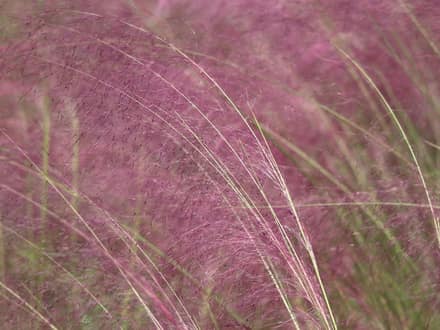
Gulf Muhly
Muhlenbergia capillaris
For a few weeks each fall this clump grass erupts into a cloud of glowing pink — the most spectacular native ornamental grass for the South..
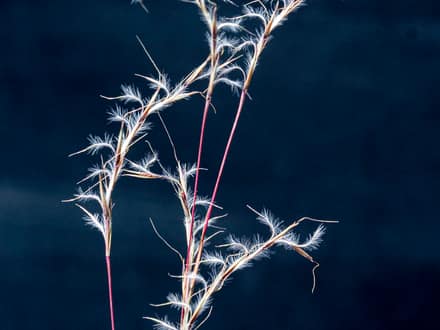
Little Bluestem
Schizachyrium scoparium
The backbone grass of the American prairie, turning coppery-mahogany in fall and silver-tufted in winter.
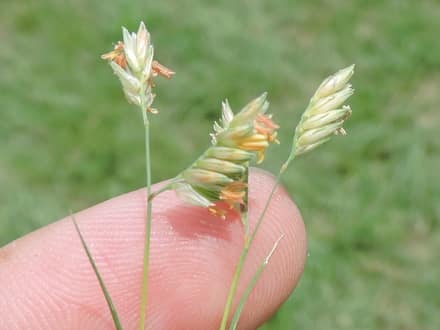
Buffalograss
Bouteloua dactyloides
North America's true native turf grass — a fine, soft, blue-green sod that forms a low lawn on a fraction of the water Bermuda or St.
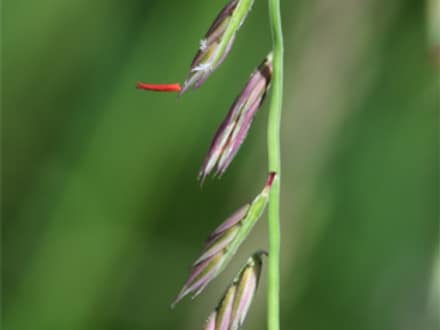
Sideoats Grama
Bouteloua curtipendula
The state grass of Texas, hanging its tiny oat-like seeds along one side of each stem, tinged with orange-red pollen.
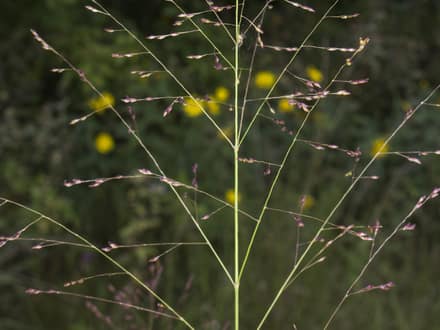
Switchgrass
Panicum virgatum
An upright prairie grass with airy pink-bronze seed clouds and gold fall color.
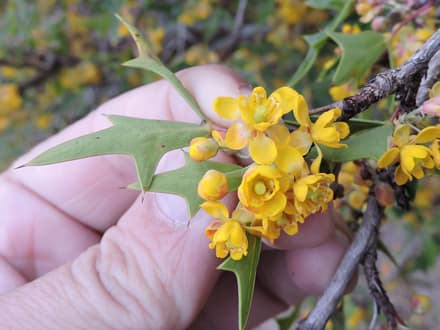
Agarita
Berberis trifoliolata
A spiny blue-grey evergreen that bees swarm in late winter and birds nest inside for protection.