Home · Texas · Carolina Buckthorn
Tree
Carolina Buckthorn
Frangula caroliniana
Also called: Carolina False Buckthorn, Indian Cherry, Yellow Buckthorn
Updated 2026-11-14
An open, thornless understory tree with glossy leaves and berries that go from red to black through late summer and fall, a steady food source for songbirds. It hosts the American snout butterfly.
Carolina buckthorn is an understory tree for bird lovers. Its small yellowish flowers are easy to miss, but the berries that follow are not: they ripen from red to black over late summer and fall, and many songbirds feed on them. Despite the name it has no thorns, and it is not one of the European buckthorns that have become invasive in the Midwest and Northeast.
It usually grows 12 to 15 feet tall with glossy, strongly veined leaves that hang on late into fall. In light shade it grows open and tiered, a little like a flowering dogwood. With more sun it turns dense and shrubby.
Growing & care
Three to four hours of sun keeps it airy and layered; more sun makes it dense and shrubby. Fairly drought tolerant once rooted but cannot sit in standing water. Deer browse it.
Where carolina buckthorn grows in Texas
It grows naturally in bottomlands, ravines and along streams on the Edwards Plateau and in East Texas. The Native Plant Society of Texas maps it across the Cross Timbers, Blackland Prairies, Edwards Plateau, East Central Texas Plains, Gulf Coast Prairies and Marshes, and the Western Gulf Coastal Plain, so it suits most of the eastern half of the state, including Dallas-Fort Worth, Austin and Houston.
How to plant carolina buckthorn
Give it three to four hours of sun a day, ideally in the morning, with shade from late-afternoon heat. It adapts to clay, loam, sand and rocky limestone soils. It tolerates periodic flooding but not standing water. Fall is the best planting time.
Watering carolina buckthorn the first year
Water regularly the first season, but don't keep it wet: the Wildflower Center warns that young plants rot if watered daily in summer. After it settles in, it handles dry spells well.
Carolina Buckthorn care through the seasons
Very little. Cut it back now and then if it gets leggy. Expect plenty of seedlings under the tree, which you can pull or pot up for friends.
Common carolina buckthorn problems
Deer browse the leaves and bark, so protect young trees where deer are heavy. It self-seeds freely. Growth is slow while young. Like many wild fruits, the berries are not for people to eat.
Wildlife value of carolina buckthorn
Songbirds eat the berries, and the flowers draw nectar insects. It is a larval host plant for the American snout butterfly.
Using carolina buckthorn in the garden
Use it as a small specimen tree in part shade, as an informal hedge or privacy screen under taller trees, or as a windbreak. Pair it with American beautyberry and coralberry for a bird border that has berries from late summer into winter.
Carolina Buckthorn FAQ
Is Carolina buckthorn invasive?
Not at all: it grows wild in Texas and across the Southeast. The buckthorns that cause trouble in northern states are introduced European species.
How much sun does Carolina buckthorn need?
About three to four hours a day. In more sun it grows dense and shrubby; in deep shade it gets thin.
Is Carolina buckthorn deer resistant?
No. Deer browse its leaves and bark.
Bloom season
In bloom: Apr–Jun · Colors: green, yellow
Where to buy
Look for carolina buckthorn (Frangula caroliniana) at: native Texas nurseries.
Guides featuring carolina buckthorn
- Native Plants for Dallas-Fort Worth: What to Grow on Black Clay and Limestone
- Native Plants for Shade and Dry Shade in Texas
- Native Shrubs for Shade in Texas: Picks by Size, Region and Use
Sources
Range, nomenclature, and the USDA symbol above come from the federal plant record for this species. Check it yourself:
Good for
Plant it with
Natives that pair with carolina buckthorn
Same conditions, same uses — species that share carolina buckthorn's growing requirements and belong in the same bed.
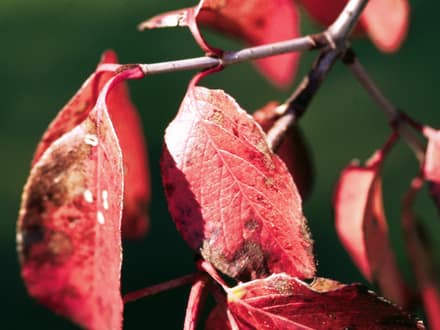
Rusty Blackhaw Viburnum
Viburnum rufidulum
A slow, tidy understory tree with flat white flower clusters in spring, blue-black fruit that birds take in fall, and glossy leaves that turn red, pink and purple before they drop..
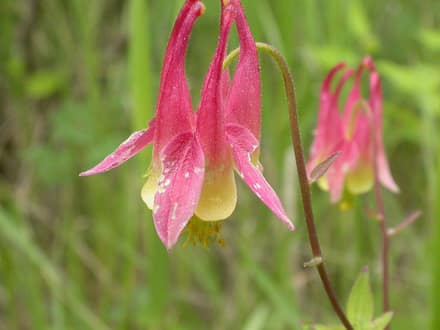
Wild Red Columbine
Aquilegia canadensis
Nodding red-and-yellow flowers with long upturned spurs over lacy blue-green leaves, blooming in late winter and spring shade when hummingbirds have little else.
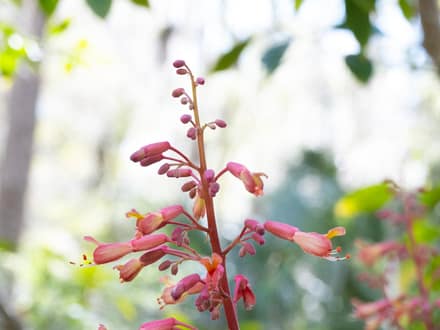
Red Buckeye
Aesculus pavia
A small understory tree that puts up foot-long spikes of red tubular flowers in early spring, right as the first hummingbirds come north.
Wax Myrtle
Morella cerifera
A fast, dense, aromatic evergreen that makes an ideal privacy screen and fixes its own nitrogen.
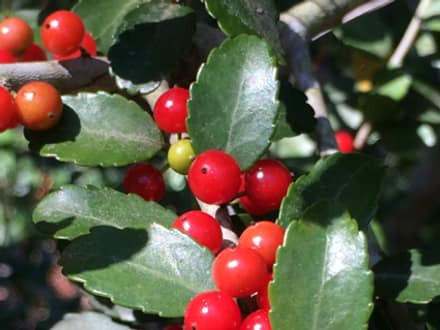
Yaupon Holly
Ilex vomitoria
An adaptable evergreen holly that takes sun or deep shade, wet or dry, and covers itself in translucent red berries that hold all winter for the birds.
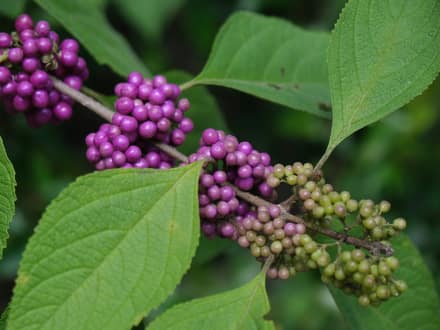
American Beautyberry
Callicarpa americana
Grown for its show-stopping clusters of electric-purple berries in fall — a feast for mockingbirds and dozens of other birds — on a graceful arching shrub..