Tree
Red Buckeye
Aesculus pavia
Also called: Scarlet Buckeye, Firecracker Plant
Updated 2026-11-14
A small understory tree that puts up foot-long spikes of red tubular flowers in early spring, right as the first hummingbirds come north. It grows best under taller trees, not out in the open.
Red buckeye is one of the few native trees that flowers well in shade. In early spring it sends up clusters of red, tube-shaped flowers 6 to 10 inches long, each bloom an inch or more, timed for the first hummingbirds moving north through Texas. The leaves are made of five leaflets spread like fingers from one stem.
It is a small tree. The Wildflower Center notes that Texas specimens sit at the short end of the species range, with Central Texas trees commonly no taller than 15 feet. That size, and its liking for dappled light, make it a good fit under a big live oak or pecan where most flowering trees would stretch and sulk.
The catch: it drops its leaves by the end of summer as a normal habit. Plant it where it can shine in March and fade into the background by August.
Growing & care
Give it morning sun and afternoon shade. It normally drops its leaves by late summer, so site it where a bare plant in August won't bother you. Seeds and young shoots are poisonous.
Where red buckeye grows in Texas
The red-flowered variety grows wild from the Edwards Plateau east through the Blackland Prairies, the East Central Texas Plains, the Gulf Coast and the Western Gulf Coastal Plain, according to the Native Plant Society of Texas. On the western Edwards Plateau it is replaced by a yellow-flowered variety, Texas yellow buckeye, and where the two meet you can find trees with flowers in mixed shades of red and yellow. The red form is the one to plant in Houston, Austin, San Antonio and the Dallas area.
How to plant red buckeye
Choose a spot with morning sun and afternoon shade, or bright filtered light under taller trees. It takes sand, loam, clay or limestone as long as the soil is deep and drains. Fall is the best time to plant a container tree in most of Texas. To grow it from seed, plant the buckeyes as soon as they are collected: the seeds are high in fat, lose viability quickly and need no treatment.
Watering red buckeye the first year
Give it a deep soak weekly during its first summer and cut back as it roots in. Avoid keeping the soil constantly wet, which the Wildflower Center links to leaf spot.
Red Buckeye care through the seasons
It rarely needs pruning other than an occasional shaping cut. In a drought, a slow deep soak can delay the early leaf drop. Expect slow to moderate growth.
Common red buckeye problems
Early leaf drop is the most common worry and is normal. Too much water invites leaf spot disease, and full afternoon sun in a hot summer scorches it. The seeds and young shoots are poisonous to people if eaten, which matters in a yard where children collect buckeyes. Deer resistance is rated moderate.
Wildlife value of red buckeye
Hummingbirds work the flowers in early spring, and so do bees. Squirrels eat the nuts, though most other wildlife avoids the toxic seeds.
Using red buckeye in the garden
Plant it as an understory tree at the edge of a shaded lawn or bed, where the spring flowers are visible from the house. Underplant with cedar sage or wild red columbine for more red in the same season, and with turk's cap to carry hummingbird food into summer after the buckeye has finished. It also works as a large shrub in a woodland border.
Red Buckeye FAQ
Why is my red buckeye losing its leaves in summer?
Red buckeye normally drops its leaves by late summer. A deep watering during drought can delay it, but a bare tree in August is not a sign of trouble.
Will red buckeye grow in shade?
Yes. It does best in part shade, especially with afternoon shade, and grows naturally under taller trees along woods and streams.
Is red buckeye poisonous?
The seeds and young shoots are poisonous if eaten. Plant it where children won't treat the buckeyes as snacks.
Bloom season
In bloom: Mar–May · Colors: red
Where to buy
Look for red buckeye (Aesculus pavia) at: native Texas nurseries.
Guides featuring red buckeye
- Texas Native Plant Calendar: What to Plant and Prune Each Month
- Native Plants for Shade and Dry Shade in Texas
- Native Shrubs for Shade in Texas: Picks by Size, Region and Use
Sources
Range, nomenclature, and the USDA symbol above come from the federal plant record for this species. Check it yourself:
Good for
Plant it with
Natives that pair with red buckeye
Same conditions, same uses — species that share red buckeye's growing requirements and belong in the same bed.
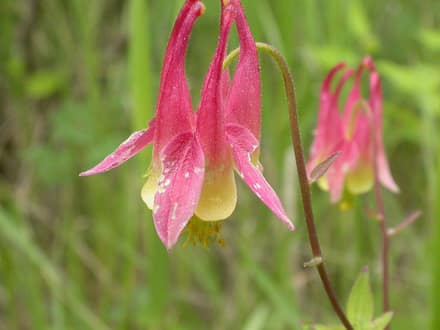
Wild Red Columbine
Aquilegia canadensis
Nodding red-and-yellow flowers with long upturned spurs over lacy blue-green leaves, blooming in late winter and spring shade when hummingbirds have little else.
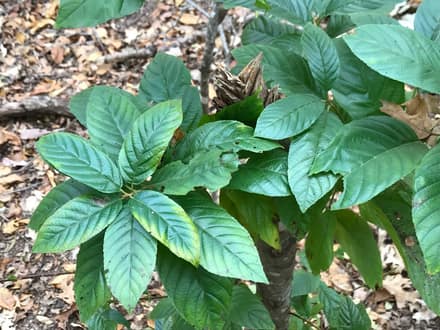
Carolina Buckthorn
Frangula caroliniana
An open, thornless understory tree with glossy leaves and berries that go from red to black through late summer and fall, a steady food source for songbirds.
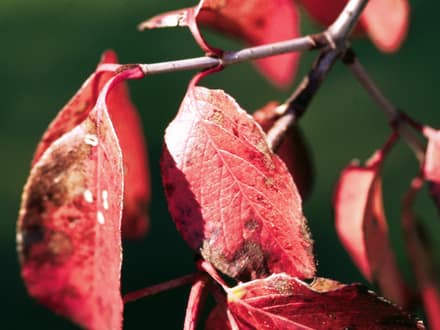
Rusty Blackhaw Viburnum
Viburnum rufidulum
A slow, tidy understory tree with flat white flower clusters in spring, blue-black fruit that birds take in fall, and glossy leaves that turn red, pink and purple before they drop..
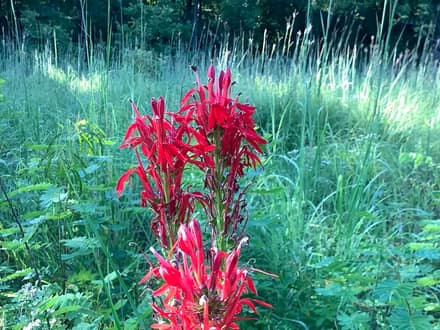
Cardinal Flower
Lobelia cardinalis
Spikes of the most intense scarlet of any native flower, rising from moist shade in late summer.
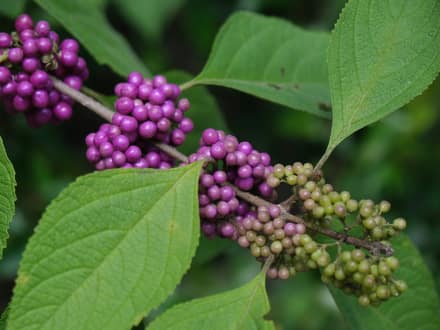
American Beautyberry
Callicarpa americana
Grown for its show-stopping clusters of electric-purple berries in fall — a feast for mockingbirds and dozens of other birds — on a graceful arching shrub..
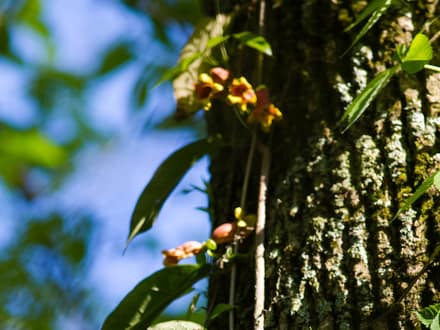
Crossvine
Bignonia capreolata
A vigorous semi-evergreen climber that covers a fence or arbor in orange-red trumpets in early spring — timed for the first returning hummingbirds.