Home · Texas · Rusty Blackhaw Viburnum
Tree
Rusty Blackhaw Viburnum
Viburnum rufidulum
Also called: Rusty Blackhaw, Southern Blackhaw, Bluehaw
Updated 2026-11-14
A slow, tidy understory tree with flat white flower clusters in spring, blue-black fruit that birds take in fall, and glossy leaves that turn red, pink and purple before they drop.
Rusty blackhaw viburnum is a small native tree with something to show every season. In spring it covers itself in flat clusters of white flowers up to 4 inches across. By fall it carries blue-black fruit with a waxy bloom, which birds eat, and its glossy leaves turn shades of red, pink, lavender and orange before they drop. In winter the bark breaks into dark, blocky plates.
The name comes from the rust-colored hairs on its leaf stalks and buds. It usually grows to about 18 feet, slowly, and fits the space under big shade trees that is too dark for most flowering trees.
Growing & care
Plant it under or beside taller trees where it gets afternoon shade. It wants deep soil that drains and little water once settled. Prune, if at all, right after it blooms.
Where rusty blackhaw viburnum grows in Texas
It grows wild in open woodland from East to Central Texas. The Native Plant Society of Texas maps it in the Cross Timbers, Blackland Prairies, Edwards Plateau, East Central Texas Plains, Gulf Coast Prairies and Marshes, and the Western Gulf Coastal Plain. That covers Dallas-Fort Worth, Austin, San Antonio and Houston. It is a good choice for the clay and limestone soils of North and Central Texas.
How to plant rusty blackhaw viburnum
Give it part shade, or sun with relief from late-afternoon heat. It needs deep soil that drains; limestone-based, sandy, loamy and clay soils all work. Fall is the best time to plant a container tree in Texas.
Watering rusty blackhaw viburnum the first year
A weekly soak during its first summer gets it rooted. Once rooted it needs little water, which is part of its appeal under trees that already compete for moisture.
Rusty Blackhaw Viburnum care through the seasons
Low. It grows slowly and keeps a neat shape on its own. If you prune, do it right after the spring bloom so you don't cut off next year's flower buds.
Common rusty blackhaw viburnum problems
Its main drawback is speed: it is slow to size up, and the Wildflower Center notes it is hard to propagate, so nursery plants can be scarce and small. It will not tolerate soggy ground. Deer resistance is rated moderate.
Wildlife value of rusty blackhaw viburnum
Bees and butterflies visit the spring flowers. Birds and small mammals eat the fall fruit. Botanists Correll and Johnston noted the fruit tastes a bit like raisins.
Using rusty blackhaw viburnum in the garden
Use it as an understory tree near the house, where the fall color and flowers are easy to see, or plant several as a loose screen under taller oaks. Underplant with coralberry or cedar sedge. It is a native alternative where people often plant Japanese maple for fall color in shade.
Rusty Blackhaw Viburnum FAQ
Does rusty blackhaw grow in shade?
Yes. It is an understory tree that does best in part shade, and in hot summers it prefers afternoon shade even when it gets morning sun.
How fast does rusty blackhaw grow?
Slowly. Plan on several years before a young plant reads as a small tree.
When does rusty blackhaw get fall color?
Usually in late fall, when the glossy leaves turn red, pink, lavender and orange before dropping.
Bloom season
In bloom: Mar–May · Colors: white
Where to buy
Look for rusty blackhaw viburnum (Viburnum rufidulum) at: native Texas nurseries.
Guides featuring rusty blackhaw viburnum
- Texas Native Plant Calendar: What to Plant and Prune Each Month
- Native Plants for Dallas-Fort Worth: What to Grow on Black Clay and Limestone
- Native Plants for Shade and Dry Shade in Texas
- Native Shrubs for Shade in Texas: Picks by Size, Region and Use
Sources
Range, nomenclature, and the USDA symbol above come from the federal plant record for this species. Check it yourself:
Good for
Plant it with
Natives that pair with rusty blackhaw viburnum
Same conditions, same uses — species that share rusty blackhaw viburnum's growing requirements and belong in the same bed.
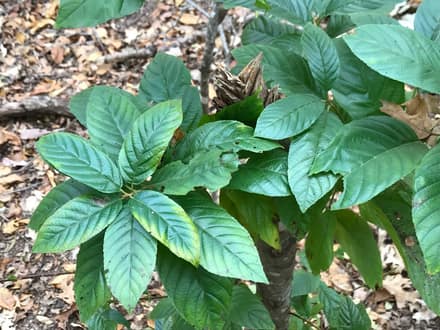
Carolina Buckthorn
Frangula caroliniana
An open, thornless understory tree with glossy leaves and berries that go from red to black through late summer and fall, a steady food source for songbirds.
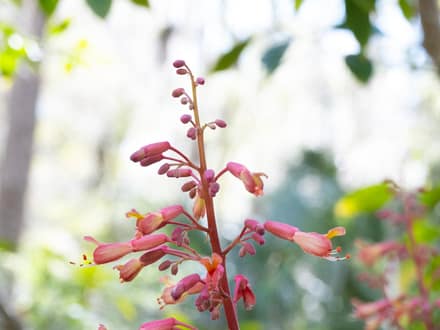
Red Buckeye
Aesculus pavia
A small understory tree that puts up foot-long spikes of red tubular flowers in early spring, right as the first hummingbirds come north.
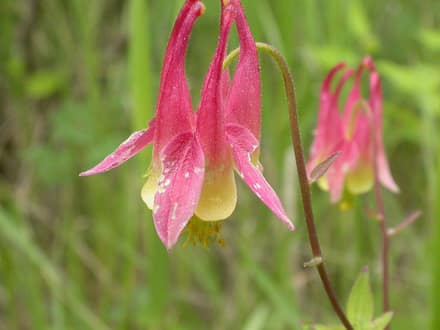
Wild Red Columbine
Aquilegia canadensis
Nodding red-and-yellow flowers with long upturned spurs over lacy blue-green leaves, blooming in late winter and spring shade when hummingbirds have little else.
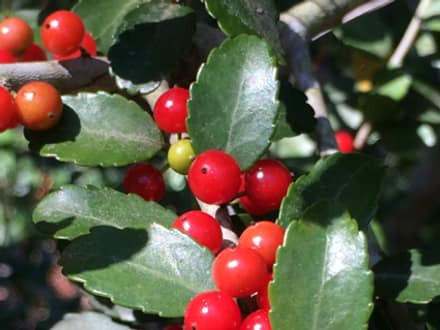
Yaupon Holly
Ilex vomitoria
An adaptable evergreen holly that takes sun or deep shade, wet or dry, and covers itself in translucent red berries that hold all winter for the birds.
Wax Myrtle
Morella cerifera
A fast, dense, aromatic evergreen that makes an ideal privacy screen and fixes its own nitrogen.
American Beautyberry
Callicarpa americana
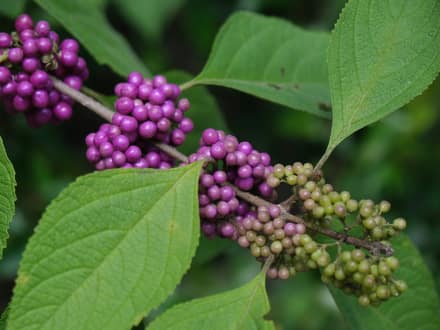
Grown for its show-stopping clusters of electric-purple berries in fall — a feast for mockingbirds and dozens of other birds — on a graceful arching shrub..