Shrub
Dwarf Palmetto
Sabal minor
Also called: Bush Palmetto, Palmetto
Updated 2026-11-14
A trunkless native palm with big blue-green fans that stays evergreen in deep shade and wet, poorly drained soil. It is the most cold-hardy palm native to the United States.
Dwarf palmetto is a native palm that most people walk past in Texas river bottoms without noticing. It is usually trunkless: big fan-shaped leaves, up to about 4 feet across and split into narrow segments, rise straight out of the ground from an underground stem. Plants run 5 to 8 feet tall in a garden.
It solves two problems at once. It holds its leaves through winter, giving a shady bed evergreen structure, and it handles wet, poorly drained soil that drowns most shrubs. The Wildflower Center calls it the most cold-tolerant Sabal, so it survives North Texas winters that kill imported palms.
In late spring it sends up long stalks of small white flowers, followed by clusters of dark fruit about half an inch wide.
Growing & care
Water well while it establishes, then it handles both soggy spells and droughts, though leaf tips may brown in a long dry summer. Cut off dead fronds at the base. Growth is slow.
Where dwarf palmetto grows in Texas
The Native Plant Society of Texas maps it in the Gulf Coast Prairies and Marshes, the Western Gulf Coastal Plain, the East Central Texas Plains, the Blackland Prairies, and the Balcones Canyonlands on the eastern edge of the Edwards Plateau. Its native range reaches west to Central Texas and south into Nuevo Leon. It is a natural pick for Houston and Southeast Texas, and it grows in Austin and Dallas yards as well.
How to plant dwarf palmetto
It grows in sun, part shade or full shade, and in sandy, loamy or clay soil. Its strength is a damp, shaded corner: a low spot, a downspout area, or the north side of a house where water lingers after rain. Fall or early spring is the time to set out nursery plants.
Watering dwarf palmetto the first year
Give it plenty of water while it roots in, through the first full growing season. After that it handles both wet spells and drought, though leaf tips may brown in a long dry summer.
Dwarf Palmetto care through the seasons
Cut off dead or tattered fronds at the base when they bother you. There is nothing else to do. Growth is slow, so buy the size you want to see in the next few years.
Common dwarf palmetto problems
Few. The slow growth tests patience, and leaf tips brown in a hard drought. Deer resistance is rated moderate. When grown in standing water it can form a short trunk, which is normal.
Wildlife value of dwarf palmetto
Birds and small mammals eat the fruit, insects visit the flowers for nectar, and the dense clump gives cover and nesting sites close to the ground.
Using dwarf palmetto in the garden
Use it as an evergreen accent in a shade garden, where the bold fans contrast with fine-leaved plants like inland sea oats and cedar sedge. A group of three makes a low, tropical-looking screen under pines or oaks. It is also one of the best natives for a rain garden or a soggy strip that never dries out in spring.
Dwarf Palmetto FAQ
Will dwarf palmetto grow in full shade?
Yes. It grows in sun, part shade and full shade, and is at its best in a damp, shaded spot.
Is dwarf palmetto cold hardy in Dallas?
It is the most cold-tolerant of the Sabal palms and is native as far north as Oklahoma and Arkansas, so it handles North Texas winters.
Does dwarf palmetto grow a trunk?
Usually not. Its leaves rise from an underground stem. Plants growing in standing water sometimes form a short trunk.
Bloom season
In bloom: May–Jun · Colors: white
Where to buy
Look for dwarf palmetto (Sabal minor) at: native Texas nurseries.
Guides featuring dwarf palmetto
- Native Plants for Shade and Dry Shade in Texas
- Native Shrubs for Shade in Texas: Picks by Size, Region and Use
Sources
Range, nomenclature, and the USDA symbol above come from the federal plant record for this species. Check it yourself:
Good for
Plant it with
Natives that pair with dwarf palmetto
Same conditions, same uses — species that share dwarf palmetto's growing requirements and belong in the same bed.
Wax Myrtle
Morella cerifera
A fast, dense, aromatic evergreen that makes an ideal privacy screen and fixes its own nitrogen.
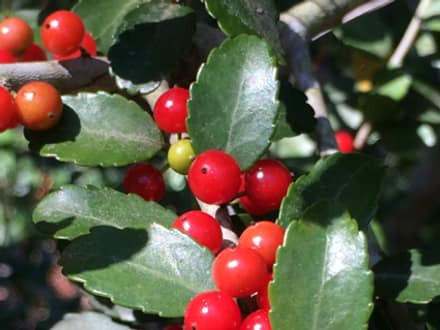
Yaupon Holly
Ilex vomitoria
An adaptable evergreen holly that takes sun or deep shade, wet or dry, and covers itself in translucent red berries that hold all winter for the birds.
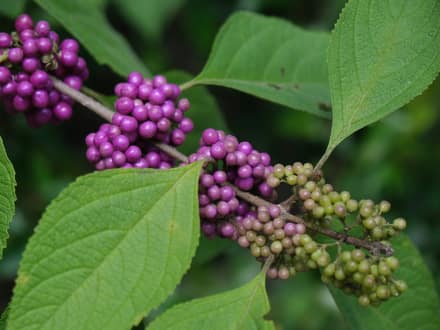
American Beautyberry
Callicarpa americana
Grown for its show-stopping clusters of electric-purple berries in fall — a feast for mockingbirds and dozens of other birds — on a graceful arching shrub..
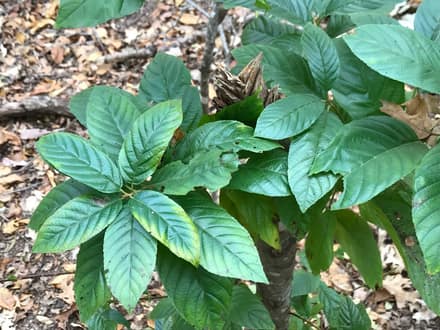
Carolina Buckthorn
Frangula caroliniana
An open, thornless understory tree with glossy leaves and berries that go from red to black through late summer and fall, a steady food source for songbirds.
Rusty Blackhaw Viburnum
Viburnum rufidulum
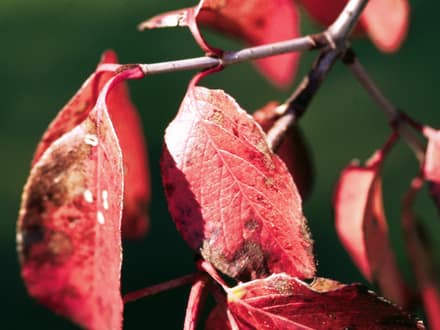
A slow, tidy understory tree with flat white flower clusters in spring, blue-black fruit that birds take in fall, and glossy leaves that turn red, pink and purple before they drop..
Crossvine
Bignonia capreolata
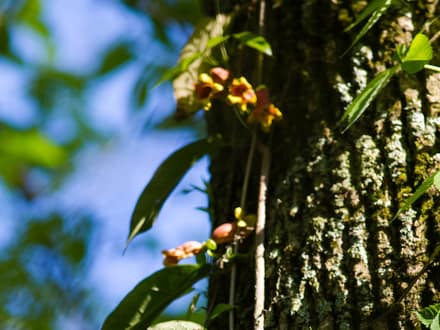
A vigorous semi-evergreen climber that covers a fence or arbor in orange-red trumpets in early spring — timed for the first returning hummingbirds.