Home · Texas · Mealy Blue Sage
Perennial · Deer-resistant
Mealy Blue Sage
Salvia farinacea
Also called: Mealycup Sage
Updated 2026-09-11
Spikes of soft blue that hum with bees from spring to frost. Unfussy, self-seeding, and one of the most reliable native perennials for a sunny Texas bed.
Mealy blue sage puts up blue flower spikes steadily from spring until the first frost, and bees rarely leave them alone. It's also more forgiving of ordinary yard soil than most native salvias: where the rest of the genus wants rock or sand, this one tolerates straight clay.
Because it seeds itself so readily, a single planting usually turns into a spreading patch within a couple of seasons without any extra effort.
Growing & care
Shear spent spikes to keep it blooming. Tolerates clay and drought. Let a few seed heads stand to reseed for next year.
Where it grows in Texas
Mealy blue sage grows across most of Texas and tolerates a wider range of soils than most native salvias, including clay as well as sand, rock, and loam, as long as the site is well-drained. It performs well in full sun to part shade statewide; the main thing to watch is standing water, not soil type.
The soil range runs from sandy and sandy loam through medium loam to clay loam and straight clay, all on the alkaline side, which covers most of the range of native and unimproved soils found across Central and North Texas yards.
How to plant
Full sun to part shade, in alkaline soil ranging from sandy to clay loam to straight clay, all well-drained. Propagate from seed, which needs a cold-moist stratification period and light to germinate, or from softwood cuttings. Collect seed as the capsules begin to dry but before they've fully dropped, if saving your own.
Care through the seasons
Cutting off spent flower spikes through the growing season keeps new ones coming rather than letting the plant go to seed early. After a long bloom stretch, a cutback to about half height thickens the foliage and brings on a shorter second flush; once fresh basal growth appears, trim away the old flower stems so the plant stays lush instead of leggy. Near the end of the season, leaving some seed heads in place instead of deadheading them is what lets the planting reseed for next year.
The plant typically reaches 1.5 to 3 feet tall, so a light midseason cutback also keeps taller stands from flopping open in wind or heavy rain.
Common problems
Mealy blue sage has few serious problems; it tolerates clay and drought better than most salvias. Because it self-seeds freely, the main "problem" gardeners report is more of a maintenance choice: without deadheading, it can spread further than intended, so remove spent spikes before they set seed in beds where you want to control its spread.
As with the other salvias on this site, the vulnerability that actually shows up in practice is standing water, not pests or foliage disease. Waterlogged, poorly-drained beds are really the only condition that causes trouble.
Wildlife value
Bees are the dominant visitor, working the blue spikes from spring through frost, with butterflies and hummingbirds also stopping in for nectar.
Butterflies and hummingbirds visit the spikes too, though bees are the most constant presence, working the flowers steadily enough that a bed of mealy blue sage is rarely without an audible hum on a warm day.
Using it in the garden
The upright blue spikes work well massed in a bed or border for repeated vertical color, and because it self-seeds, a single initial planting can fill in a naturalistic drift over a season or two without replanting. It's also a strong cut flower, since the spikes hold up well once cut.
Often confused with
Mealy blue sage is the blue-flowered member of a trio of native salvias this site carries; autumn sage covers red, pink, coral, and white on a woodier shrub, and scarlet sage stays red and tolerates shade that neither of the other two does. Nurseries also commonly sell non-native bedding cultivars bred from the same species for more uniform color; the straight native species listed here has the same low-water tolerance but better value for pollinators.
FAQ
Does mealy blue sage grow in clay soil?
Yes, better than most native salvias. It tolerates clay, sand, and rocky soil as long as the site drains and doesn't hold standing water.
Will mealy blue sage take over my garden?
It self-seeds readily, so it can spread more than expected if spent flower spikes are left to go to seed. Deadhead through the season to control spread, or leave some seed heads standing deliberately if you want it to fill in an area.
Is mealy blue sage a true perennial in Texas?
Yes, it's a reliable perennial across most of Texas, blooming from spring through frost and returning each year.
Bloom season
In bloom: Apr–Oct · Colors: blue, purple
Where to buy
Look for mealy blue sage (Salvia farinacea) at: Prairie Moon Nursery, native Texas nurseries, Eden Brothers seed.
Sources
Range, nomenclature, and the USDA symbol above come from the federal plant record for this species. Check it yourself:
Good for
Plant it with
Natives that pair with mealy blue sage
Same conditions, same uses — species that share mealy blue sage's growing requirements and belong in the same bed.
Gayfeather
Liatris mucronata
Spires of feathery purple that open top-down in fall, when Monarchs are moving through and desperate for nectar.
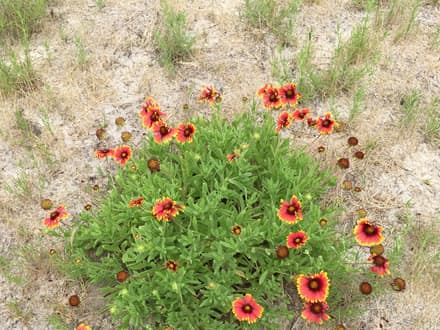
Indian Blanket
Gaillardia pulchella
The red-and-gold pinwheel daisy that blankets Texas roadsides all summer.
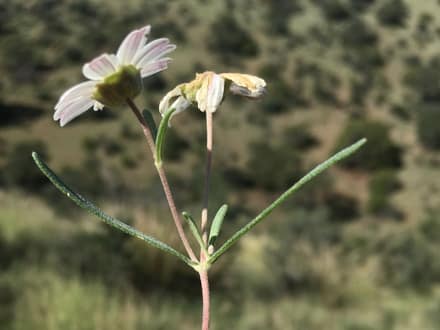
Blackfoot Daisy
Melampodium leucanthum
A tidy mound smothered in honey-scented white daisies for most of the year.
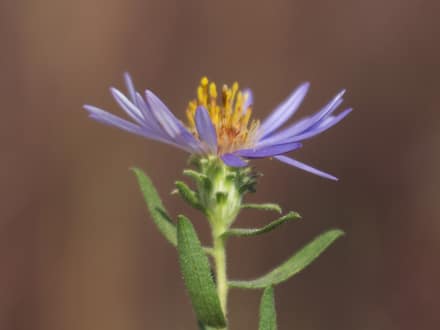
Fall Aster
Symphyotrichum oblongifolium
A mounding aster that vanishes into the background all summer, then bursts into a haze of blue-purple daisies in October — a lifeline of late nectar for pollinators..
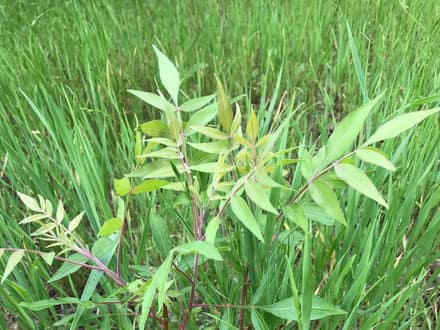
Flameleaf Sumac
Rhus lanceolata
A small native tree grown for the best red-orange fall color in central Texas, plus summer flower panicles for bees and red berry clusters that feed birds into winter..
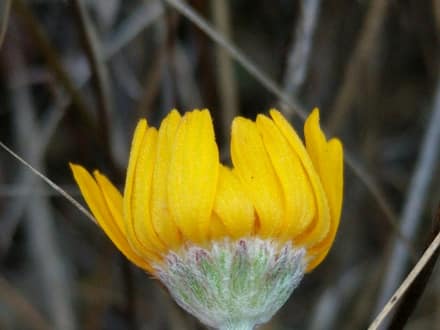
Four-nerve Daisy
Tetraneuris scaposa
A tidy evergreen tuft that lofts cheerful yellow daisies on wiry stems in nearly every month of the year.